Have you ever felt the sudden urge to buy something just because it was labeled “limited edition” or “only 3 left in stock”? You’re not alone. Scarcity is one of the most powerful psychological triggers in marketing — and it works across industries, from fashion to tech to digital products.
But why does the word “limited” instantly make something feel more valuable? And how can businesses use scarcity ethically and effectively in the future?
Let’s break it down.
The Psychology Behind Scarcity
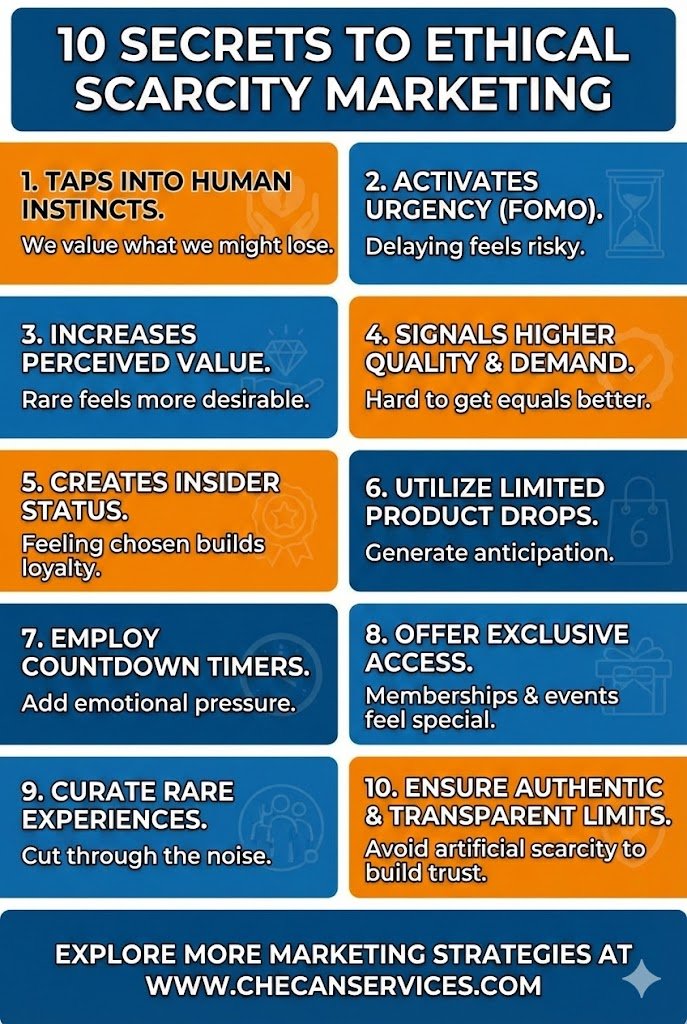
At its core, scarcity taps into a simple human instinct: we value what we might lose.
When something feels rare or hard to get, our brain interprets it as more desirable. This is rooted in evolutionary psychology. In early human history, scarce resources — food, shelter, safety — were critical to survival. Missing out could mean real danger.
Today, the stakes aren’t life-or-death, but the instinct remains.
When a website says “Sale ends tonight” or “Only 5 seats remaining,” it activates urgency. Suddenly, delaying a decision feels risky. You might miss out.
This is closely related to FOMO — the fear of missing out — a powerful emotional driver in modern consumer behavior.
Scarcity Creates Perceived Value
Think about luxury brands. A handbag that’s mass-produced feels ordinary. The same handbag labeled “limited run of 100” feels exclusive.
It’s not just about supply. It’s about perception.
Scarcity signals:
- Higher quality
- Greater demand
- Special access
- Insider status
If everyone can have it, it feels less special. But if only a few can, it becomes a status symbol.
This is why product drops, exclusive memberships, and limited pre-orders have become so popular. They don’t just sell a product — they sell access.
Real-World Examples of Scarcity in Action
1. Limited Product Drops
Streetwear brands mastered this strategy. Instead of keeping items permanently available, they release products in small batches. Once they’re gone, they’re gone.
This creates anticipation. Customers plan ahead. They line up. They refresh websites at launch time.
The product becomes an event.
2. Countdown Timers
E-commerce sites often use countdown timers for flash sales. Even if the discount isn’t massive, the ticking clock adds emotional pressure.
Without the timer, you might think, “I’ll decide later.”
With the timer, you think, “I need to act now.”
That subtle shift drives conversions.
3. Exclusive Access
Online courses, memberships, and events frequently open enrollment for a limited time. When doors close, they stay closed.
This approach doesn’t just drive urgency. It builds community. Members feel chosen — not just like customers.
The Future of Scarcity in a Digital World
We live in a time of abundance. Digital products can be copied infinitely. Streaming platforms give instant access to millions of songs and movies.
So how does scarcity still work?
Interestingly, it may become even more powerful.
As options multiply, attention becomes scarce. People crave experiences that feel curated, personal, and rare. Limited access can cut through the noise.
Creators and entrepreneurs are increasingly using:
- Limited-time content releases
- Members-only communities
- Early access for subscribers
- Exclusive digital editions
In a crowded digital marketplace, “limited” becomes a filter.
But here’s the key: artificial scarcity without integrity can backfire. If customers realize something is “limited” but constantly restocked, trust erodes.
The future belongs to authentic scarcity — where limits are real, transparent, and meaningful.
Why Scarcity Works So Consistently
Scarcity works because it combines three psychological triggers:
- Urgency – You must decide quickly.
- Value perception – Rare equals valuable.
- Emotional engagement – You don’t want to miss out.
When these elements align, decision-making speeds up.
But the most successful brands don’t use scarcity as manipulation. They use it to create focus, excitement, and intention.
When something is limited, people pay attention.
What This Means for Creators and Entrepreneurs
If you’re building a product, brand, or digital offering, scarcity can help you:
- Launch with momentum
- Increase conversion rates
- Build anticipation
- Strengthen brand positioning
Instead of offering everything all the time, consider structured releases. Offer limited bonuses. Create time-bound enrollment periods.
Used wisely, scarcity doesn’t pressure — it clarifies.
It signals: this matters right now.
Looking Ahead
As consumers become more aware of marketing tactics, authenticity will matter more than ever. Scarcity will still work — but only when it’s genuine.
The word “limited” isn’t powerful because of clever wording. It’s powerful because it aligns with how we think and feel.
And when used ethically, it doesn’t just increase sales — it increases meaning.
If you’re interested in exploring deeper insights into human behavior, decision-making, and modern life, you might enjoy browsing Louise Blount’s books. Her Apple Books collection offers thoughtful reads that expand on psychology, growth, and the subtle forces that shape our everyday choices.