Have you ever reached for the same coffee, phone, or pair of sneakers without even thinking about it? In a world full of endless options, there’s something deeply reassuring about choosing a familiar brand. It feels safe. Predictable. Comfortable.
But this comfort isn’t just about habit. It reflects how we navigate an increasingly complex and fast-moving world.
Why We Gravitate Toward Familiar Brands
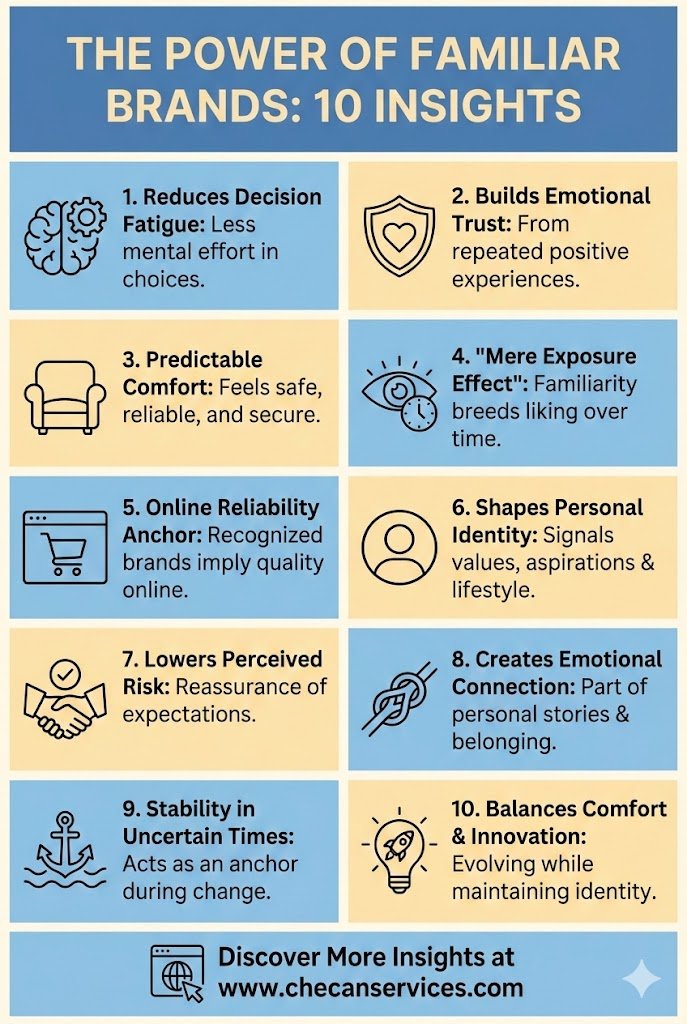
Every day, we’re flooded with choices. New products, new companies, new technologies. Decision fatigue is real. When everything feels new and uncertain, familiar brands offer mental relief.
Think about brands like Apple, Nike, or Coca-Cola. Even if you don’t use all their products, you instantly recognize them. You know what they stand for. You have expectations about quality and experience.
That predictability reduces risk. When you buy from a brand you know, you’re not just purchasing a product—you’re buying reassurance.
The Psychology Behind Brand Comfort
Familiar brands tap into something powerful: trust. And trust isn’t built overnight.
It grows through repeated positive experiences. Maybe your first smartphone was from Apple. Maybe you’ve worn Nike shoes since high school. These experiences create emotional associations. The brand becomes part of your personal story.
There’s also a psychological principle called the “mere exposure effect.” The more we see something, the more we tend to like it. Logos, packaging, slogans—over time, they feel almost like old friends.
In uncertain times—economic shifts, global change, rapid technology growth—people often return to what feels stable. Familiar brands become anchors.
The Role of Familiar Brands in the Digital Age
Today, we can discover a new product with one scroll. Social media and online marketplaces constantly introduce alternatives. While that’s exciting, it can also feel overwhelming.
That’s where familiar brands gain an edge.
When shopping online, you can’t touch or test products. You rely on brand reputation. If you see a brand you recognize, your brain relaxes. You assume a certain level of quality control, customer service, and reliability.
This is why established brands continue to thrive even when smaller competitors offer lower prices. Trust often outweighs cost.
Comfort vs. Complacency
However, comfort has a flip side.
Brands that rely too heavily on familiarity can become complacent. If they stop innovating, customers will eventually move on. Loyalty is powerful—but it’s not unconditional.
The brands that win in the future will balance comfort with creativity. They’ll maintain their core identity while evolving to meet changing needs.
For example, many legacy brands now focus on sustainability, personalization, and digital convenience. They understand that familiarity alone isn’t enough. Consumers expect growth and responsibility.
How Familiar Brands Shape Our Identity
Interestingly, the brands we choose often say something about us.
Driving a certain car, wearing a specific watch, or using a particular phone can signal values, aspirations, or lifestyle choices. Brands become part of how we present ourselves to the world.
This doesn’t mean we’re superficial. It means humans naturally use symbols to express identity. Familiar brands provide shared meaning. They create a sense of belonging.
In the future, this emotional connection may become even more important as artificial intelligence and automation make many products feel similar. What will differentiate brands then? Story, community, and authenticity.
What This Means for the Future
As technology continues to evolve, new brands will emerge faster than ever. But the comfort of familiar brands isn’t going away.
If anything, it may become more valuable.
In a world of rapid change, people crave stability. They want to feel understood. They want consistency. Brands that offer both reliability and innovation will thrive.
For consumers, the key is awareness. It’s perfectly fine to love your go-to brands. Just make sure you’re choosing them intentionally, not automatically.
Try new things—but appreciate the comfort of what already works.
Key Takeaways
Familiar brands reduce decision fatigue and create emotional reassurance.
Trust and repeated positive experiences build long-term loyalty.
In the digital age, brand recognition often replaces physical product testing.
The future belongs to brands that combine comfort with innovation.
As markets continue to evolve, the brands that feel like trusted companions—rather than just sellers—will stand the test of time.
If you enjoy exploring how psychology, habits, and everyday choices shape our lives, you might also appreciate the deeper reflections found in Louise Blount’s books. Her Apple Books collection offers thoughtful insights that pair beautifully with conversations like this.