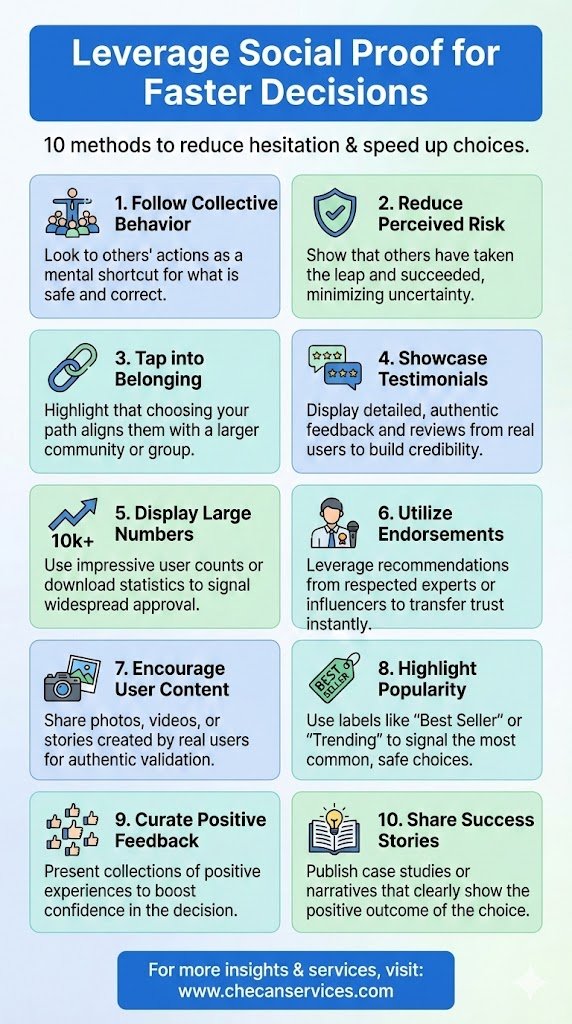
Have you ever noticed how much easier it is to try something new when you see others already doing it?
That quiet nudge you feel when a restaurant is full, when a product has thousands of five-star reviews, or when a friend recommends a book—that’s social proof at work. And in a world filled with choices, social proof has become one of the most powerful forces shaping decisions.
Let’s explore how social proof removes hesitation and why it matters more than ever.
What Is Social Proof, Really?
Social proof is the psychological tendency to look at other people’s behavior to decide what’s correct, safe, or valuable.
When we’re uncertain, we don’t want to make the “wrong” move. So we scan for clues. Are others buying this? Using this? Recommending this?
If the answer is yes, our brains relax.
Instead of overthinking, we think: If it works for them, it will probably work for me.
That simple mental shortcut saves time and energy.
Why Hesitation Happens in the First Place
Hesitation is usually rooted in risk.
Will this product waste my money?
Will this decision make me look foolish?
Will I regret this choice later?
Every decision carries some level of uncertainty. The more unfamiliar the situation, the stronger the hesitation.
Imagine you’re considering joining a new online course. If no one has reviewed it, no testimonials exist, and you don’t know anyone who’s taken it, you’ll likely pause. You might bookmark the page and “think about it.”
Now imagine the same course has hundreds of positive reviews, student success stories, and video testimonials. Suddenly, the risk feels smaller.
Nothing about the course changed. But your confidence did.
The Psychology Behind Social Proof
Social proof works because humans are wired for belonging and safety.
For thousands of years, survival depended on staying aligned with the group. Acting differently from others could mean danger. So we developed an instinct to follow collective behavior.
Today, that instinct shows up in subtle ways:
- Buying products labeled “Best Seller”
- Choosing the busiest coffee shop on the street
- Clicking articles with high engagement
- Watching shows that are trending
When we see that others have already made a choice—and survived—we feel safer making the same choice.
It reduces mental friction.
The Different Forms of Social Proof
Social proof isn’t just about reviews. It appears in many forms:
1. Testimonials and Reviews
Customer feedback builds immediate credibility. A detailed review feels like advice from a friend.
2. Numbers and Statistics
“Over 10,000 downloads” or “1 million readers” signals trust. Large numbers imply approval.
3. Influencer or Expert Endorsements
When a respected figure recommends something, it transfers trust instantly.
4. User-Generated Content
Photos, videos, or stories from real users make experiences feel authentic.
Each type lowers hesitation in a slightly different way, but the result is the same: reduced doubt.
Real-Life Example: Why We Read What Others Recommend
Think about how you choose books.
You’re browsing online and see two titles. One has no reviews. The other has dozens of thoughtful comments and a high rating.
Even if both sound interesting, you’ll likely choose the one others recommend.
It’s not about blindly following the crowd. It’s about reducing uncertainty.
When you see that others found value in something—whether it’s a self-development guide, a productivity ebook, or a practical life handbook—you feel more confident exploring it yourself.
That’s why curated collections, reader feedback, and recommendations matter. They help people move from “Maybe later” to “I’ll try it.”
How Social Proof Shapes the Future of Decisions
As digital platforms grow, social proof will become even more influential.
Artificial intelligence will highlight trending products. Algorithms will show what people similar to you are buying. Communities will shape recommendations in real time.
In the future, decisions won’t just be influenced by ads. They’ll be influenced by collective behavior data.
For creators, entrepreneurs, and authors, this means one thing: transparency and authenticity will matter more than ever.
For consumers, it means learning to recognize social proof—not to be manipulated by it, but to use it wisely.
What This Means for You
Next time you feel hesitation, pause and ask yourself:
Am I unsure because I lack information? Or because I haven’t seen enough social proof?
Sometimes, seeking trusted reviews, recommendations, or community feedback can give you the clarity you need.
And when you find something valuable, share your experience. Your review might be the reassurance someone else needs to move forward.
If you enjoy thoughtful insights about decision-making, personal growth, and navigating modern life, you may find inspiration in Louise Blount’s books, where real-world reflection meets practical guidance for everyday choices.