Curiosity is one of the oldest human instincts. It’s what makes us click headlines, open emails, watch trailers, and read “just one more page.” In marketing, curiosity isn’t manipulation — it’s momentum. When used well, it pulls people forward naturally.
The brands that understand this don’t shout louder. They create questions in the customer’s mind.
And questions demand answers.
What Makes Curiosity So Powerful?
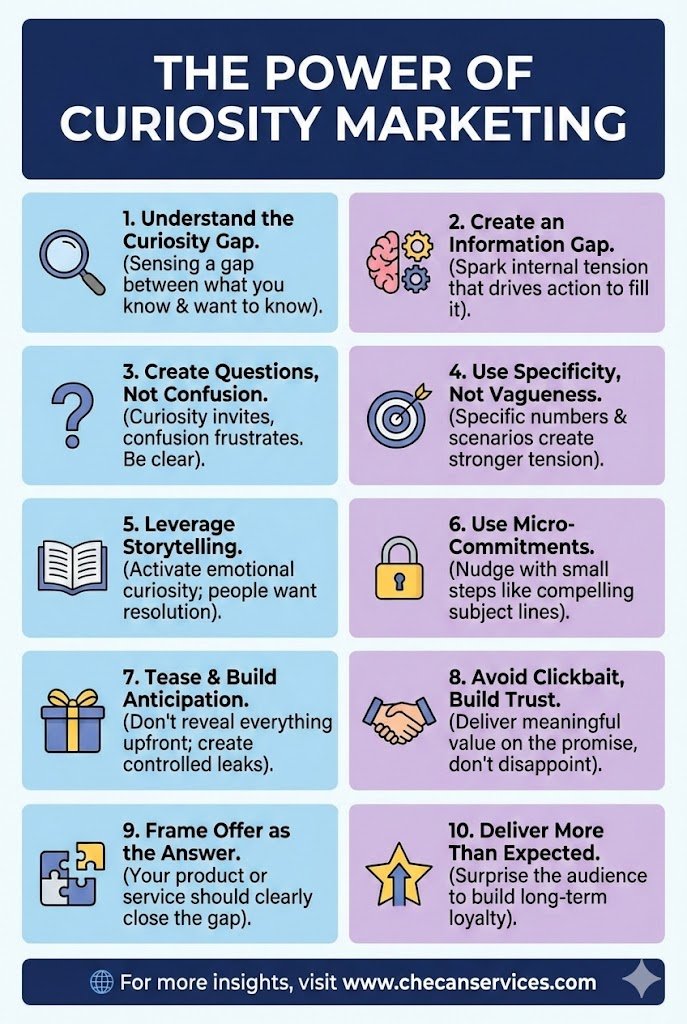
Curiosity works because of a psychological principle often linked to George Loewenstein and his information gap theory. The idea is simple: when we sense a gap between what we know and what we want to know, we feel an internal tension. We want to close that gap.
That tension drives action.
Think about headlines like:
- “You’re Probably Making This Common Financial Mistake”
- “The One Habit That Changed My Productivity Forever”
- “What Happens When You Wake Up at 5AM for 30 Days?”
Each one creates a gap. You know something is missing — and you want to fill it.
In marketing, this translates into clicks, sign-ups, shares, and purchases.
But there’s a difference between creating curiosity and creating confusion. The former invites. The latter frustrates.
The Curiosity Gap in Action
Let’s imagine you’re launching a new productivity app.
Instead of saying:
“Download our app to manage your tasks.”
You say:
“Why 73% of Remote Workers Switched to This Productivity System.”
Now the reader wonders:
What system? Why did they switch? Am I missing something?
The product becomes the answer to a question.
This approach works across industries:
- E-commerce: “The Skincare Ingredient Dermatologists Are Talking About”
- Fitness: “Why Most Home Workouts Fail After 3 Weeks”
- Finance: “The Savings Trick Banks Don’t Want You to Know”
The key is specificity. Vague curiosity doesn’t work. Targeted curiosity does.
Teasers, Storytelling, and Micro-Commitments
Curiosity thrives in storytelling.
When you open with:
“Three years ago, I almost quit my business…”
People lean in.
Storytelling activates emotional curiosity. We don’t just want information — we want resolution.
You can also use micro-commitments. For example:
- Email subject line: “You Forgot Something Important”
- First sentence inside: “It’s not what you think…”
Each step nudges the reader forward.
But here’s the rule: always deliver value. If the reveal disappoints, trust erodes. And in the long run, trust matters more than short-term clicks.
How Modern Brands Use Curiosity
Look at product launches from companies like Apple Inc.. They rarely reveal everything upfront. They tease features. They build anticipation. They create controlled leaks.
By the time launch day arrives, customers are already invested.
Streaming platforms use the same trigger. Think about the way Netflix structures trailers — short, dramatic, incomplete. You don’t get the full story. You get just enough to crave more.
Even social media algorithms reward curiosity-driven content. Hooks in the first three seconds determine whether viewers stay or scroll.
Curiosity isn’t new — but digital platforms have amplified its impact.
The Ethical Line: Curiosity vs. Clickbait
Here’s where many marketers go wrong.
Clickbait promises more than it delivers. Curiosity marketing promises something meaningful and follows through.
For example:
- Clickbait: “You Won’t Believe What Happened Next!”
- Effective curiosity: “The One Pricing Change That Increased Revenue by 42%”
One creates frustration. The other creates insight.
In the future, audiences will become even more sensitive to manipulation. Transparent curiosity — where the outcome feels worth the journey — will outperform sensationalism.
Trust and intrigue must work together.
How to Use Curiosity in Your Marketing Strategy
If you want to apply this trigger practically, start with these steps:
1. Identify the knowledge gap.
What does your audience think they know? What are they missing?
2. Frame your offer as the answer.
Your product or service should close the gap clearly.
3. Be specific.
Numbers, timelines, and real scenarios create stronger tension.
4. Deliver more than expected.
Surprise builds loyalty.
For example, instead of saying:
“Improve your mindset.”
Try:
“What Happens When You Journal for 10 Minutes Every Morning for 30 Days?”
Now the reader is picturing the outcome.
What This Means for the Future of Marketing
Attention is becoming scarcer. People scroll faster. Filters are sharper. Skepticism is higher.
Curiosity will remain one of the few triggers that cuts through noise — because it’s human, not technological.
But the winners won’t be those who shout the loudest. They’ll be the ones who craft the most compelling questions — and answer them honestly.
If you’re interested in exploring how storytelling, psychology, and emotional triggers shape personal growth and success, you might enjoy browsing Louise Blount’s books — her Apple Books collection offers thoughtful reads that spark reflection and action.