Have you ever noticed how much easier it feels to buy something when there’s a “100% Money-Back Guarantee” attached? That small line can make the difference between hesitation and clicking “Buy Now.” Guarantees aren’t just legal statements or marketing tactics—they’re powerful psychological tools rooted in how we make decisions.
Understanding the psychology of guarantees in business can completely transform how you approach sales, customer relationships, and long-term growth.
The Fear Behind Every Purchase
Every buying decision carries risk.
Customers wonder: What if this doesn’t work? What if I waste my money? What if I regret this? Even small purchases trigger these internal questions. For bigger investments—courses, software subscriptions, coaching programs, or electronics—the fear grows stronger.
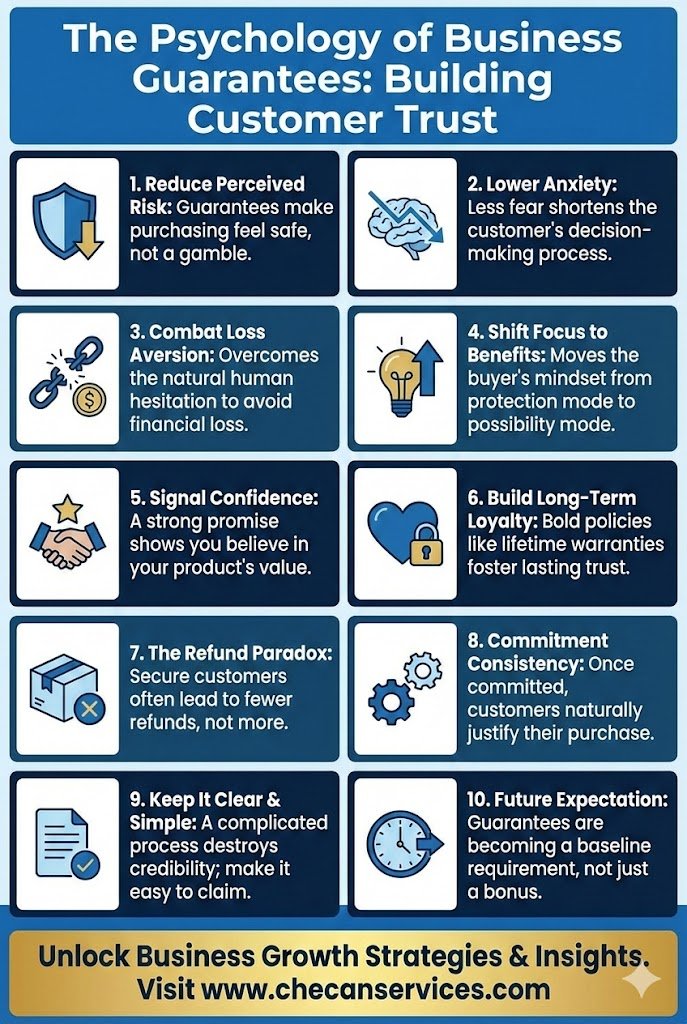
A guarantee reduces perceived risk. It tells the customer: “You’re safe. You won’t lose.”
Psychologically, this lowers anxiety and shortens the decision-making process. When fear decreases, action increases.
Loss Aversion: Why Guarantees Matter So Much
Behavioral psychology shows that humans hate losing more than they love winning. This concept, known as loss aversion, explains why people hesitate before spending money.
Without a guarantee, a purchase feels like a potential loss.
With a guarantee, the perceived loss disappears. The customer thinks, “If it doesn’t work, I can get my money back.”
That shift is powerful. The brain moves from protection mode to possibility mode. Instead of focusing on what could go wrong, the buyer imagines the benefits.
Smart businesses understand this emotional switch—and use guarantees strategically.
Trust Signals in a Skeptical Market
We live in an era of online scams, fake reviews, and exaggerated promises. Consumers are more skeptical than ever.
A clear, strong guarantee sends a signal of confidence. It communicates:
- We believe in our product.
- We stand behind our promises.
- We’re not afraid of refunds.
That confidence transfers psychologically to the customer. If a company is willing to take on the risk, the buyer feels less exposed.
In fact, some companies have built their entire brand identity around bold guarantees. Think of lifetime warranties or no-questions-asked returns. These policies don’t just protect buyers—they build long-term loyalty.
The Paradox: Fewer Refunds, Not More
Here’s something surprising.
Many business owners fear offering guarantees because they expect a wave of refunds. In reality, the opposite often happens.
When customers feel secure, they buy more confidently—and they’re more likely to give the product a fair chance. Without that safety net, some customers never purchase at all.
There’s also a psychological effect called commitment consistency. Once someone makes a purchase, they naturally look for reasons to justify it. A guarantee removes pressure, which often reduces the desire to request a refund.
Types of Guarantees That Influence Behavior
Not all guarantees work the same way.
- Money-back guarantees reduce financial risk.
- Performance guarantees promise specific results.
- Satisfaction guarantees focus on emotional fulfillment.
- Lifetime guarantees signal long-term reliability.
The stronger and clearer the promise, the greater the psychological impact.
However, credibility matters. A complicated refund process can destroy trust. A guarantee must feel genuine, simple, and easy to claim.
The Future of Guarantees in Business
As competition grows and AI-driven marketplaces expand, customer trust will become even more valuable.
In the future, we’ll likely see:
- Longer guarantee periods.
- More personalized guarantees based on customer behavior.
- Risk-reversal strategies integrated into subscription models.
- Transparency dashboards that show refund rates publicly.
Businesses that remove friction will win. Guarantees will shift from being a marketing bonus to a baseline expectation.
Customers will increasingly choose brands that reduce uncertainty rather than just lower prices.
What This Means for Entrepreneurs
If you’re building a business, the question isn’t whether you can afford to offer a guarantee.
The real question is: can you afford not to?
A thoughtful guarantee forces you to improve product quality. It pushes you to be confident in what you sell. And it signals integrity in a marketplace where trust is currency.
Guarantees aren’t about refunds—they’re about reassurance.
When customers feel protected, they lean forward instead of pulling back.
Looking ahead, the businesses that thrive will be those that understand human psychology as deeply as they understand pricing and marketing.
If you’re fascinated by the psychology behind decision-making and want deeper insights into how human behavior shapes business success, you might enjoy exploring Louise Blount’s books. Her work dives into the mindset patterns that influence growth, resilience, and smart strategy.