Have you ever found yourself constantly stepping in to fix someone else’s problems — even when they didn’t ask you to?
Maybe you’re the friend who always lends money, the partner who smooths over every conflict, or the family member who solves everyone’s crises at 2 a.m. At first, it feels generous. Helpful. Loving.
But over time, rescuing others can quietly drain your energy, create resentment, and even hold people back from growing.
Learning to stop rescuing other people isn’t about becoming cold or uncaring. It’s about building healthier relationships — and protecting your own emotional well-being in the process.
Why We Feel the Need to Rescue
Rescuing often comes from good intentions.
You might hate seeing someone struggle. You may believe love means solving problems. Or maybe you grew up in an environment where your value came from being “the responsible one.”
In many cases, rescuing is tied to approval. When people rely on you, you feel needed. Important. Secure.
But here’s the uncomfortable truth: constantly rescuing can create dependency. It teaches others that they don’t need to handle their own challenges — because you’ll do it for them.
Over time, this dynamic becomes exhausting.
The Hidden Cost of Always Helping
At first, stepping in feels empowering. You’re the problem-solver. The steady one.
But eventually, you may notice:
- Feeling overwhelmed by other people’s responsibilities
- Resentment toward the very people you’re helping
- Neglecting your own needs and goals
- Attracting people who constantly need saving
Rescuing can slowly shift from kindness to self-sacrifice.
Imagine always helping a friend manage their finances. You pay their bills “just this once,” then again, and again. Instead of learning budgeting skills, they rely on you. Meanwhile, you feel stressed and unappreciated.
The cycle continues — unless you break it.
The Difference Between Helping and Rescuing
Helping empowers.
Rescuing enables.
Helping might sound like:
“I can show you how to create a budget.”
Rescuing sounds like:
“I’ll just handle it for you.”
The key difference is responsibility. Helping supports someone as they grow. Rescuing removes the opportunity for growth.
If you constantly take over, you unintentionally communicate: I don’t trust you to handle this.
That message, even if unspoken, affects both of you.
How to Start Letting Go
Breaking the rescuing habit doesn’t happen overnight. It requires awareness and practice.
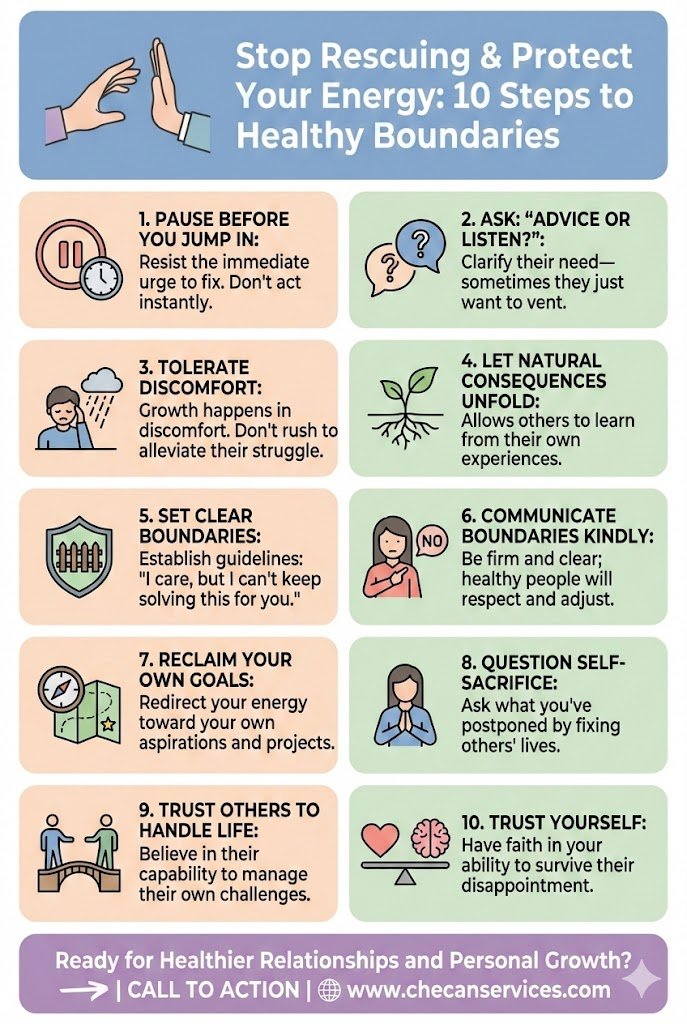
1. Pause Before You Jump In
When someone shares a problem, resist the immediate urge to fix it.
Instead, ask:
“Do you want advice, or do you just need me to listen?”
Sometimes people simply need space to process — not a solution.
2. Tolerate Discomfort
Watching someone struggle can feel unbearable. But growth often happens in discomfort.
If your adult child misses a deadline or your coworker forgets a task, let natural consequences unfold. This isn’t cruelty. It’s respect for their capability.
3. Set Clear Boundaries
Boundaries aren’t walls. They’re guidelines.
You might say:
“I care about you, but I can’t keep solving this for you.”
At first, this may feel harsh. But healthy people will adjust. And those who resist may have been benefiting from your over-giving.
4. Reclaim Your Own Goals
Ask yourself: What have I postponed while fixing everyone else’s life?
Maybe it’s a career move. A creative project. A health goal.
Redirecting your energy toward your own growth can feel unfamiliar — even selfish — but it’s necessary.
When you stop rescuing, you free up space for your own development.
What This Means for Your Relationships
Something powerful happens when you step back.
People begin to step up.
Some relationships may shift. A few might fade. But the ones that remain will likely become more balanced and respectful.
You’ll also start attracting people who take responsibility for themselves — not those searching for a savior.
And most importantly, you’ll feel lighter.
Less drained.
Less resentful.
More centered.
Looking Ahead
Learning to stop rescuing other people is really about trust — trusting others to handle their lives, and trusting yourself to survive their disappointment.
You can still be compassionate. Supportive. Loving.
But you don’t have to carry everyone.
If this topic resonates with you and you’re ready to explore emotional growth, boundaries, and self-worth on a deeper level, you might find inspiration in Louise Blount’s books, where themes of personal strength and transformation are explored with honesty and clarity.
Rescuing feels noble in the moment. But empowering yourself — and others — is far more powerful in the long run.