Every parent wants to give their child the best possible start in life, and nutrition plays a powerful role in shaping how young brains grow, learn, and adapt. From early language skills to memory, focus, and emotional regulation, the foods children eat can directly influence brain development. The good news? You don’t need exotic supplements or complicated diets—many everyday foods naturally support a child’s growing mind.
A child’s brain develops rapidly, especially in the early years, forming millions of neural connections every second. Fueling that process with the right nutrients can help strengthen cognitive abilities both now and in the future.
Omega-3–Rich Foods for Cognitive Growth
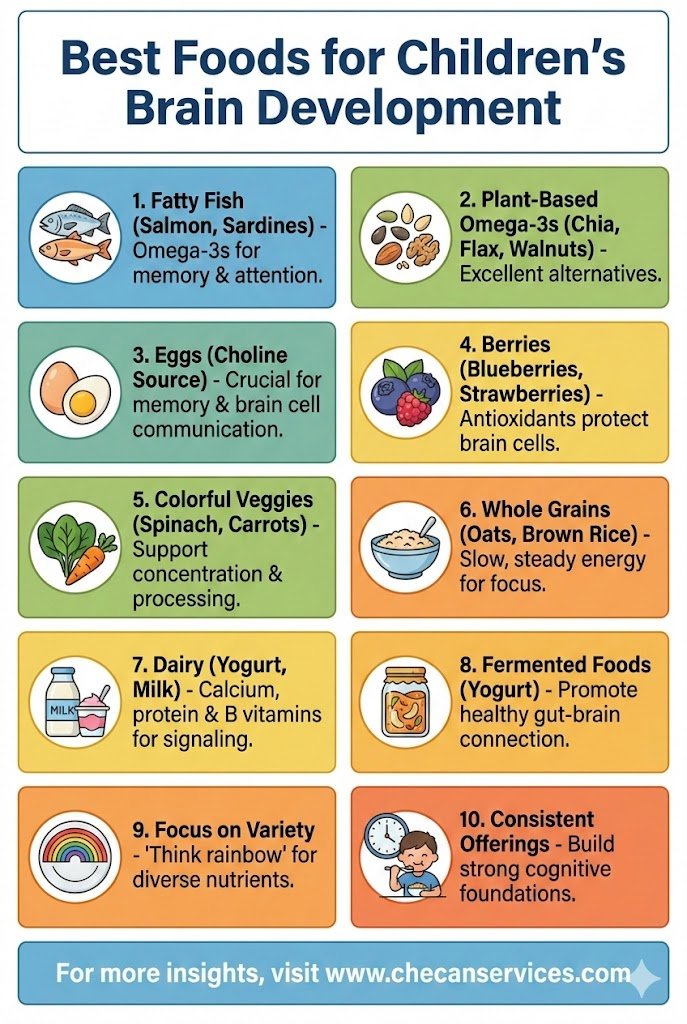
Omega-3 fatty acids are essential building blocks of the brain. Fatty fish like salmon, sardines, and trout are among the best natural sources. For children who don’t love fish, alternatives such as chia seeds, flaxseeds, and walnuts are excellent plant-based options. These fats help improve memory, attention span, and overall learning capacity.
Adding ground flaxseed to smoothies or oatmeal is an easy, kid-friendly way to boost intake without changing flavors too much.
Eggs: Small Food, Big Brain Benefits
Eggs are often called a “brain superfood,” and for good reason. They contain choline, a nutrient crucial for memory development and brain cell communication. Eggs are also rich in protein, supporting steady energy levels throughout the school day.
Scrambled eggs, omelets with veggies, or even hard-boiled eggs as snacks can easily fit into a busy routine.
Fruits and Vegetables That Feed the Mind
Brightly colored fruits and vegetables provide antioxidants that protect brain cells from oxidative stress. Blueberries, strawberries, spinach, carrots, and sweet potatoes are especially beneficial. These foods support long-term brain health while also improving concentration and processing speed.
Think rainbow on the plate—the more colors, the wider the range of brain-supporting nutrients your child receives.
Whole Grains for Steady Brain Energy
The brain relies heavily on glucose for fuel, and whole grains provide a slow, steady release of energy. Oats, brown rice, whole wheat bread, and quinoa help children stay focused longer, especially during school hours.
A whole-grain breakfast can make a noticeable difference in attention and mood compared to sugary, refined options.
Dairy and Fermented Foods for Brain-Gut Connection
Yogurt, milk, and cheese provide calcium, protein, and B vitamins that support brain signaling. Fermented foods like yogurt also promote a healthy gut microbiome, which research increasingly links to emotional balance and cognitive performance in children.
Key Takeaways for Parents
Supporting brain development doesn’t require perfection—just consistency. Offering a variety of whole, nutrient-dense foods helps children build strong cognitive foundations while also developing healthy eating habits they’ll carry into adulthood.
Looking Ahead
As science continues to explore the connection between nutrition and learning, one thing remains clear: food is more than fuel—it’s information for the brain. Thoughtful choices today can shape how children think, feel, and grow tomorrow.
If you enjoy learning about mindful living, parenting insights, and personal growth, explore the inspiring ebooks by Louise Blount available on Apple Books. You can discover them here and find thoughtful reads that support intentional, balanced family life.