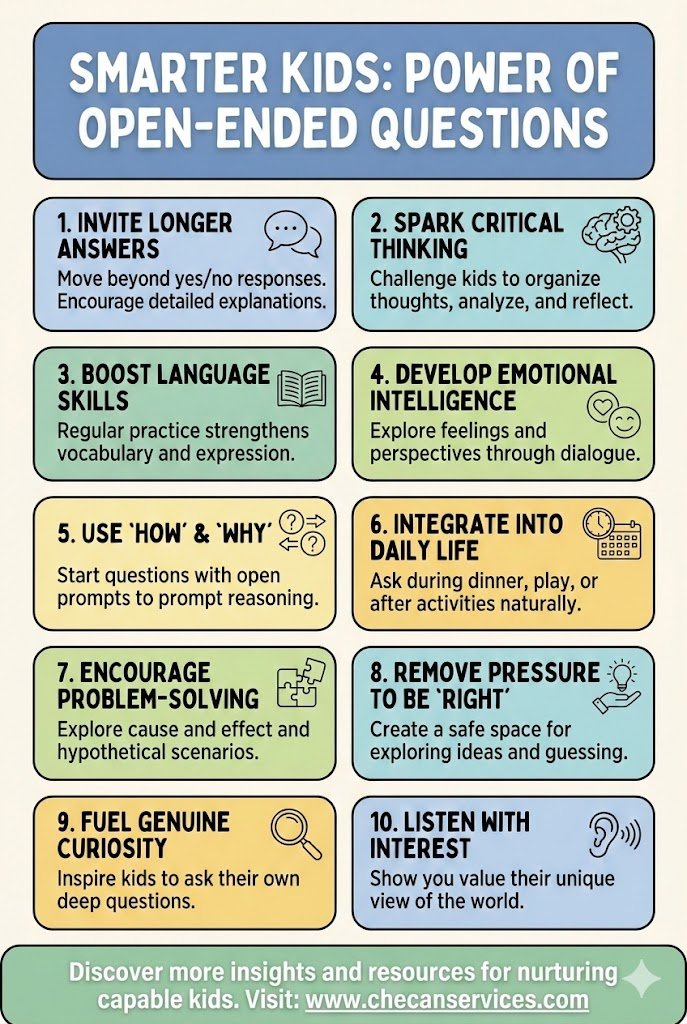
If you’ve ever asked a child, “Did you have a good day?” and received a one-word answer, you already know the limits of closed questions. Now imagine asking instead, “What was the most interesting thing that happened today?” Suddenly, the gears start turning. This simple shift in how we talk to kids can have a powerful impact on how they think, learn, and grow.
Open-ended questions don’t just invite longer answers. They invite thinking. And over time, that thinking adds up.
Why Open-Ended Questions Work So Well
Open-ended questions are questions that don’t have a single correct answer. They usually start with how, why, what do you think, or what would happen if. When kids hear these questions, they’re nudged to explain, imagine, analyze, and reflect.
Instead of recalling a fact, they have to organize their thoughts. That mental effort strengthens critical thinking skills, language development, and even emotional intelligence. In other words, they’re not just answering you—they’re practicing how to think.
For example, compare:
- “Did you like the story?”
- “What part of the story stood out to you, and why?”
The second question encourages interpretation, reasoning, and self-expression. Over time, kids who regularly engage in this kind of dialogue become more confident thinkers and communicators.
Everyday Moments That Spark Smarter Thinking
The good news? You don’t need a classroom or a lesson plan. Open-ended questions fit naturally into everyday life.
At dinner, instead of asking, “Did you finish your homework?” try, “What was the trickiest part of your homework today?”
While playing, ask, “What do you think will happen if we stack the blocks this way?”
After a disagreement, gently explore with, “How do you think the other person felt?”
These moments teach kids that their thoughts matter. They also help children learn cause and effect, problem-solving, and perspective-taking—all key ingredients of intelligence.
Building Curiosity, Not Just Correctness
One of the biggest benefits of open-ended questions is that they remove the pressure of being “right.” Kids learn that it’s okay to explore ideas, make guesses, and even change their minds. That sense of psychological safety fuels curiosity.
Curious kids ask more questions themselves. They dig deeper. They’re more willing to tackle challenges because they see learning as exploration rather than performance. In a world that’s changing fast, that mindset may be one of the smartest skills of all.
Key Takeaways for Parents and Caregivers
Asking open-ended questions isn’t about interrogating kids or turning every moment into a teaching opportunity. It’s about being genuinely interested in how they see the world. When adults listen with curiosity, kids learn to think with confidence.
The next time you’re tempted to ask a yes-or-no question, pause and open it up. You might be surprised by how much brilliance comes pouring out.
If you enjoy thoughtful insights on nurturing curious, capable kids, you’ll love the ebooks by Louise Blount. Explore them on Apple Books and discover ideas that gently support smarter thinking and deeper connection at home.