Have you ever noticed how quickly you trust a product recommended by a doctor, celebrity, or industry expert? Or how you’re more likely to buy from a brand labeled “#1 recommended”? That’s not random. It’s the powerful psychological force of authority shaping your buying behavior.
Authority influences what we buy, who we trust, and how confidently we make decisions. In today’s crowded marketplace, understanding how authority works can help you become a smarter consumer — or a more effective business owner.
Let’s break it down.
What Is Authority in Marketing?
Authority in buying behavior refers to the influence of perceived expertise, credibility, or leadership.
It can show up in many forms:
- A medical professional endorsing a supplement
- A bestselling author recommending a productivity tool
- A well-known CEO backing a startup
- A brand described as “award-winning” or “industry leader”
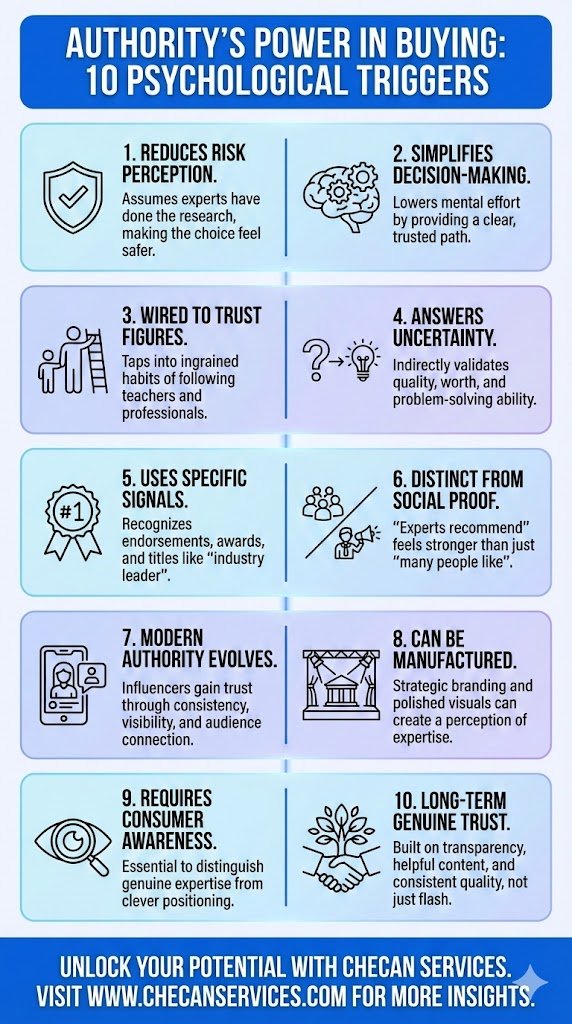
When we see authority signals, our brains relax. We assume someone knowledgeable has already done the research. That assumption reduces risk — and buying always involves some level of risk.
Why Authority Works So Well
Humans are wired to follow authority figures. From childhood, we learn to trust teachers, parents, and professionals. That pattern doesn’t disappear in adulthood — it simply shifts into different contexts.
When shopping online, we face uncertainty:
- Is this product high quality?
- Will it solve my problem?
- Is it worth the price?
Authority answers those questions indirectly.
For example, imagine choosing between two skincare brands. One simply lists its ingredients. The other includes dermatologists’ endorsements and mentions clinical testing. Even if both products are similar, most people will feel safer choosing the second option.
Authority reduces mental effort. It simplifies decision-making.
Social Proof vs. Authority
It’s easy to confuse authority with social proof, but they’re different.
Social proof says: “Many people like this.”
Authority says: “Experts recommend this.”
Both influence buying behavior, but authority often feels stronger because it suggests knowledge and expertise. A product with 10,000 positive reviews is persuasive. But if it’s also endorsed by a respected expert, the impact multiplies.
Authority in the Digital Age
Today, authority doesn’t only belong to doctors or CEOs. Influencers, content creators, and thought leaders have become modern authority figures.
Someone with a large, loyal audience can significantly shape purchasing decisions. Why? Because perceived expertise often comes from consistency and visibility.
If you follow a finance creator who shares helpful advice daily, you’re more likely to trust their recommendation for a budgeting app. Familiarity builds authority over time.
But here’s the catch: authority can be manufactured.
Some brands create authority through strategic branding — professional websites, polished visuals, expert-sounding language, and media mentions. Sometimes that authority is genuine. Sometimes it’s just good marketing.
As a consumer, learning to distinguish real expertise from clever positioning is essential.
How Authority Influences Your Future Decisions
Understanding authority gives you power.
Before your next purchase, ask yourself:
- Am I buying because of real value or because someone influential endorsed it?
- Does the authority figure actually have expertise in this area?
- Would I choose this product without the endorsement?
This awareness doesn’t mean you should ignore authority. Experts often provide valuable guidance. But conscious decision-making protects you from impulse purchases driven purely by perceived status.
For businesses, authority is a long-term investment. Publishing helpful content, earning certifications, collaborating with credible experts, and consistently delivering quality builds genuine trust.
In the future, brands that combine transparency with authority will win. Consumers are becoming more informed. Flashy endorsements alone won’t be enough — authenticity will matter more than ever.
Key Takeaways
Authority shapes buying behavior by reducing risk and simplifying decisions.
We naturally trust experts and leaders, especially when we feel uncertain.
In the digital era, authority can come from professionals, influencers, or strong brand positioning.
Being aware of authority helps you make smarter purchases and avoid manipulation.
As markets grow more competitive, genuine expertise and transparency will define successful brands.
Understanding these psychological forces gives you an edge — whether you’re building a business or simply navigating everyday purchasing choices.
If you enjoy exploring how human behavior influences success, decision-making, and personal growth, you may appreciate Louise Blount’s books, where these ideas are unpacked in practical, thought-provoking ways.