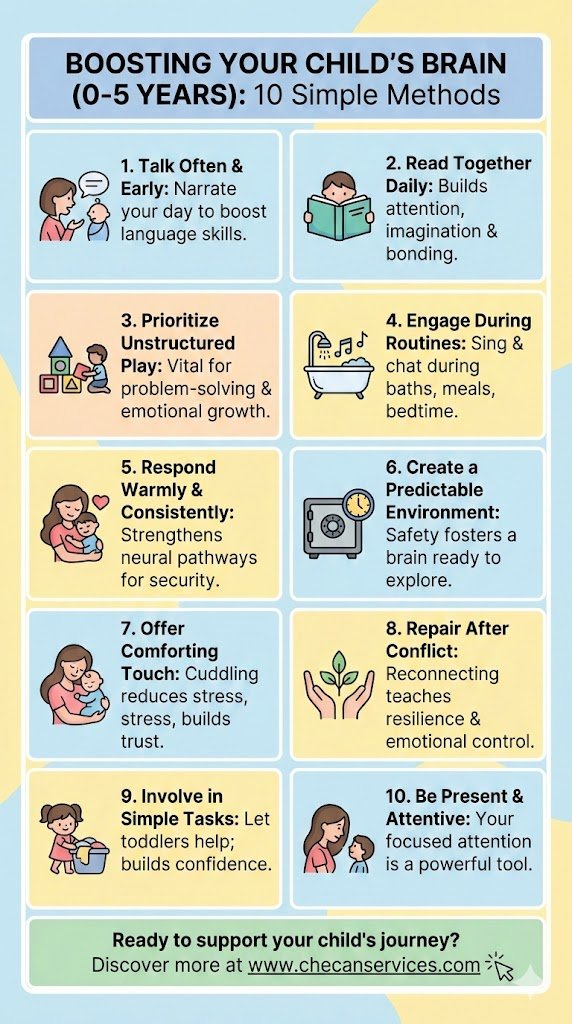
The first five years of a child’s life are nothing short of extraordinary. During this short window, a child’s brain develops faster than at any other time, laying the foundation for learning, behavior, emotional health, and relationships. For parents, understanding what’s happening inside that rapidly growing brain can make everyday moments feel more meaningful—and empowering.
Why the First Five Years Matter So Much
At birth, a baby’s brain already has billions of neurons, but what truly drives development is how those neurons connect. In the early years, the brain forms more than a million new neural connections every second. These connections are shaped by experiences: talking, playing, cuddling, exploring, and even everyday routines like meals and bedtime.
Think of the brain like a house under construction. Genes provide the blueprint, but experiences supply the building materials. Warm, responsive caregiving helps strengthen pathways for language, problem-solving, and emotional regulation. On the flip side, chronic stress or lack of stimulation can weaken or limit those connections.
Everyday Experiences That Build Healthy Brains
Parents often underestimate how powerful simple interactions can be. Talking to your child—even before they can talk back—boosts language development. Reading together builds attention span and imagination. Play, especially unstructured play, helps children learn how to plan, adapt, and manage emotions.
Even moments that feel ordinary, like singing during bath time or letting your toddler help with simple tasks, contribute to brain growth. These repeated, positive interactions tell a child’s brain that the world is safe, predictable, and worth exploring.
Emotions, Stress, and the Developing Brain
Emotional development is tightly linked to brain development. When caregivers respond consistently and calmly to a child’s needs, the brain learns how to manage stress. This is crucial because prolonged stress in early childhood can interfere with areas of the brain responsible for memory and emotional control.
That doesn’t mean parents need to be perfect. Occasional frustration or tough days are part of real life. What matters most is repair—comforting, reconnecting, and reassuring your child afterward. Those moments teach resilience and trust.
Key Takeaways for Parents
The science is clear, but the message is reassuring: you don’t need fancy toys or complex programs. Your presence, attention, and love are the most powerful tools for supporting your child’s brain development. Small, consistent actions add up in a big way over time.
Looking Ahead
As your child grows beyond the early years, the foundation you’ve helped build continues to influence how they learn, relate to others, and handle challenges. Investing in connection now pays dividends for years to come—in confidence, curiosity, and emotional well-being.
If you’d like to explore these ideas more deeply and gain practical insights into parenting and personal growth, take a look at the thoughtful ebooks by Louise Blount available on Apple Books. You can browse the full collection here and discover resources that support both you and your child on this journey.