Parenting has always come with pressure, but modern life has a way of turning everyday stress into a constant background hum. Deadlines, financial worries, lack of sleep, and the invisible weight of “doing it right” can all pile up. What many parents don’t realize is that this ongoing stress doesn’t stop with them—it can quietly shape how their child’s brain develops.
Stress Is Contagious—Especially at Home
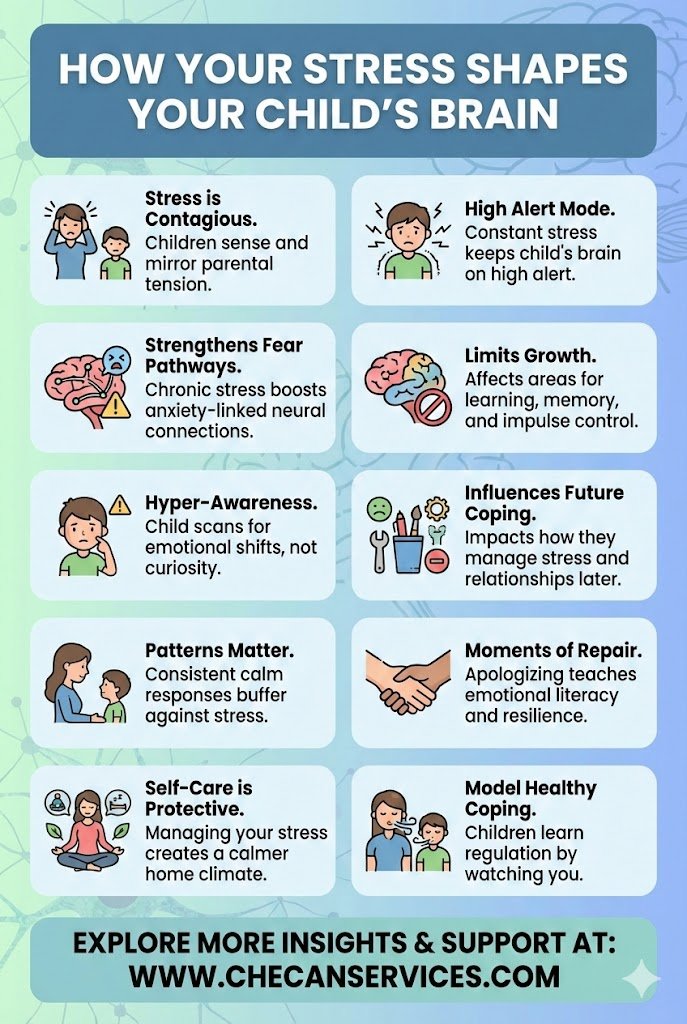
Children are remarkably sensitive to their environments. Even babies who can’t yet understand words can sense emotional tone, facial expressions, and body language. When a parent is consistently stressed, a child’s nervous system often mirrors that tension.
For example, a parent who is overwhelmed may be more reactive—snapping quickly, withdrawing emotionally, or struggling to stay present. Over time, this unpredictability can signal to a child’s brain that the world is unsafe or unstable. The developing brain adapts by staying on high alert, which can affect emotional regulation and attention later in life.
What Happens Inside the Developing Brain
A child’s brain is built from experience. Repeated exposure to stress can strengthen neural pathways associated with fear and anxiety, while limiting growth in areas linked to learning, memory, and impulse control. This doesn’t mean stressed parents “damage” their children, but chronic stress can tilt development in less helpful directions.
Imagine a young child whose parent is constantly anxious about money or work. That child may become hyper-aware of emotional shifts, learning to scan for danger instead of focusing on play or curiosity. Over time, this can influence how they manage stress, relationships, and even school challenges.
Everyday Moments Matter More Than Big Ones
It’s not the occasional bad day that makes the difference—it’s the pattern. Small, repeated interactions are what shape the brain. A calm response to a tantrum, a reassuring hug after a mistake, or simply being emotionally available can act as powerful buffers against stress.
Even when parents feel overwhelmed, moments of repair matter. Saying, “I was really stressed earlier, but that wasn’t your fault,” teaches emotional literacy and resilience. These moments help rewire the child’s brain toward safety and connection.
Supporting Your Child by Supporting Yourself
One of the most forward-thinking shifts in parenting today is recognizing that self-care isn’t selfish—it’s protective. When parents manage their own stress, they create a calmer emotional climate at home. This might look like setting boundaries around work, asking for help, or practicing simple grounding techniques.
Children don’t need perfect parents. They need regulated, responsive ones. When a parent models healthy coping—taking deep breaths, naming emotions, or stepping away to cool down—children learn skills that support lifelong mental health.
Key Takeaways for Parents
Parental stress is unavoidable, but its impact isn’t fixed. Awareness is the first step. By noticing how stress shows up in daily interactions and making small, intentional changes, parents can positively influence their child’s brain development. A supportive environment, even an imperfect one, lays the foundation for emotional strength, adaptability, and confidence.
If you’re interested in exploring emotional wellbeing, resilience, and modern parenting in more depth, you may enjoy the insightful ebooks available on Apple Books by Louise Blount. They offer thoughtful perspectives that gently support parents navigating today’s complex emotional landscape.