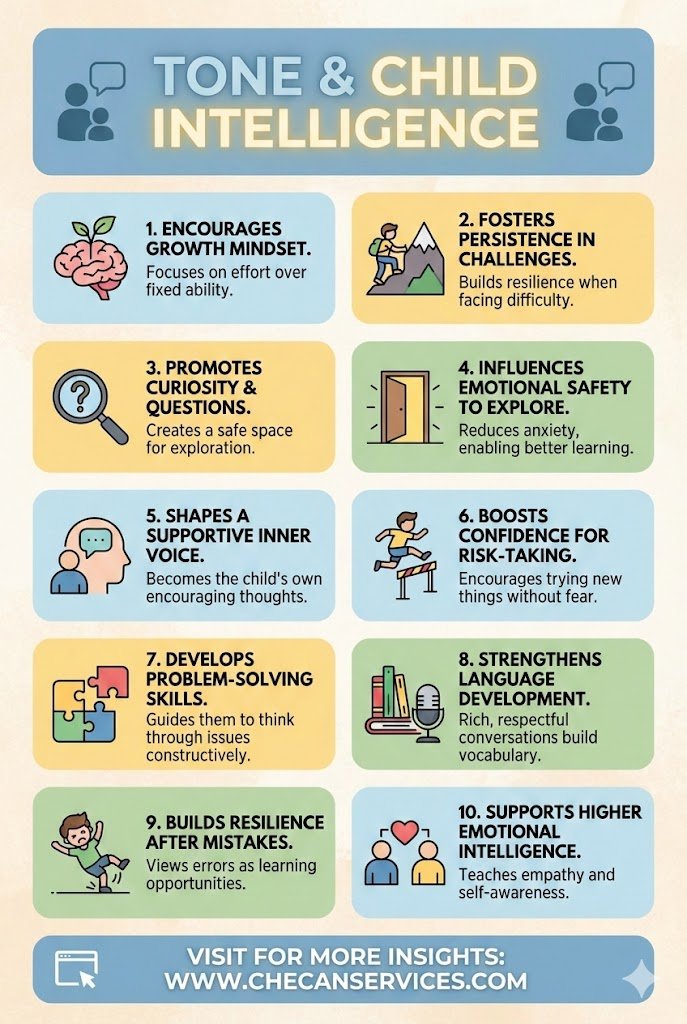
The way we speak to our children might feel like a small, everyday detail—but research and real-life experience suggest it can have a powerful impact on how their intelligence develops. Parenting tone isn’t just about being “nice” or “strict.” It’s about the emotional message behind your words and how consistently that message shapes your child’s thinking, confidence, and curiosity.
Imagine a child struggling with a math problem. One parent says, “You’re not trying hard enough—this is easy.” Another says, “This is tricky, but let’s work through it together.” The words are different, but more importantly, the tone is different. Over time, those differences add up.
Why Tone Matters More Than You Think
Tone influences how safe a child feels to explore, ask questions, and make mistakes. When children grow up hearing calm, encouraging language, they’re more likely to develop what psychologists call a growth mindset—the belief that intelligence can be developed through effort and learning.
Studies from institutions like Stanford University have shown that children who are praised for effort rather than labeled as “smart” tend to persist longer on challenging tasks. Tone plays a central role here. A warm, patient tone tells a child, “Your brain grows when you try.” A harsh or dismissive tone often sends the opposite message: “Your ability is fixed, and mistakes are failures.”
Everyday Moments That Shape Intelligence
Parenting tone shows up in ordinary moments:
- During homework: Supportive tones encourage problem-solving and resilience. Sharp or impatient tones can trigger anxiety, which literally makes it harder for the brain to learn.
- In conversations: Asking open-ended questions—“What do you think will happen next?”—stimulates critical thinking far more than commands or quick corrections.
- When mistakes happen: A calm response helps children analyze errors and learn from them, strengthening reasoning and memory skills.
Over time, children internalize the tone they hear. It becomes their inner voice. A supportive inner voice boosts confidence and cognitive flexibility, while a critical one can limit risk-taking and creativity.
The Long-Term Impact on Learning
Children raised with respectful, encouraging communication often show stronger language development, better problem-solving skills, and higher emotional intelligence. These abilities are closely linked to academic success and lifelong learning.
This doesn’t mean parents must be endlessly gentle or permissive. Clear boundaries and expectations matter. The key difference is how those boundaries are communicated. Firm guidance delivered with respect builds understanding; the same message delivered with sarcasm or anger can shut learning down.
Key Takeaways
- Parenting tone shapes how children view their own intelligence.
- Encouraging language supports curiosity, persistence, and problem-solving.
- Calm, respectful communication helps children develop a growth mindset.
- Everyday interactions quietly influence long-term cognitive development.
Looking Ahead
As we learn more about brain development, one thing becomes clear: intelligence isn’t just built in classrooms—it’s shaped at home, conversation by conversation. By becoming more mindful of tone, parents can create an environment where learning feels safe, exciting, and endless.
If you’d like deeper insights into parenting, emotional development, and mindful communication, explore the thoughtful ebooks by Louise Blount available on Apple Books. You can discover them here. They’re a wonderful resource for parents looking to nurture both intelligence and emotional well-being.