You’ve probably heard it before: you never get a second chance to make a first impression. In sales, that saying isn’t just motivational fluff — it’s reality.
Whether you’re pitching a product, hosting a discovery call, or meeting a client face-to-face, the first few seconds often determine how the rest of the interaction unfolds. Before you’ve explained pricing, features, or benefits, your prospect has already formed an opinion. And that opinion quietly shapes whether they lean in… or tune out.
Let’s explore how first impressions influence sales outcomes — and what you can do to make those early moments work in your favor.
Why First Impressions Matter More Than You Think
When someone meets you for the first time, their brain works fast. Within seconds, they assess trustworthiness, competence, and confidence. This happens subconsciously.
In sales, trust is currency. If a potential customer senses uncertainty, pushiness, or disorganization right away, they’ll start looking for reasons to say no. On the other hand, if you project clarity and confidence, they’ll be more open to hearing what you have to offer.
Think about walking into a beautifully organized store. You instantly feel more comfortable spending money there. Now imagine a cluttered, chaotic space with no one greeting you. Same products, different impression — and very different sales outcomes.
The same principle applies to you.
The Psychology Behind Buying Decisions
Most people like to believe they make rational decisions. In reality, buying is emotional first, logical second.
When a prospect meets you, they’re not just evaluating your product — they’re evaluating you. Do you seem prepared? Do you listen? Do you respect their time?
If your first impression signals professionalism and empathy, you activate positive emotional triggers. The customer begins to think, “This feels right.”
From there, facts and figures simply support a decision they’re already leaning toward.
What Shapes a Strong First Impression in Sales
First impressions aren’t only about appearance — though presentation does matter. They’re shaped by several key elements:
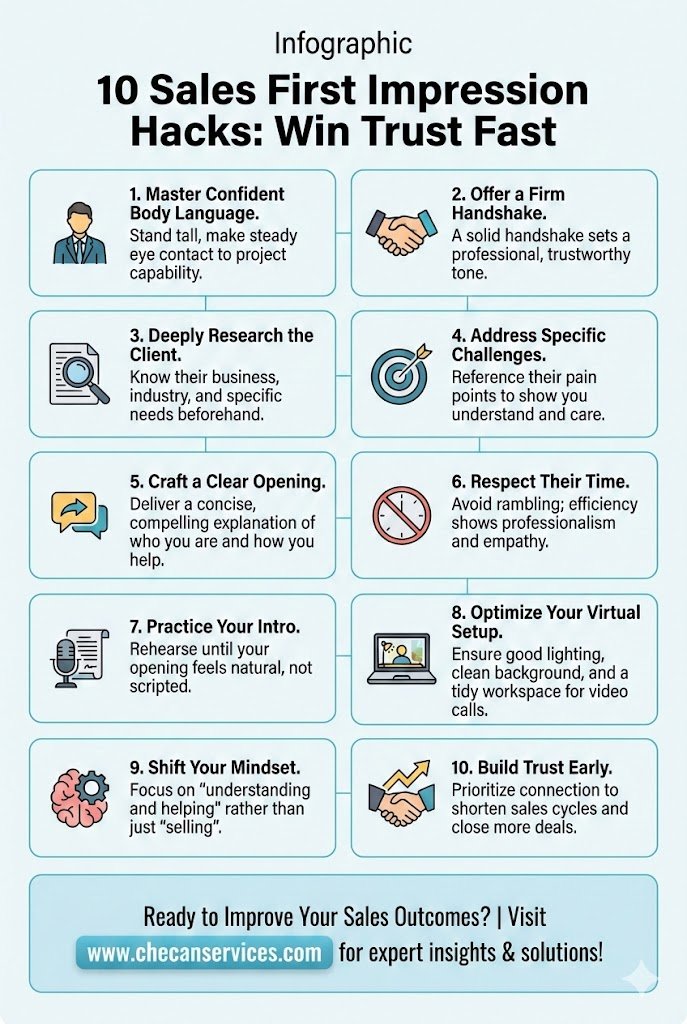
1. Energy and Body Language
Your posture, eye contact, and tone communicate confidence before you say a word.
A firm handshake, relaxed shoulders, and steady eye contact send the message: “You’re in capable hands.” Even on video calls, your posture and facial expression set the tone immediately.
2. Preparation
Nothing builds credibility faster than being prepared.
If you’ve researched the client’s business, understand their industry, and reference specific challenges they might face, you immediately stand out. It shows respect — and preparation signals professionalism.
3. Clarity in Communication
Rambling introductions kill momentum.
A clear, concise opening that explains who you are and how you help creates focus. Prospects appreciate efficiency. When you respect their time, they’re more likely to respect your offer.
The Hidden Cost of a Poor First Impression
Here’s the part many salespeople overlook: once a negative impression forms, it’s hard to reverse.
You might recover somewhat, but you’ll spend the rest of the conversation trying to rebuild trust instead of strengthening it. That drains energy and reduces closing probability.
For example, imagine starting a call five minutes late and sounding flustered. Even if your pitch is excellent, the client now questions reliability.
Small moments have long-term consequences.
How to Improve Your First 60 Seconds
The good news? First impressions are trainable.
Start by refining your opening statement. Practice it until it feels natural, not scripted. Focus on how you help solve problems rather than listing credentials.
Next, pay attention to your environment. Clean workspace, good lighting, professional background — these details matter, especially in virtual sales.
Finally, shift your mindset. Instead of thinking, “I need to sell this,” think, “I’m here to understand and help.” That subtle internal shift changes your tone and energy — and prospects can feel the difference.
What This Means for Future Sales Success
As sales becomes increasingly digital and competitive, first impressions matter even more. Attention spans are shorter. Buyers have more options. Trust must be built quickly.
The future of sales belongs to professionals who master connection early. It’s no longer just about persuasion — it’s about presence.
When you consistently make strong first impressions, you shorten sales cycles, increase referrals, and close more deals without pushing harder.
Key Takeaways
First impressions in sales aren’t superficial — they’re foundational. They shape trust, emotional response, and openness from the very start.
By improving preparation, communication, and presence, you dramatically improve outcomes before the pitch even begins.
If you’re serious about strengthening your communication skills and developing a confident sales mindset, exploring practical personal development insights can make a real difference. You might find valuable guidance in Louise Blount’s books, which focus on growth, clarity, and building meaningful influence.
Small improvements in your first moments can lead to big results in your future sales conversations.