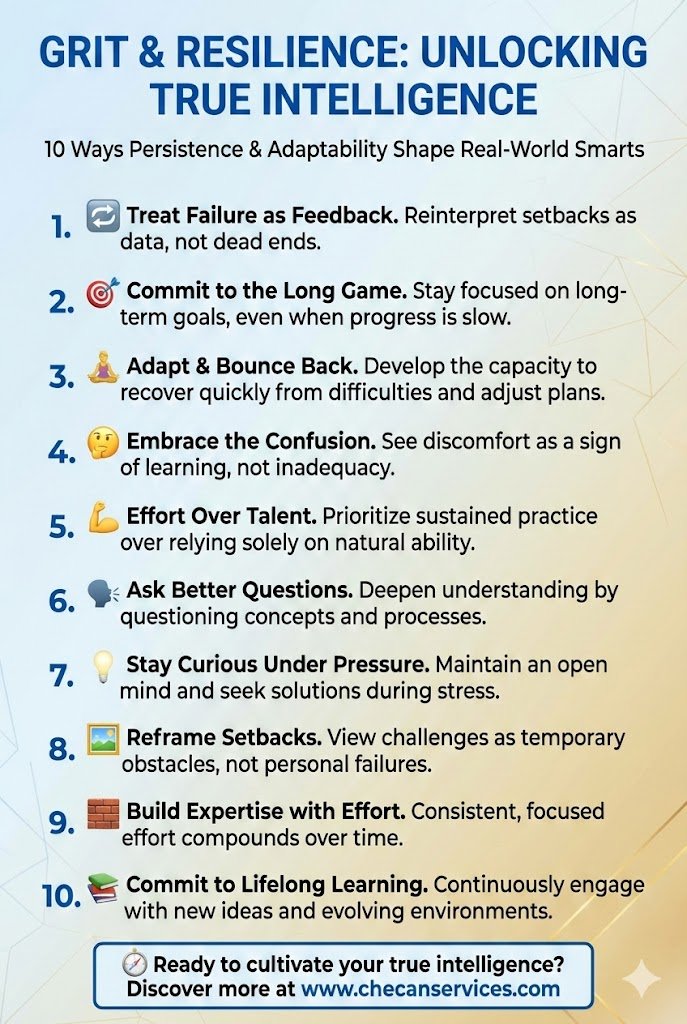
When we talk about intelligence, most people still picture IQ tests, grades, or raw brainpower. But in real life, intelligence often shows up in quieter, more persistent ways. It’s the student who keeps learning after failure, the professional who adapts when a plan collapses, or the creative who keeps refining an idea long after the initial excitement fades. This is where grit and resilience step into the spotlight.
Grit is the ability to stay committed to long-term goals, even when progress feels painfully slow. Resilience is the capacity to recover, adapt, and keep going after setbacks. Together, they form a powerful foundation for how intelligence actually functions in the real world.
Why Intelligence Needs More Than Talent
Natural ability can open doors, but grit determines whether you walk through them. Intelligence without persistence often stalls at the first obstacle. Think of learning a new skill like coding, writing, or public speaking. The early stages are uncomfortable. Mistakes pile up. Progress feels invisible. People who rely solely on “being smart” may quit when the learning curve bruises their confidence.
Gritty learners, on the other hand, treat confusion as part of the process. They revisit concepts, ask better questions, and stay engaged even when motivation dips. Over time, this sustained effort compounds, turning effort into expertise. Intelligence, in this sense, becomes less about speed and more about endurance.
Resilience as Cognitive Strength
Resilience plays a crucial role in how intelligence responds to stress and failure. When things go wrong, resilient individuals don’t see setbacks as proof of inadequacy. Instead, they interpret them as information. What didn’t work? What can be adjusted next time?
This mindset keeps the brain flexible. Rather than shutting down under pressure, resilient thinkers remain curious and adaptive. They are more likely to experiment, problem-solve, and innovate because failure doesn’t feel like a dead end. It feels like feedback.
In fast-changing environments—whether in careers, education, or personal growth—this adaptability is a form of intelligence that traditional tests rarely measure.
Grit, Resilience, and Lifelong Learning
One of the most forward-looking aspects of intelligence today is the ability to keep learning. Industries evolve, tools change, and knowledge becomes outdated faster than ever. Grit fuels the long-term commitment to learning, while resilience helps people navigate the frustration that comes with constant change.
For example, someone transitioning careers later in life may struggle initially. New terminology, unfamiliar systems, and self-doubt can creep in. Grit keeps them practicing. Resilience helps them reframe setbacks as temporary. Over time, their intelligence expands—not because they suddenly became “smarter,” but because they stayed engaged long enough to grow.
Key Takeaways
Intelligence isn’t just what you know or how quickly you understand something. It’s also how you respond when things get hard. Grit sustains effort. Resilience protects curiosity. Together, they transform challenges into opportunities for deeper thinking and long-term success.
As we continue to redefine what it means to be intelligent in a complex world, these qualities are no longer optional. They are essential.
If you’re interested in exploring personal growth, mindset, and resilience more deeply, you might enjoy the ebooks by Louise Blount available on Apple Books. Discover stories and insights designed to inspire persistence and inner strength by visiting https://books.apple.com/cz/author/louise-blount/id1785734643?see-all=books.