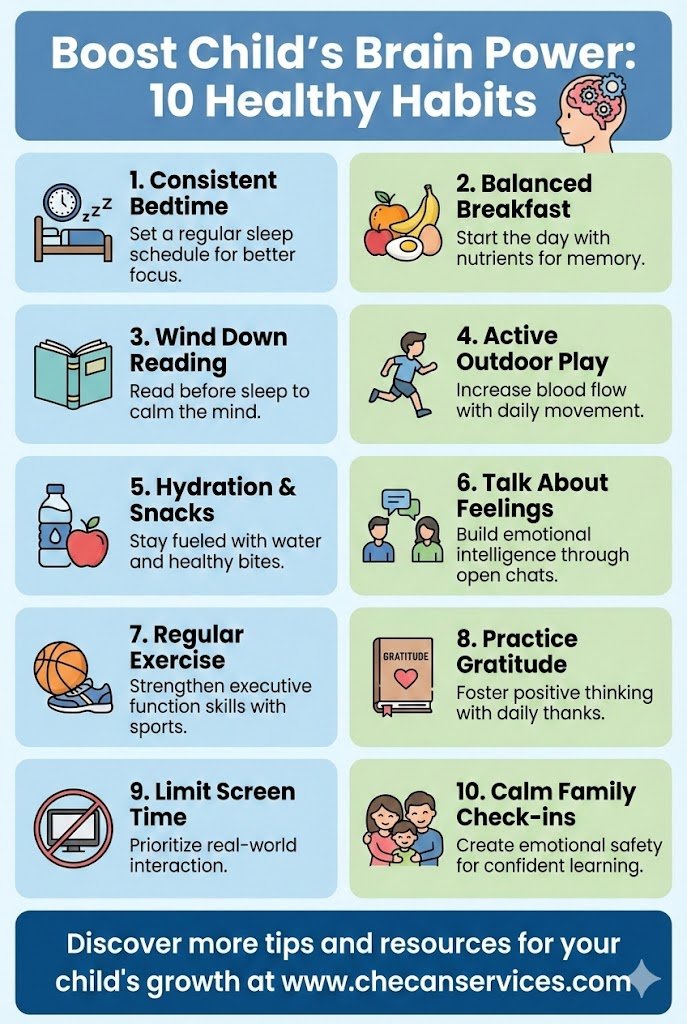
Parents often ask a simple but powerful question: how do everyday habits really affect a child’s ability to think, learn, and grow? The answer is encouraging. Healthy daily routines don’t just support physical growth—they actively shape children’s cognitive skills, from memory and attention to problem-solving and creativity.
Children’s brains are developing rapidly, especially in the early years. What they eat, how they sleep, how often they move, and even how they manage emotions all play a role in how effectively their brains process information. Let’s explore how small, consistent habits can make a big cognitive difference.
The Brain-Boosting Power of Sleep
Sleep is often underestimated, but it’s one of the strongest drivers of cognitive development. When children sleep well, their brains consolidate memories, strengthen neural connections, and prepare for learning the next day. A child who gets consistent, age-appropriate sleep is more likely to focus in class, follow instructions, and retain new information.
For example, a child with a predictable bedtime routine—such as reading a book and winding down without screens—often shows better attention spans and emotional regulation than one who sleeps irregularly.
Nutrition That Fuels Thinking
Healthy eating is not just about physical health; it directly feeds the brain. Nutrient-rich foods like whole grains, fruits, vegetables, eggs, and healthy fats support brain function and energy levels. Breakfast, in particular, matters. Children who eat a balanced breakfast tend to perform better on memory and problem-solving tasks compared to those who skip it.
Think of food as brain fuel. A steady supply of nutrients helps children stay mentally alert, curious, and ready to learn throughout the day.
Movement and Mental Sharpness
Physical activity plays a surprisingly important role in cognitive development. When children run, jump, climb, or play sports, blood flow to the brain increases, supporting learning and concentration. Active play has been linked to improved executive function—skills like planning, self-control, and flexible thinking.
Even short bursts of movement, such as outdoor play after school, can help children return to homework with better focus and creativity.
Emotional Habits Matter Too
Healthy daily habits also include emotional routines—like talking about feelings, practicing gratitude, or having calm family check-ins. These habits help children build emotional intelligence, which supports decision-making and social problem-solving. A child who feels emotionally safe is more confident exploring ideas, asking questions, and taking healthy learning risks.
Key Takeaways for Parents
Healthy habits don’t need to be complicated. Consistent sleep, nourishing meals, regular movement, and emotional support work together to strengthen children’s cognitive skills. Over time, these routines create a solid foundation for lifelong learning and resilience.
Looking Ahead
As our understanding of child development grows, one thing remains clear: small daily choices have lasting effects. By building healthy routines today, parents can help children grow into focused, curious, and confident learners tomorrow.
If you’re interested in exploring thoughtful, child-centered insights on growth, learning, and wellbeing, you may enjoy the inspiring ebooks available on Apple Books by Louise Blount. They’re a wonderful resource for parents looking to nurture both the mind and heart of their children.