If you’ve ever noticed how quickly children pick up words, accents, and even humor, you’ve already seen language exposure at work. From the first lullabies sung to a baby to the bedtime stories read years later, language quietly shapes how children think, reason, and understand the world. Intelligence doesn’t develop in isolation—it grows in conversation.
Language exposure isn’t just about how many words a child hears. It’s about how those words are shared. Rich, meaningful interactions give children mental tools they’ll use for problem-solving, creativity, and emotional understanding throughout life.
The Brain Grows Through Words
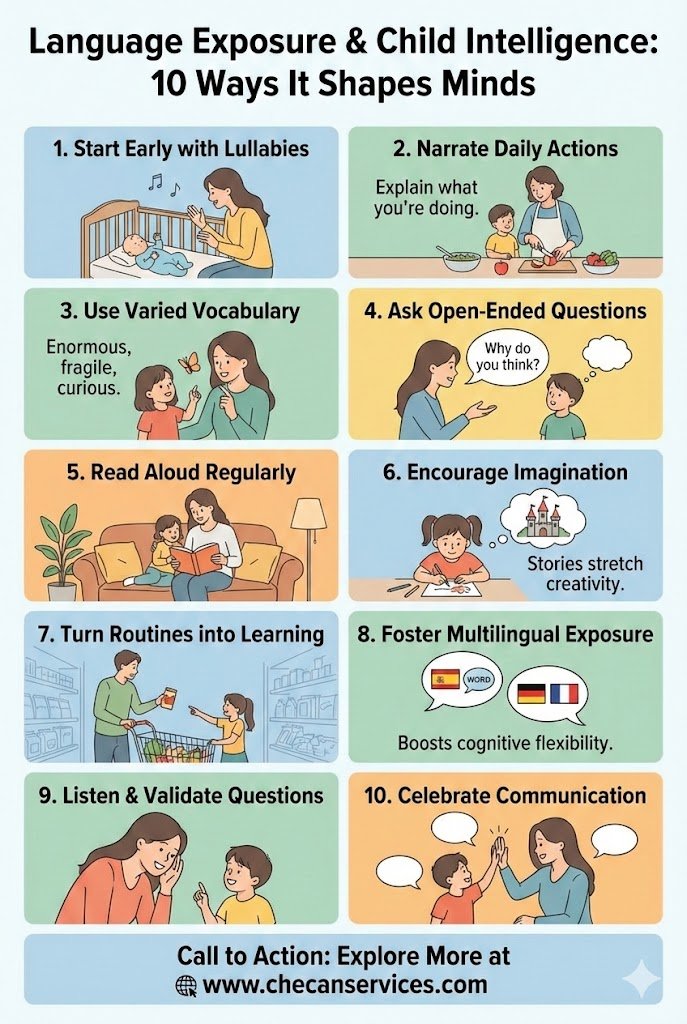
In early childhood, the brain is building connections at an astonishing rate. Each conversation, story, or question strengthens neural pathways linked to memory and reasoning. When adults describe what they’re doing—“I’m cutting the apple into slices”—children learn sequencing, categorization, and cause-and-effect thinking without realizing it.
Children exposed to varied vocabulary also tend to develop stronger comprehension skills. For example, a child who hears descriptive language like “enormous,” “fragile,” or “curious” gains more precise ways to understand experiences. That precision becomes the foundation for analytical thinking later in school.
Conversations Beat Commands
One of the most powerful forms of language exposure is back-and-forth conversation. Asking open-ended questions like, “Why do you think that happened?” encourages children to explain their reasoning. This doesn’t just build language skills—it sharpens intelligence by teaching children how to organize thoughts and make connections.
Even everyday moments count. Talking about groceries at the store or narrating a walk in the park turns routine activities into mini learning sessions. Children who experience this kind of interactive language often show stronger attention spans and better problem-solving abilities.
Stories, Books, and Imagination
Reading aloud deserves special attention. Stories expose children to ideas beyond their immediate environment, stretching imagination and empathy. When children hear narratives, they learn to follow plots, anticipate outcomes, and understand different perspectives—all key components of intelligence.
Multilingual exposure adds another layer. Children who grow up hearing more than one language often develop greater cognitive flexibility. Switching between languages exercises the brain, improving skills like focus and mental adaptability.
Key Takeaways for Parents and Caregivers
Language exposure doesn’t require perfection or expensive tools. It thrives on presence and curiosity. Talk often, listen closely, and invite children into conversations. Celebrate their questions, even when answers aren’t obvious. Every word shared is an investment in how they think, learn, and grow.
Looking Ahead
As our world becomes more communication-driven, children who grow up immersed in rich language environments are better prepared to navigate complexity. By fostering thoughtful conversations today, we’re helping shape the intelligent, confident thinkers of tomorrow.
If you’re inspired to deepen your understanding of personal growth, learning, and human potential, explore the thoughtfully written ebooks by Louise Blount available on Apple Books. Discover stories and insights that complement a lifelong love of learning by browsing her collection here.