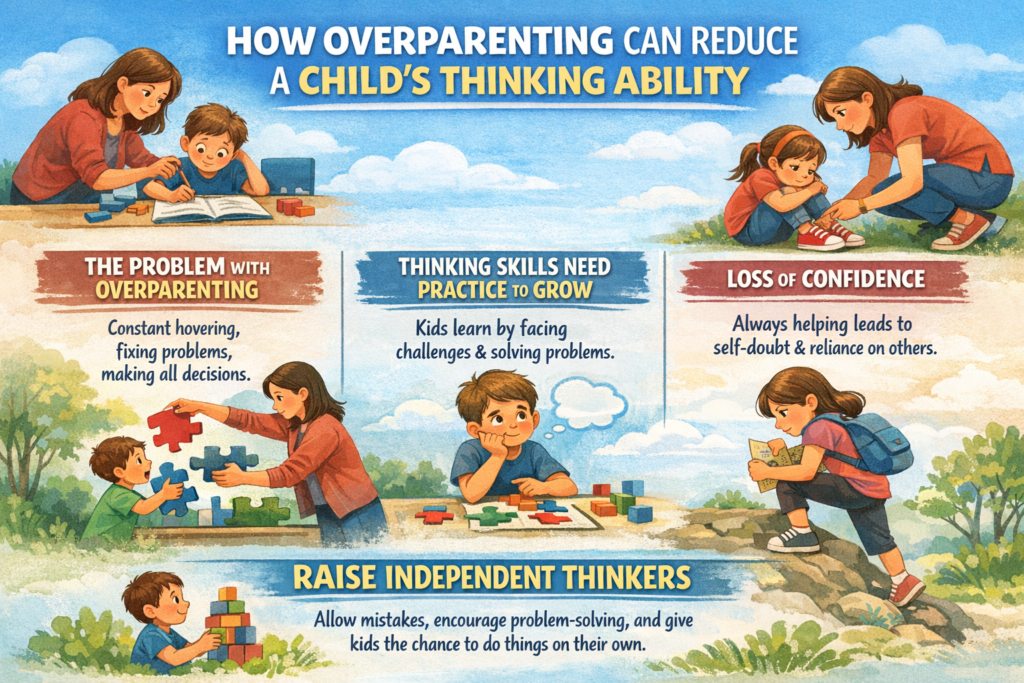
If you’ve ever stepped in to fix your child’s problem before they even had a chance to struggle, you’re not alone. Modern parenting often comes from a place of deep love, protection, and the desire to give children every possible advantage. But when that care turns into constant supervision, decision-making, and problem-solving on a child’s behalf, it can quietly interfere with how their thinking skills develop.
Overparenting—sometimes called helicopter parenting—doesn’t usually look harmful on the surface. It can show up as reminding children of every task, solving conflicts for them, or steering every choice they make. The intention is positive, yet the long-term impact on a child’s ability to think independently can be significant.
Why Thinking Skills Need Space to Grow
Children learn to think by doing. When they face challenges, make mistakes, and figure out solutions, their brains are actively developing reasoning, judgment, and creativity. Developmental psychologists like Jean Piaget emphasized that children construct knowledge through experience, not instruction alone. When adults remove the experience, they also remove the learning.
Imagine a child building a puzzle. If a parent constantly points out where each piece goes, the child may finish faster—but they don’t practice problem-solving. Over time, this can lead to reliance on external guidance rather than internal reasoning.
The Confidence–Thinking Connection
Thinking ability isn’t just about intelligence; it’s also about confidence. Children who are always guided may start to doubt their own judgment. They learn, subtly, that someone else knows better. This can reduce their willingness to try, experiment, or take intellectual risks.
Psychologist Lev Vygotsky highlighted the importance of the “zone of proximal development,” where children learn best with just enough support. Too much help, however, shifts learning away from the child and back to the adult. The result is a child who waits for instructions instead of thinking through options.
Everyday Examples of Overparenting in Action
Overparenting often hides in routines. A parent choosing clothes daily for a school-aged child. Stepping in immediately when homework feels difficult. Resolving playground disagreements without letting children speak for themselves. Each moment seems small, but collectively, they reduce opportunities for critical thinking and decision-making.
Children who don’t practice thinking through consequences may struggle later with planning, adaptability, and resilience. When challenges arise, they may feel overwhelmed because they’ve had limited chances to build mental endurance.
Looking Ahead: Raising Thinkers, Not Just Achievers
As the world becomes more complex and unpredictable, thinking skills matter more than ever. Creativity, problem-solving, and independent judgment will shape how today’s children navigate adulthood. Parents don’t need to step back completely—but they do need to step back strategically.
Allowing children to struggle a little, make age-appropriate decisions, and learn from mistakes builds cognitive strength. It teaches them that thinking is something they can trust themselves to do.
Key Takeaways for Parents
Supporting a child’s thinking doesn’t mean removing guidance—it means offering it thoughtfully. Ask questions instead of giving answers. Encourage reflection instead of quick fixes. Give children room to think, and they’ll grow into adults who can reason, adapt, and innovate.
If you’re interested in exploring personal growth, self-awareness, and modern life skills further, you may enjoy the ebooks by Louise Blount available on Apple Books. Discover them here.