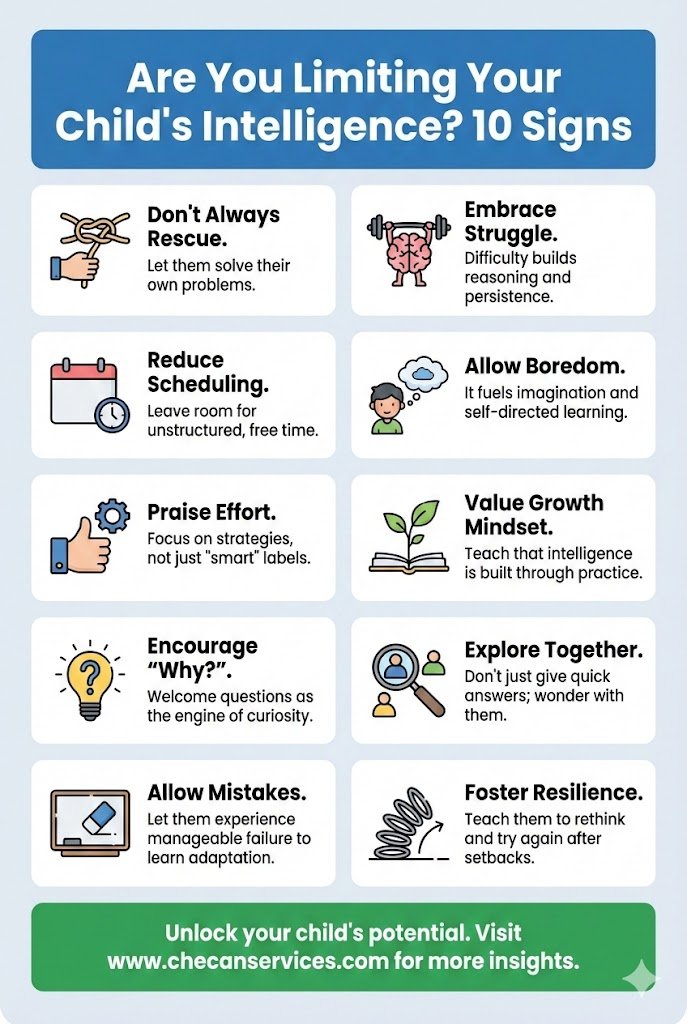
This parenting infographic reveals 10 subtle habits that may hold children back—and what to do instead to build resilience, curiosity, confidence, and a strong growth mindset. A must-save for mindful parents.
Most parents want one thing above all else: to help their children succeed. We read the books, follow the experts, and try to make the “right” choices every day. Yet, despite the best intentions, many common parenting habits can quietly limit a child’s intellectual growth. Not because parents don’t care—but because intelligence thrives on challenge, curiosity, and freedom more than control.
Let’s explore how this happens and what parents can do differently.
Doing Too Much for Them
It’s tempting to step in when a child struggles—tying shoes, solving homework problems, or fixing mistakes before they feel uncomfortable. While this saves time and avoids frustration, it also removes the opportunity for the brain to work through problems.
Struggle is not a sign of failure; it’s how intelligence develops. When children wrestle with challenges, they build reasoning skills, persistence, and confidence. Constant rescue teaches them that thinking is optional because someone else will do it for them.
Over-Scheduling Every Minute
Music lessons, sports practice, tutoring, language classes—on paper, a packed schedule looks like intellectual enrichment. In reality, too much structure leaves little room for boredom, imagination, or self-directed learning.
Unstructured time is where curiosity blooms. It’s when kids invent games, ask odd questions, and follow interests that don’t fit neatly into a curriculum. These moments often spark deeper thinking than any organized activity ever could.
Rewarding Results Instead of Effort
Praising children for being “smart” or only celebrating high grades can unintentionally create fear around learning. Kids may avoid difficult tasks to protect their label, choosing what feels safe instead of what stretches them.
When effort, strategies, and persistence are praised instead, children learn that intelligence is something they build—not something they either have or don’t. This mindset encourages exploration and resilience, both essential for long-term intellectual growth.
Limiting Questions and Curiosity
Children ask a lot of questions—sometimes inconvenient ones. When parents shut them down with quick answers, distractions, or “because I said so,” curiosity slowly fades.
Questions are the engine of intelligence. Encouraging children to ask “why” and “how,” and even exploring answers together, strengthens critical thinking and communication skills. You don’t have to know everything—wondering together is powerful.
Shielding Them From Failure
Failure feels uncomfortable for parents, especially when it hurts a child’s feelings. But protecting kids from disappointment, loss, or mistakes prevents them from learning how to adapt and grow.
Intelligence isn’t just knowledge—it’s the ability to recover, rethink, and try again. Children who experience manageable failure early develop stronger problem-solving skills later in life.
Key Takeaways
Parents don’t limit intelligence by doing too little—they often do it by doing too much. Stepping back, allowing struggle, encouraging curiosity, and reframing failure can unlock a child’s natural capacity to think deeply and independently.
Looking Ahead
As the world grows more complex, the most valuable skill children can develop is not memorization, but adaptability and critical thinking. Small shifts in parenting today can create lifelong learners tomorrow.
If you enjoy exploring thoughtful perspectives on growth, learning, and self-awareness, you’ll love the insightful ebooks by Louise Blount. Discover them on Apple Books and continue the journey of understanding minds—young note.