If there’s one habit that quietly shapes a child’s future, it’s reading aloud. Long before children can recognize letters or sound out words, their brains are already wiring themselves based on what they hear, see, and feel. Reading aloud to young children isn’t just a cozy bedtime ritual—it’s a powerful driver of brain development that supports language, thinking, and emotional connection in ways few other activities can.
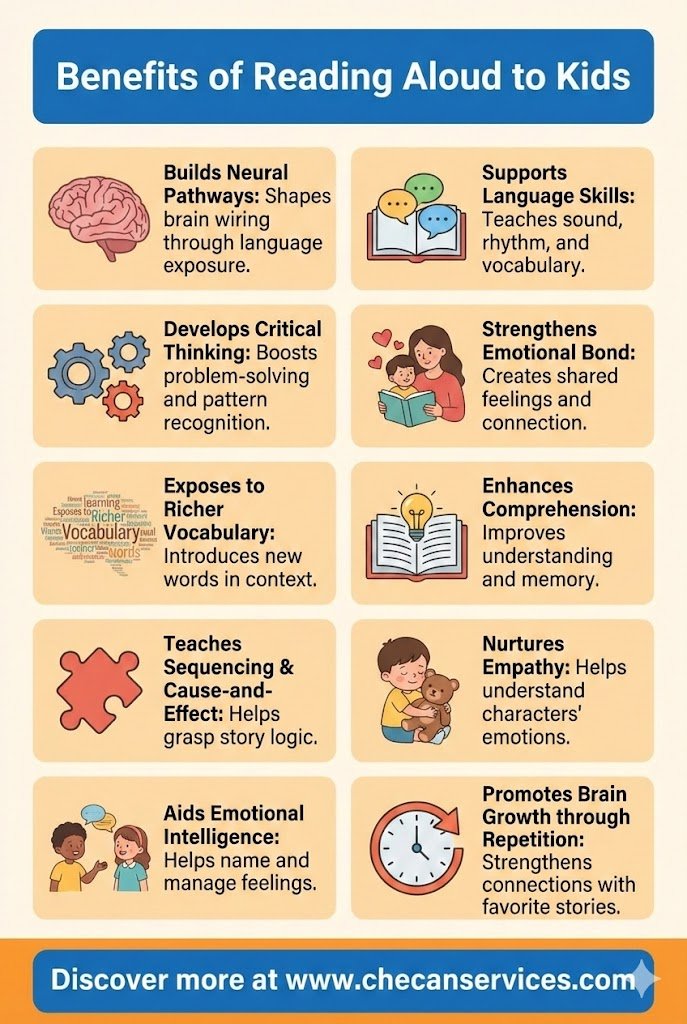
When you read aloud, you’re essentially giving a child’s brain a workout. The rhythm of language, the rise and fall of your voice, and the repeated exposure to words all help build neural pathways. These pathways become the foundation for future skills like reading independently, problem-solving, and even social communication.
Building Language and Cognitive Skills Early
Young children learn language by hearing it used in meaningful ways. Reading aloud exposes them to richer vocabulary than everyday conversation typically does. Words like “enormous,” “curious,” or “disappointed” may not come up at the dinner table, but they show up often in stories. Over time, children begin to understand these words through context, strengthening comprehension and memory.
Stories also help children grasp sequencing and cause-and-effect. When a character faces a challenge and finds a solution, a child’s brain starts recognizing patterns. This kind of narrative thinking later supports math skills, logical reasoning, and creative problem-solving.
Strengthening Emotional and Social Development
Reading aloud isn’t only about words—it’s about connection. Sitting together with a book creates a shared emotional experience. Children learn to read facial expressions, interpret emotions, and understand empathy as they follow characters through different situations.
For example, when a character feels scared on the first day of school, a child may relate and feel reassured knowing others experience the same emotions. This helps children name their feelings and develop emotional intelligence, a skill that’s just as important as academic success.
Supporting Brain Growth Through Repetition and Routine
Young brains thrive on repetition. Hearing favorite stories again and again strengthens neural connections and builds confidence. Each rereading allows children to notice new details, predict what comes next, and even “read” along from memory. These small moments are signs of a brain actively organizing information and preparing for literacy.
Making reading aloud part of a daily routine—before naps, bedtime, or quiet play—signals safety and consistency. That sense of security allows the brain to focus on learning and growth.
Key Takeaways for Parents and Caregivers
Reading aloud doesn’t require special training or expensive materials. A simple picture book, your voice, and a few uninterrupted minutes can make a lasting impact. Asking questions, pointing to pictures, or letting children turn pages keeps them engaged and deepens understanding.
Most importantly, reading aloud sends a powerful message: learning is enjoyable, comforting, and shared.
Looking Ahead
As children grow, the benefits of reading aloud continue to ripple outward—supporting independent reading, academic confidence, and a lifelong love of stories. If you’re looking for engaging, thoughtfully written books that support early learning and connection, explore the beautifully crafted ebooks by Louise Blount on Apple Books. You can discover them here: https://books.apple.com/cz/author/louise-blount/id1785734643?see-all=books. These stories are a wonderful addition to any read-aloud routine and an easy way to invest in your child’s growing mind.