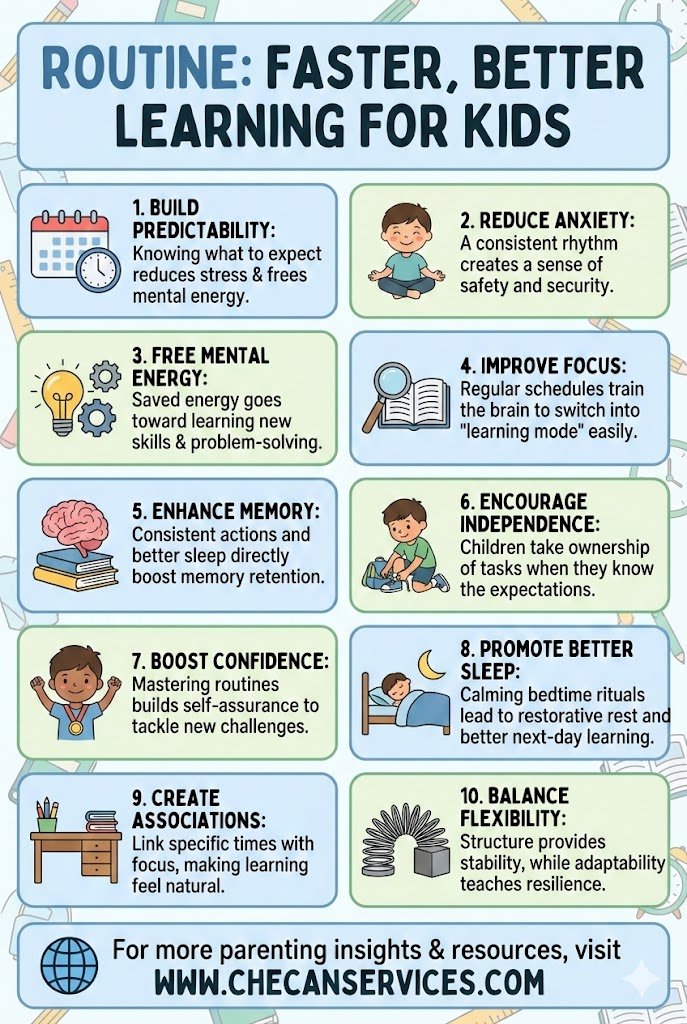
If you’ve ever noticed how kids seem calmer—and even smarter—when their days follow a familiar rhythm, you’re not imagining it. Routine plays a powerful role in how children learn, process information, and grow emotionally. Far from being boring or restrictive, a consistent routine gives kids the structure they need to explore, experiment, and learn with confidence.
So why does routine make such a big difference? Let’s break it down in a way that’s practical, relatable, and forward-looking.
Routine Builds a Strong Learning Foundation
Children thrive on predictability. When they know what comes next—wake up, breakfast, school, homework, play, bedtime—their brains don’t have to spend energy guessing or worrying. That saved mental energy can then be used for learning new skills, understanding lessons, and solving problems.
For example, a child who always does homework at the same time each afternoon quickly associates that time with focus and productivity. Over time, concentration becomes easier, and learning happens faster. Routine essentially trains the brain to switch into “learning mode” without resistance.
Less Stress, Better Focus
Uncertainty can be stressful for kids, even if they can’t always express it. A predictable routine reduces anxiety by creating a sense of safety. When children feel secure, they’re more willing to ask questions, make mistakes, and try again—all essential parts of learning.
Think about bedtime routines. A child who follows the same calming steps each night—bath, story, lights out—falls asleep more easily and gets better rest. Better sleep directly impacts memory, attention, and overall learning ability the next day.
Routines Encourage Independence
Another hidden benefit of routine is independence. When children know what’s expected of them, they start taking ownership of their tasks. A morning routine might begin with reminders, but soon your child is brushing their teeth or packing their bag without being asked.
This independence boosts confidence. Confident kids are more likely to engage in learning, participate in class, and challenge themselves academically.
Flexibility Still Matters
Routine doesn’t mean rigidity. Life happens, and kids also need to learn adaptability. The goal is a balanced routine—one that provides structure but allows flexibility when needed. When children understand the “normal flow” of their day, they cope better with changes because they have a stable baseline to return to.
Key Takeaways
Routine helps kids learn faster and better by reducing stress, improving focus, supporting independence, and strengthening memory. It turns everyday activities into learning opportunities and creates an environment where children feel safe enough to grow. As education continues to evolve, one thing remains constant: children learn best when their world feels organized, predictable, and supportive.
If you’re interested in deeper insights into nurturing young minds, storytelling, and thoughtful parenting perspectives, explore the inspiring ebooks by Louise Blount available on Apple Books. They offer engaging reads that subtly support learning, creativity, and emotional growth—perfect companions for parents who want to raise confident learners.