Storytelling has always been part of how humans make sense of the world. Long before classrooms, textbooks, or even written language, people used stories to teach lessons, share experiences, and spark imagination. Today, storytelling still plays a powerful role—especially when it comes to improving creativity and cognitive development in both children and adults.
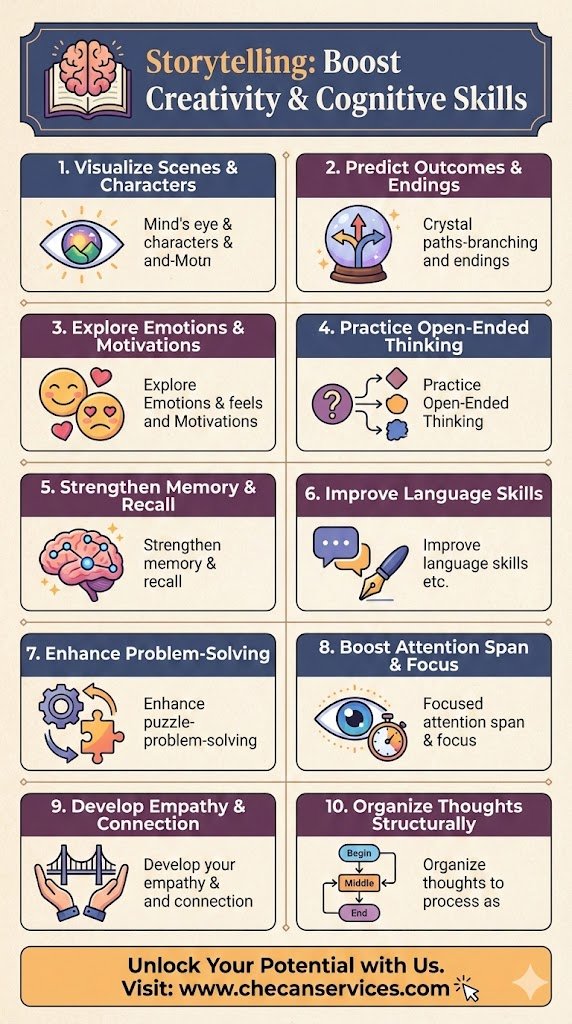
At its core, storytelling invites the brain to work in complex and exciting ways. When we listen to or create a story, we’re not just absorbing words. We’re visualizing scenes, predicting outcomes, interpreting emotions, and connecting ideas. All of this mental activity strengthens the brain’s ability to think creatively and critically.
Storytelling as a Creativity Catalyst
Creativity thrives on imagination, and storytelling is imagination in action. When someone hears a story, their mind fills in the details—what the characters look like, how the setting feels, and what might happen next. This active participation encourages flexible thinking and originality.
For example, when children are asked to create their own endings to a story, they learn that there isn’t just one “right” answer. This open-ended thinking builds confidence in their ideas and nurtures creative risk-taking. Adults experience the same benefit when journaling, writing fiction, or even sharing personal stories; storytelling becomes a safe space to explore new perspectives.
Cognitive Development Through Narrative Thinking
From a cognitive standpoint, storytelling strengthens memory, language skills, and problem-solving abilities. Stories naturally follow a structure—beginning, middle, and end—which helps the brain organize information more effectively. This structure supports comprehension and recall, making it easier to learn and retain new concepts.
Listening to stories also enhances attention span and emotional intelligence. When we follow a character’s journey, we practice empathy by understanding different motivations and feelings. This emotional engagement activates multiple areas of the brain, reinforcing neural connections that support learning and reasoning.
In educational settings, storytelling often transforms abstract ideas into relatable experiences. A historical event becomes more memorable when framed as a story about real people. A scientific concept sticks better when explained through a narrative that shows cause and effect in action.
Storytelling in Everyday Life
You don’t need to be a professional writer to benefit from storytelling. Everyday moments—sharing memories at the dinner table, reading bedtime stories, or even explaining a work challenge as a narrative—can sharpen cognitive skills. These small habits reinforce communication abilities and help the brain practice organizing thoughts clearly and creatively.
Digital storytelling has expanded these benefits even further. Podcasts, audiobooks, and interactive stories allow people to engage with narratives in new ways, keeping storytelling relevant in a fast-paced, tech-driven world.
Key Takeaways
Storytelling improves creativity by encouraging imagination, originality, and flexible thinking. It supports cognitive development by enhancing memory, language, emotional awareness, and problem-solving skills. Whether used in education, personal growth, or everyday conversation, storytelling remains one of the most powerful tools for mental development.
Looking Ahead
As creativity becomes increasingly valuable in education and the workplace, storytelling will continue to play a central role. Encouraging storytelling—especially from an early age—helps build minds that are curious, empathetic, and adaptable.
If you’re inspired to explore storytelling more deeply, discover beautifully written ebooks that celebrate imagination and personal growth. Browse the collection by Louise Blount on Apple Books and let stories spark your creativity.