If you’ve ever felt a little silly chatting away to a baby who can’t answer back, you’re not alone. But here’s the reassuring truth: talking to babies isn’t just sweet—it’s one of the most powerful ways to build smarter, healthier brains. From birth (and even before), babies are wired to learn from language, tone, and human connection.
What’s fascinating is that babies don’t need perfectly structured sentences or flashcards. They need you. Your voice, your expressions, your everyday words all help shape how their brains grow and organize themselves.
Why Baby Talk Matters More Than You Think
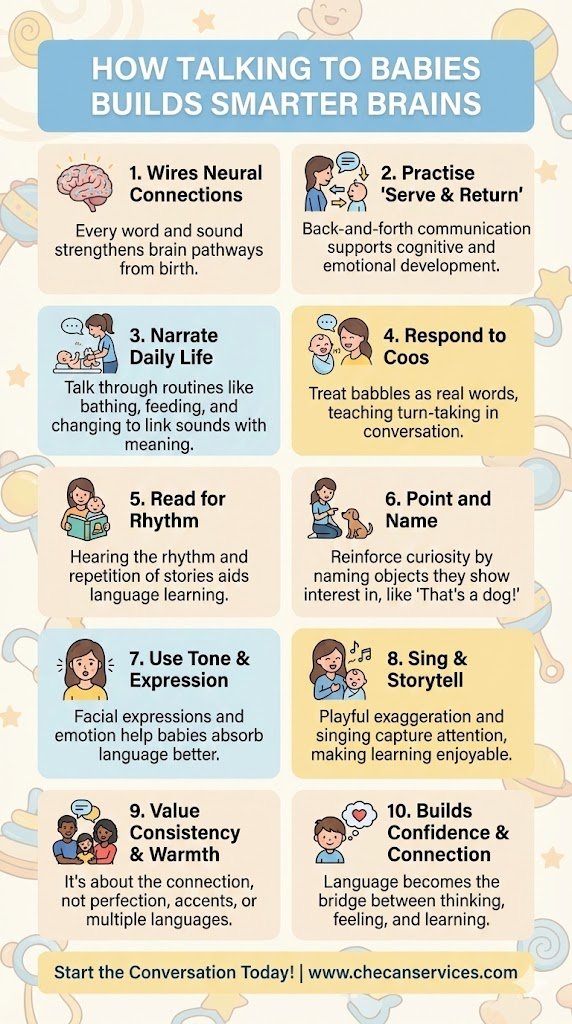
A baby’s brain grows at an astonishing pace during the first few years of life. Neural connections are being formed every second, and language plays a huge role in strengthening those pathways. Studies from Harvard University have shown that frequent back-and-forth communication—often called “serve and return”—supports cognitive development, emotional regulation, and future learning.
When you describe what you’re doing (“I’m pouring the milk”), respond to a baby’s coos, or narrate a walk in the park, you’re helping their brain link sounds with meaning. Over time, those simple interactions lay the groundwork for vocabulary, memory, and even problem-solving skills later in life.
Everyday Moments That Build Language
The good news? You don’t need extra time or special tools. Language learning happens in ordinary moments:
- During routines: Bath time, feeding, diaper changes—talk through what’s happening.
- While reading: Even if they don’t understand the story, hearing rhythm and repetition matters.
- In conversation: Pause and respond to babbles as if they’re real words. Babies learn turn-taking this way.
For example, when a baby points and babbles at a dog, saying “Yes, that’s a dog! The dog is walking,” reinforces curiosity and language at the same time. These small exchanges add up quickly.
It’s Not Just Words—It’s Connection
Tone, facial expressions, and emotion all influence how language is absorbed. Babies learn best when they feel safe and engaged. Singing, storytelling, and playful exaggeration (yes, even classic baby talk) capture attention and make learning enjoyable.
Importantly, it’s not about perfection. Accents, multiple languages, and varied speech patterns all enrich a baby’s experience. What matters most is consistency and warmth.
Key Takeaways for Parents and Caregivers
Talking to babies builds more than vocabulary—it builds confidence, curiosity, and connection. By simply narrating life and responding with interest, you’re giving a child tools they’ll use for a lifetime. Language becomes the bridge between thinking, feeling, and learning.
Looking Ahead
As research continues to uncover how early experiences shape the brain, one message stays clear: words matter. The conversations you start today help shape how a child understands the world tomorrow. And it all begins with something wonderfully simple—talking.
If you enjoy thoughtful insights on childhood development, relationships, and emotional growth, you’ll love exploring the ebooks by Louise Blount on Apple Books. Discover stories and reflections that stay with you long after the last page.
👉 Explore Louise Blount’s ebooks on Apple Books