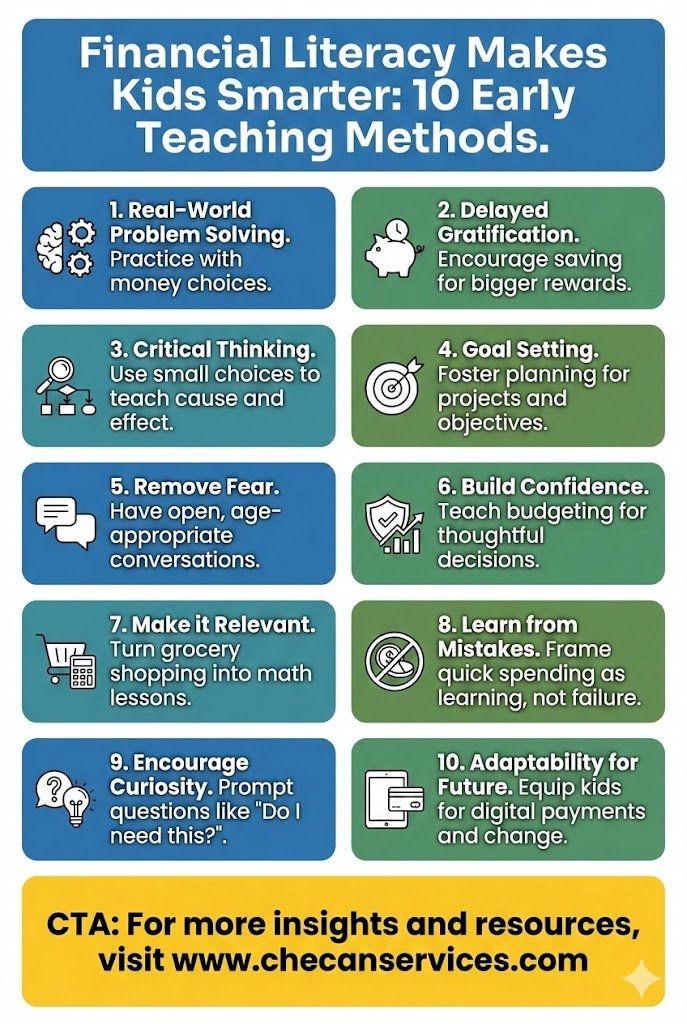
What if one of the smartest things we could teach kids had nothing to do with test scores or homework? Financial literacy—understanding money, saving, spending, and planning—is one of those life skills that quietly shapes confidence, decision-making, and long-term success. Teaching it early doesn’t just prepare kids for adulthood; it actually helps them become sharper thinkers right now.
Money Lessons Build Brain Power
When kids learn about money, they’re practicing real-world problem-solving. Deciding whether to save allowance for a bigger reward or spend it now strengthens critical thinking and delayed gratification—skills linked to academic and emotional intelligence. These small choices teach cause and effect in a way worksheets rarely do.
For example, a child who saves for a toy learns patience, goal-setting, and basic math without even realizing it. That same mindset transfers to schoolwork: planning ahead for projects, breaking tasks into steps, and understanding that effort today pays off tomorrow.
Confidence Comes From Understanding
Money can feel intimidating—even for adults. When kids grow up with open, age-appropriate conversations about finances, it removes fear and mystery. A child who understands how budgeting works is more likely to ask questions, make thoughtful choices, and feel confident navigating everyday situations.
Imagine a teen who already knows how to track expenses or compare prices. That confidence spills into other areas of life, from managing time to making healthier social decisions. Financial literacy doesn’t just teach kids how to handle money; it teaches them how to think independently.
Real-Life Examples Make Learning Stick
Kids learn best when lessons feel relevant. Turning everyday moments into teachable opportunities makes financial literacy natural and engaging. Grocery shopping becomes a math lesson. Saving for a family outing introduces planning. Even mistakes—like spending too quickly—become valuable learning moments rather than failures.
These experiences encourage curiosity and adaptability. Kids start asking smarter questions: “Do I really need this now?” or “What happens if I save instead?” Those questions signal growing awareness and maturity.
Preparing Kids for a Changing Future
The world kids are growing into looks very different from the one we knew. Digital payments, online shopping, and new career paths mean financial decisions come earlier and faster. Teaching financial literacy early equips kids with flexible thinking skills that help them adapt to change.
More importantly, it sets the foundation for lifelong learning. Kids who understand money basics are better prepared to learn about investing, entrepreneurship, and financial independence later on—topics that increasingly shape modern success.
Key Takeaways
Teaching financial literacy early helps kids develop critical thinking, confidence, and real-world problem-solving skills. It transforms everyday moments into powerful lessons and prepares children for a future where smart decisions matter more than ever.
If you’re looking to explore thoughtful, practical insights that support personal growth and smarter life choices, you’ll enjoy the inspiring ebooks by Louise Blount available on Apple Books. They’re a great resource for anyone interested in building knowledge that truly lasts.