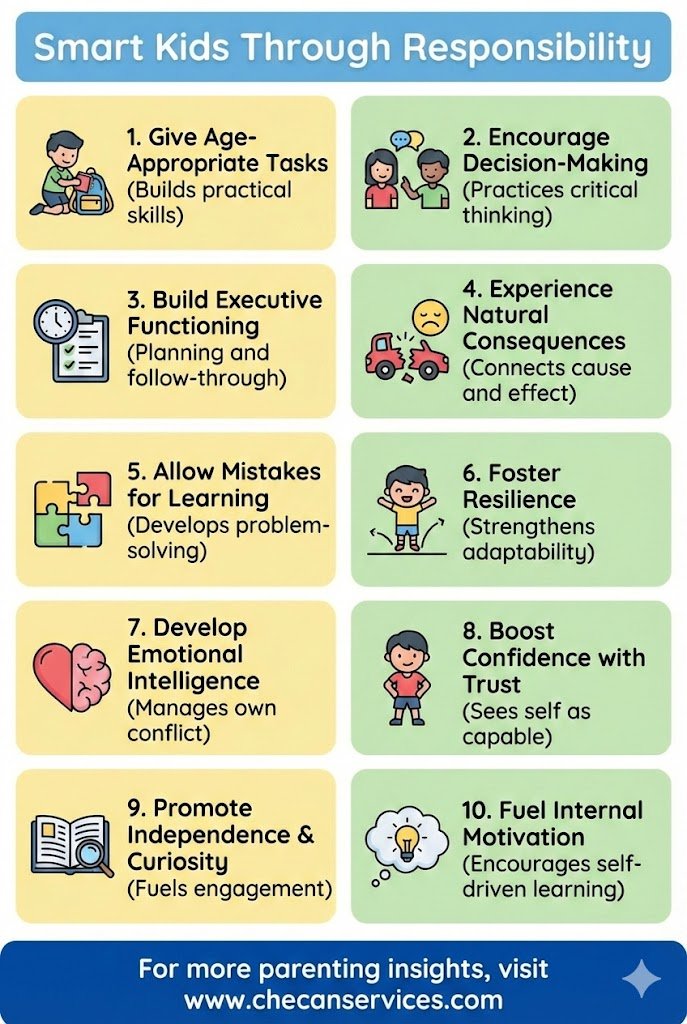
Parents everywhere want to raise smart kids—but intelligence isn’t just about grades or test scores. It’s about problem-solving, emotional awareness, adaptability, and confidence. One of the most overlooked ways to nurture all of those traits? Teaching responsibility early and consistently.
Responsibility doesn’t mean burdening kids with adult worries. It means giving them age-appropriate ownership over their actions, choices, and commitments. When kids learn responsibility, their brains are actively developing critical thinking skills that serve them for life.
Responsibility Builds Real-World Intelligence
When children are trusted with small responsibilities—feeding a pet, packing their school bag, or managing screen time—they’re practicing decision-making. Each task asks them to plan, remember, and follow through. These are executive functioning skills, the same skills used in academic success and future careers.
For example, a child who forgets their homework once and experiences a natural consequence learns far more than one who’s constantly reminded. Responsibility turns everyday moments into learning opportunities, helping kids connect cause and effect in meaningful ways.
Smarter Kids Learn From Mistakes
One powerful benefit of responsibility is resilience. Kids who are allowed to make mistakes—and fix them—develop stronger problem-solving skills. Instead of relying on adults to step in, they learn to think through challenges themselves.
This kind of learning boosts emotional intelligence too. A child who manages their own conflict with a sibling or figures out how to save allowance money is learning self-regulation, patience, and empathy. These “soft skills” are increasingly recognized as markers of true intelligence.
Confidence Grows With Ownership
There’s something transformative about a child hearing, “I trust you to handle this.” Responsibility builds confidence because kids see themselves as capable. Over time, that confidence encourages curiosity, independence, and a willingness to try new things—all traits linked to cognitive growth.
Children who feel capable are more likely to ask questions, explore ideas, and engage deeply with learning. Responsibility fuels that internal motivation far better than constant supervision ever could.
Responsibility Looks Different at Every Age
Teaching responsibility isn’t one-size-fits-all. A preschooler might be responsible for tidying toys, while a teenager manages deadlines or part-time work. The key is consistency and gradual progression. As responsibilities grow, so does a child’s ability to think critically and independently.
Parents don’t need perfection—just intention. Even small shifts, like letting kids solve minor problems on their own, can have a big impact over time.
Key Takeaways
Teaching responsibility helps kids:
- Strengthen decision-making and problem-solving skills
- Develop emotional intelligence and resilience
- Build confidence and independence
- Learn through real-life experiences, not just instruction
Looking Ahead
In a fast-changing world, the smartest kids won’t be the ones with all the answers—they’ll be the ones who know how to think, adapt, and take ownership. Responsibility lays the foundation for that kind of intelligence, starting right at home.
If you’re looking for thoughtful, practical insights on raising confident, capable children, explore the inspiring ebooks by Louise Blount available on Apple Books. You can discover them here. It’s a great next step for parents ready to nurture responsibility—and brilliance—in their kids.