Every parent wants to give their toddler the best possible start in life. The good news? You don’t need expensive toys or complicated programs to support early brain development. Many everyday activities you’re probably already doing can naturally boost toddler intelligence—when done with intention and consistency.
Toddlers learn best through play, movement, and connection. Their brains are forming millions of neural connections each day, and simple routines can help strengthen memory, language, problem-solving, and emotional intelligence. Let’s explore how ordinary moments can become powerful learning opportunities.
Talk, Sing, and Read—All Day Long
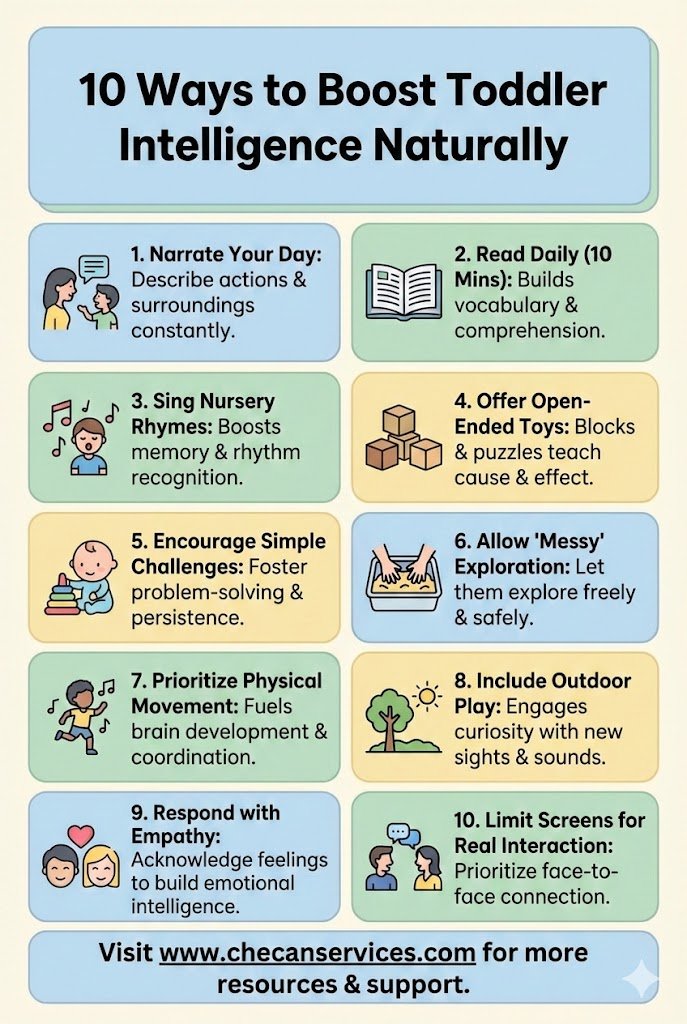
Language exposure is one of the strongest predictors of cognitive development. Narrate your day as you go—describe what you’re cooking, name colors while folding laundry, or talk about what you see outside.
Reading daily, even for just 10 minutes, builds vocabulary and comprehension skills. Singing nursery rhymes boosts memory and rhythm recognition, while repetition helps toddlers anticipate patterns. Don’t worry about reading perfectly—enthusiasm matters more than precision.
Encourage Hands-On Play and Exploration
Open-ended play is a brain builder. Blocks, puzzles, and sorting games help toddlers understand cause and effect, shapes, and spatial relationships. Let your child explore freely—even if it gets messy.
Simple challenges like stacking cups or fitting puzzle pieces encourage problem-solving and persistence. Resist the urge to “fix” things quickly; allowing toddlers to struggle a little helps strengthen executive function and confidence.
Move the Body to Grow the Brain
Physical movement fuels brain development. Activities like dancing, climbing, running, and balancing improve coordination while supporting attention and emotional regulation.
Outdoor play adds another layer of stimulation—new textures, sounds, and sights engage curiosity and sensory processing. Even a daily walk can spark conversation and observation skills.
Build Emotional Intelligence Through Connection
Toddlers learn intelligence not just from thinking—but from feeling. Responding to emotions with empathy (“I see you’re frustrated”) helps children develop self-awareness and emotional regulation.
Daily routines like shared meals, bedtime chats, and gentle transitions provide predictability, which strengthens memory and security. A calm, connected toddler is far more open to learning.
Limit Screens and Prioritize Real Interaction
While some educational content can be helpful, real-world interaction is far more powerful. Face-to-face conversations, hands-on play, and responsive caregiving activate multiple areas of the brain at once—something screens simply can’t replicate.
Key Takeaways for Parents
Boosting toddler intelligence doesn’t require perfection—just presence. Talking more, playing freely, moving often, and connecting emotionally all work together to shape a curious, capable young mind. These small daily habits compound over time, creating a strong foundation for lifelong learning.
If you’re looking for gentle, practical guidance to support early childhood development, you may enjoy the thoughtfully written ebooks by Louise Blount, available on Apple Books. They’re designed for parents who want to nurture intelligence naturally—without pressure or overwhelm. 👉 Explore the ebooks on Apple Books