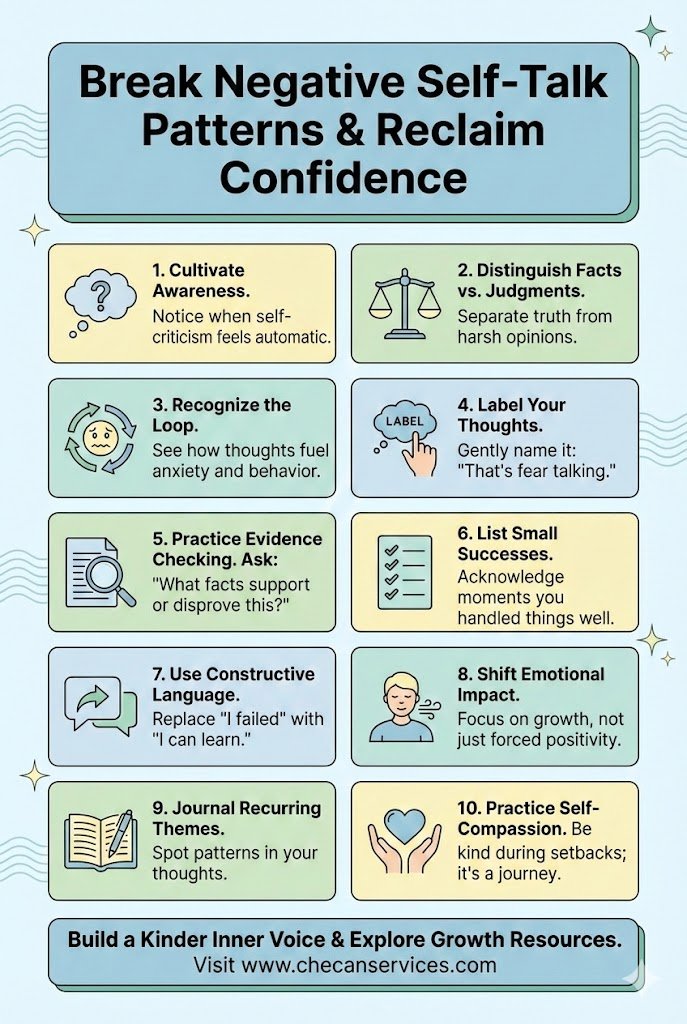
Negative self-talk is one of those quiet habits that sneaks into everyday life. It shows up as that inner voice saying “I’m not good enough,” “I always mess this up,” or “Why even try?” Over time, these thoughts don’t just affect mood—they shape behavior, confidence, and the choices we make. The good news? Negative self-talk isn’t permanent, and it can be unlearned.
Breaking negative self-talk patterns starts with awareness. Most of us don’t realize how often we criticize ourselves because the thoughts feel automatic. For example, you might miss a deadline and instantly think, “I’m so irresponsible.” That thought may feel factual, but it’s actually a judgment—not the truth. The truth might simply be, “I underestimated how long this task would take.” That distinction matters more than it seems.
Understanding Where Negative Self-Talk Comes From
Negative self-talk often develops early, shaped by past experiences, social expectations, or repeated criticism. Over time, the brain treats these thoughts as shortcuts—fast, familiar, and unquestioned. Unfortunately, familiar doesn’t mean helpful.
Imagine preparing for a presentation and thinking, “Everyone will notice how nervous I am.” That thought raises anxiety, which then makes the presentation harder. The pattern reinforces itself. Recognizing this loop is the first step toward changing it.
Practical Ways to Interrupt the Pattern
One effective strategy is thought labeling. When a negative thought appears, label it gently: “That’s self-criticism,” or “That’s fear talking.” This creates space between you and the thought, reminding you that you are not the thought itself.
Another approach is evidence checking. Ask yourself: What facts support this thought? What facts don’t? If you think, “I never do anything right,” list moments—no matter how small—where you handled things well. This isn’t about forced positivity; it’s about balance.
Replacing negative self-talk with constructive language also helps. Instead of “I failed,” try “This didn’t go as planned, and I can learn from it.” The situation stays the same, but the emotional impact shifts.
Building a Kinder Inner Voice Over Time
Breaking negative self-talk isn’t a one-time fix—it’s a practice. Journaling can help you spot recurring themes in your thoughts. Mindfulness practices strengthen your ability to notice thoughts without immediately believing them. Self-compassion, especially during setbacks, is what makes the change sustainable.
Over time, the inner voice becomes less harsh and more supportive. You may still hear negative thoughts, but they won’t control your decisions or self-worth the way they once did.
Key Takeaways
Negative self-talk thrives on autopilot, but awareness puts you back in control. By questioning your thoughts, choosing kinder language, and practicing self-compassion, you can reshape how you speak to yourself—and how you show up in your life.
If you’d like deeper, reflective guidance on mindset, emotional resilience, and self-growth, explore the inspiring ebooks by Louise Blount available on Apple Books. You can discover them through this curated collection on Apple Books and continue building a healthier relationship with your inner voice.