Motivation is exciting. It shows up with energy, big ideas, and that this-time-it’s-different feeling. But motivation is also unreliable. It fades on busy mornings, stressful weeks, or days when you simply don’t feel like it. That’s where self-discipline steps in—and unlike motivation, it doesn’t need to feel good to work.
Building self-discipline isn’t about becoming rigid or robotic. It’s about learning how to keep moving forward even when the emotional spark is gone. And the good news? Discipline is a skill you can practice, not a personality trait you’re born with.
Why Motivation Alone Isn’t Enough
Motivation is reactive. It depends on mood, energy levels, and external circumstances. Discipline, on the other hand, is proactive. It’s what carries you through when enthusiasm dips.
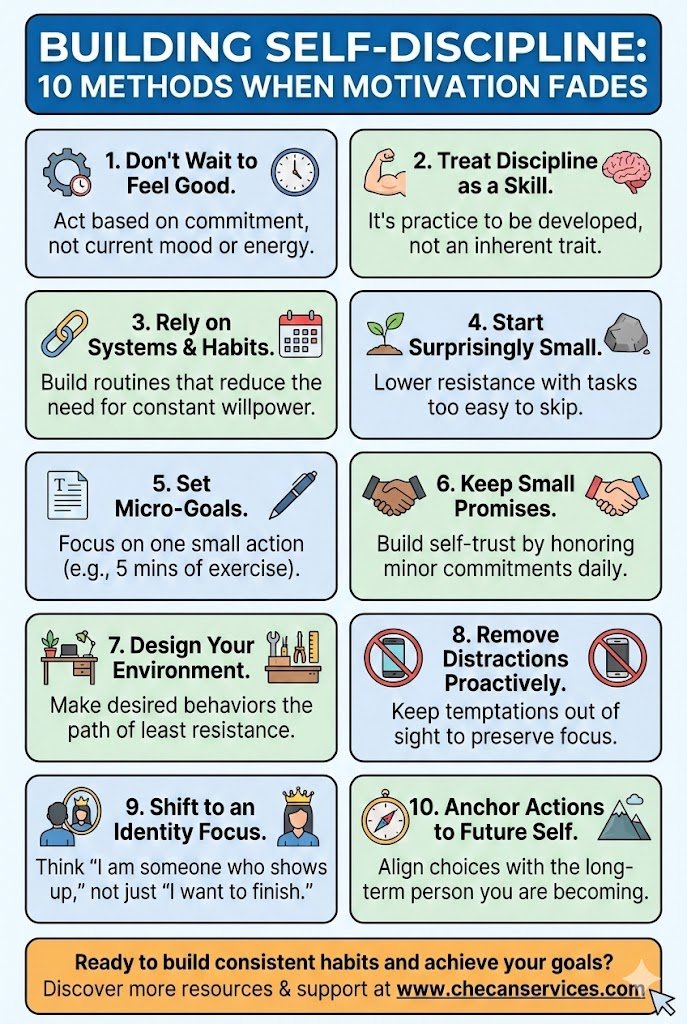
Think about anyone who writes consistently, trains regularly, or builds a business long-term. They don’t feel motivated every day. They rely on systems, habits, and small commitments that reduce the need for constant emotional drive. Discipline is what turns intention into consistency.
Start Smaller Than You Think
One of the biggest mistakes people make is aiming too big too fast. When motivation fades, overly ambitious goals collapse.
Instead of saying, “I’ll work out for an hour every day,” try “I’ll move my body for five minutes.” Instead of writing a full chapter, write one paragraph. Small actions feel almost too easy to skip—but that’s exactly why they work. They lower resistance and make showing up non-negotiable.
Discipline grows from keeping promises to yourself, especially the small ones.
Design Your Environment for Success
Self-discipline isn’t just willpower; it’s strategy. Your environment can either support your goals or sabotage them.
If you want to read more, keep a book visible and your phone out of reach. If you want to eat healthier, prep food in advance. If you want to write consistently, open the document before you even think about whether you feel like writing. When the environment does the heavy lifting, discipline becomes easier to maintain.
Focus on Identity, Not Just Outcomes
A powerful shift happens when you stop focusing only on results and start focusing on who you’re becoming.
Instead of “I want to finish this project,” think “I’m someone who finishes what they start.” Instead of “I want to be disciplined,” think “I’m someone who shows up even on off days.” Identity-based discipline helps you act in alignment with your long-term self, not your short-term mood.
Key Takeaways
Self-discipline doesn’t require constant motivation. It thrives on clarity, small commitments, and supportive systems. When motivation fades—and it will—discipline is what keeps you moving forward. Build it gradually, design your environment wisely, and anchor your actions to the person you want to become.
Looking Ahead
As life gets busier and distractions multiply, self-discipline becomes one of the most valuable skills you can develop. It’s not about perfection—it’s about progress. Each time you choose consistency over comfort, you strengthen a habit that pays off far beyond today.
If you’re looking for thoughtful, practical inspiration to support your growth journey, explore the collection of ebooks by Louise Blount on Apple Books. You can find them here on Apple Books and discover insights designed to help you keep going, even when motivation fades.