We’ve all been there. You promise yourself this is the week you’ll wake up earlier, eat better, write more, or finally stick to an exercise routine. A few days in, motivation fades, life gets busy, and the habit quietly disappears. The problem isn’t a lack of willpower—it’s how most habits are built in the first place.
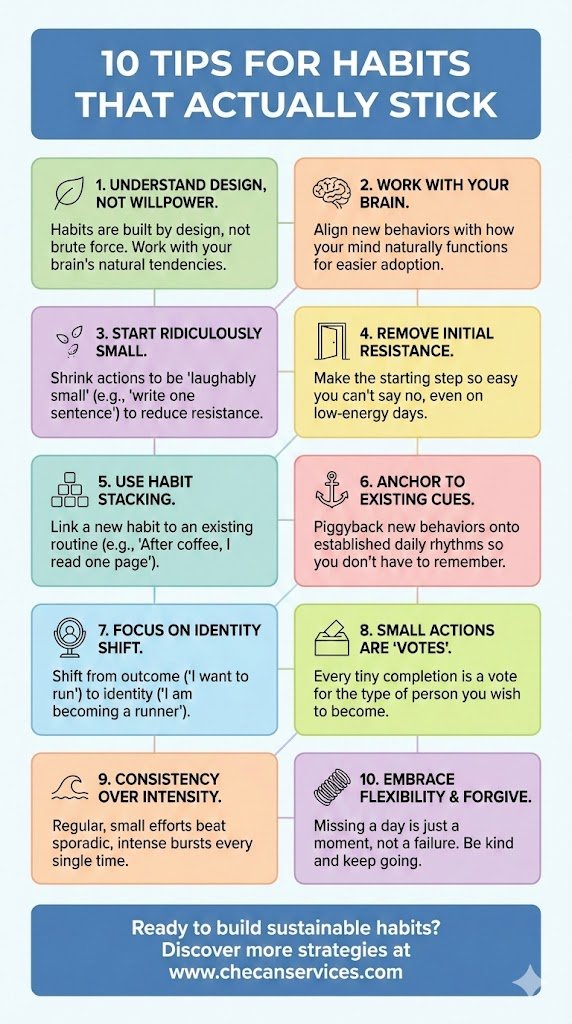
Creating habits that actually stick is less about discipline and more about design. When you work with your brain instead of against it, consistency becomes surprisingly achievable.
Why Most Habits Fail
Many habits fail because they’re too big, too vague, or too disconnected from daily life. Saying “I want to be healthier” sounds inspiring, but it doesn’t tell your brain what to do at 7 a.m. on a Tuesday. Big goals are great for direction, but habits thrive on simplicity.
Think about how often you already run on autopilot—brushing your teeth, checking your phone, making coffee. These behaviors stick because they’re anchored to existing routines and require minimal effort to start.
Start Smaller Than You Think
One of the most effective ways to build lasting habits is to shrink them down to almost laughably small actions. Instead of “work out every day,” start with “put on workout clothes.” Instead of “write a chapter,” try “write one sentence.”
Small habits remove resistance. They make it easier to show up, even on low-energy days. Over time, these tiny actions naturally grow into bigger behaviors without the mental struggle.
Tie Habits to What You Already Do
Habits stick best when they’re connected to something that already happens. This is often called habit stacking. For example:
- After I make my morning coffee, I read one page.
- After I brush my teeth, I stretch for one minute.
- After I shut down my laptop, I write tomorrow’s to-do list.
By linking a new habit to an existing one, you eliminate the need to remember. The habit becomes part of your rhythm instead of another task on your plate.
Focus on Identity, Not Outcomes
Lasting habits are rooted in identity. Instead of saying “I’m trying to run,” shift to “I’m becoming someone who runs.” Each small action then becomes a vote for the person you want to be.
This mindset shift is powerful because it keeps you moving forward even when progress feels slow. Missing a day doesn’t mean failure—it’s just a moment, not a definition.
Key Takeaways for Building Lasting Habits
Consistency beats intensity every time. Design habits that fit your life, not an idealized version of it. Make them easy to start, attach them to existing routines, and allow them to evolve naturally.
Looking ahead, habit-building is becoming less about hustle and more about sustainability. The future favors systems that support well-being, creativity, and long-term growth—one small, repeatable action at a time.
If you enjoy reflective, practical insights like these, you may find inspiration in the beautifully written ebooks by Louise Blount, available on Apple Books. Explore stories and ideas that encourage personal growth and mindful living by browsing her collection here.