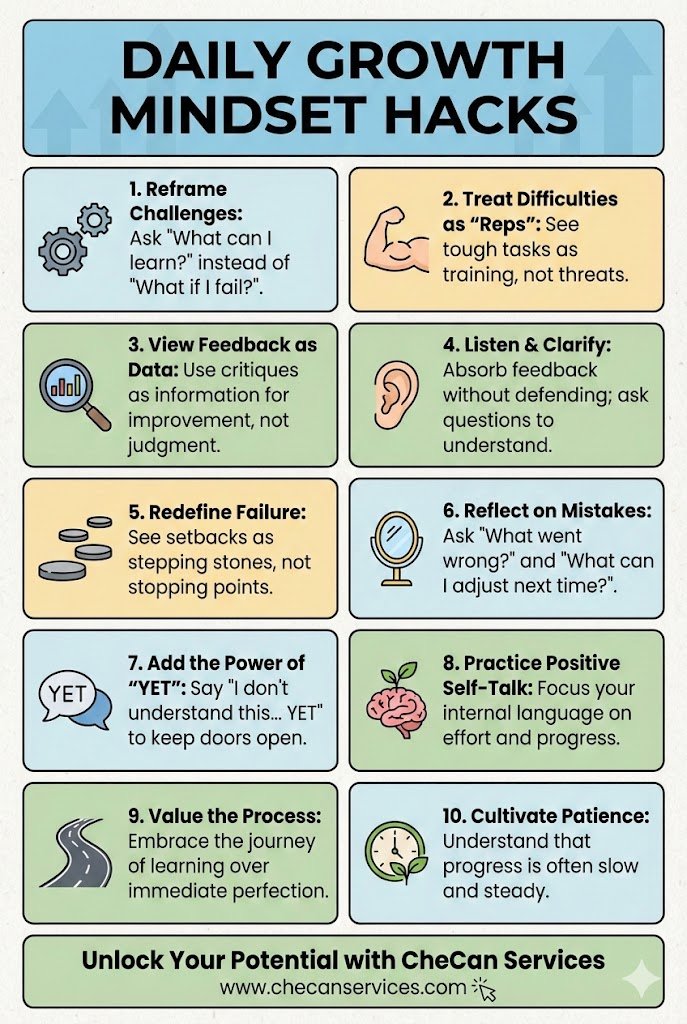
What if the biggest limit to your success wasn’t your skills, background, or circumstances—but the way you think about growth itself? Developing a growth mindset in everyday life is less about dramatic transformation and more about small, intentional shifts in how you respond to challenges, feedback, and change.
A growth mindset is the belief that abilities can be developed through effort, learning, and persistence. Unlike a fixed mindset—where talent and intelligence feel set in stone—a growth mindset invites curiosity. It turns everyday moments into opportunities to improve, even when things don’t go as planned.
Seeing Challenges as Training, Not Threats
In daily life, challenges show up constantly: a tough conversation at work, a new responsibility, or even learning a skill that doesn’t come naturally. The key difference is how you interpret these moments. Instead of asking, “What if I fail?” try reframing it to, “What might this teach me?”
For example, imagine you’re asked to lead a meeting for the first time and it feels awkward. A fixed mindset might say, “I’m just not good at this.” A growth mindset says, “This is my first rep—of course it feels uncomfortable.” Over time, that reframing builds confidence rooted in progress, not perfection.
Turning Feedback into Fuel
Feedback can sting, especially when it touches on areas you’re sensitive about. But in everyday life, feedback is one of the fastest paths to growth—if you let it be. Instead of hearing feedback as a judgment of who you are, treat it as data about what you can work on next.
This could be as simple as listening without interrupting, asking clarifying questions, and resisting the urge to defend yourself immediately. Growth-minded people see feedback as a collaboration, not a confrontation.
Redefining Failure in Small Moments
Failure isn’t always dramatic. Sometimes it looks like skipping a habit, missing a deadline, or saying the wrong thing. A growth mindset helps you zoom out and see patterns instead of isolated mistakes.
Ask yourself practical questions: What went wrong? What can I adjust next time? What did I learn? These reflections turn everyday setbacks into stepping stones rather than stopping points.
Practicing Growth Through Language
The words you use—internally and out loud—matter more than you think. Adding “yet” to a sentence can completely shift your mindset. “I don’t understand this…yet.” “I’m not confident with this…yet.” This small linguistic tweak keeps the door open to growth instead of quietly closing it.
Over time, this kind of self-talk builds resilience and patience, especially when progress feels slow.
Key Takeaways for Everyday Growth
Developing a growth mindset isn’t about being endlessly positive or ignoring difficulty. It’s about staying engaged with the process of becoming better, one day at a time. When you treat challenges as practice, feedback as guidance, and failure as information, growth becomes a natural part of daily life—not a distant goal.
If you’re ready to deepen this mindset and explore personal growth through thoughtful storytelling and reflection, you may enjoy the ebooks by Louise Blount available on Apple Books. Explore them here and take another step toward building a mindset that grows with you.