In a world of instant messages, voice assistants, and one-tap answers, it’s no surprise that kids are getting faster at responding—but not always deeper at thinking. While quick answers have their place, helping children slow down, reflect, and explore ideas builds skills they’ll use for life: curiosity, resilience, creativity, and sound judgment. The good news? Encouraging deep thinking doesn’t require fancy tools or long lectures. It starts with small, intentional shifts at home and school.
Why Deep Thinking Matters More Than Ever
Deep thinking helps kids connect ideas, question assumptions, and understand the “why” behind answers. Instead of memorizing facts, they learn how to learn. For example, when a child asks, “Why is the sky blue?” a quick answer ends the conversation. A deeper approach—“What do you think causes it?”—opens the door to exploration, hypotheses, and wonder. Over time, these moments compound, shaping confident thinkers who aren’t afraid of complex problems.
Simple Ways to Nurture Thoughtful Responses
Pause before answering.
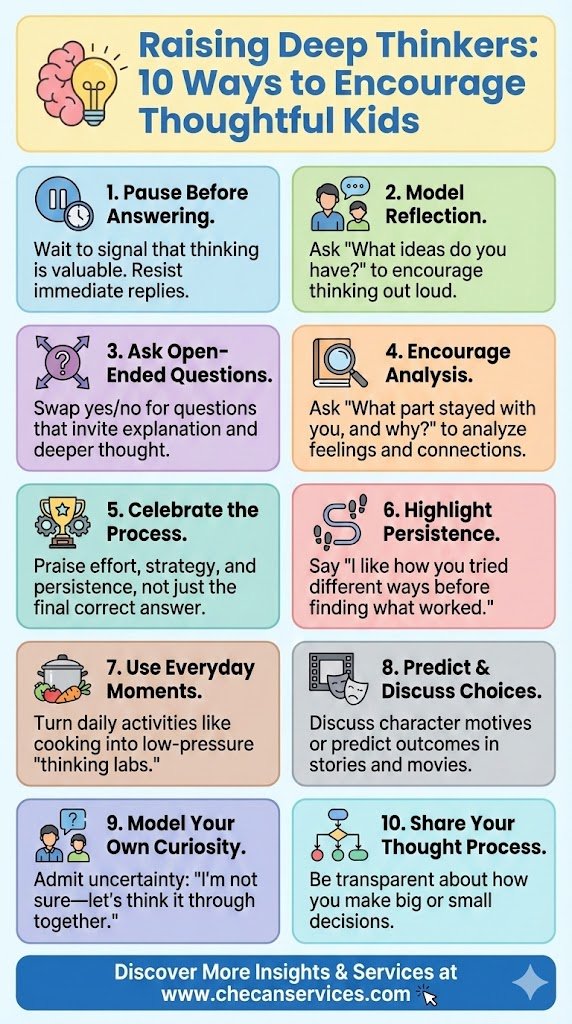
When kids ask a question, resist the urge to reply immediately. A short pause signals that thinking is valuable. You might say, “That’s a good question—what ideas do you have?” This models reflection and gives them permission to think out loud.
Ask open-ended questions.
Swap yes/no questions for ones that invite explanation. Instead of “Did you like the book?” try “What part of the story stayed with you, and why?” Open-ended questions encourage kids to analyze feelings, motives, and connections.
Celebrate the process, not just the result.
When a child solves a problem, praise their effort and strategy: “I like how you tried two different ways before finding what worked.” This shifts focus from speed to persistence and learning.
Use everyday moments as thinking labs.
Cooking dinner? Ask your child to predict what will happen if you change an ingredient. Watching a movie? Discuss why a character made a certain choice. These low-pressure moments make deep thinking feel natural, not academic.
Creating a Home Culture That Values Thinking
Kids pick up cues from adults. If they see you googling answers instantly, they’ll do the same. Try modeling curiosity instead: “I’m not sure—let’s think it through together.” Share your own thought process when making decisions, big or small. This transparency teaches kids that thinking is an active, ongoing practice.
Looking Ahead: Raising Thoughtful, Confident Learners
As technology continues to accelerate, the ability to slow down and think deeply will stand out. Kids who practice reflection today will be better equipped to navigate tomorrow’s challenges—academically, socially, and emotionally. By valuing questions over quick answers, we give them something far more powerful than information: wisdom.
Key Takeaways
Encouraging deep thinking is less about adding more lessons and more about changing how we respond. Pauses, open questions, and everyday conversations can transform curiosity into insight—one thoughtful moment at a time.
If you enjoy exploring ideas like mindful parenting, thoughtful learning, and nurturing curiosity, you may enjoy the insightful ebooks by Louise Blount. Discover her collection on Apple Books and find gentle, practical inspiration to support your child’s growth—one page at a time.