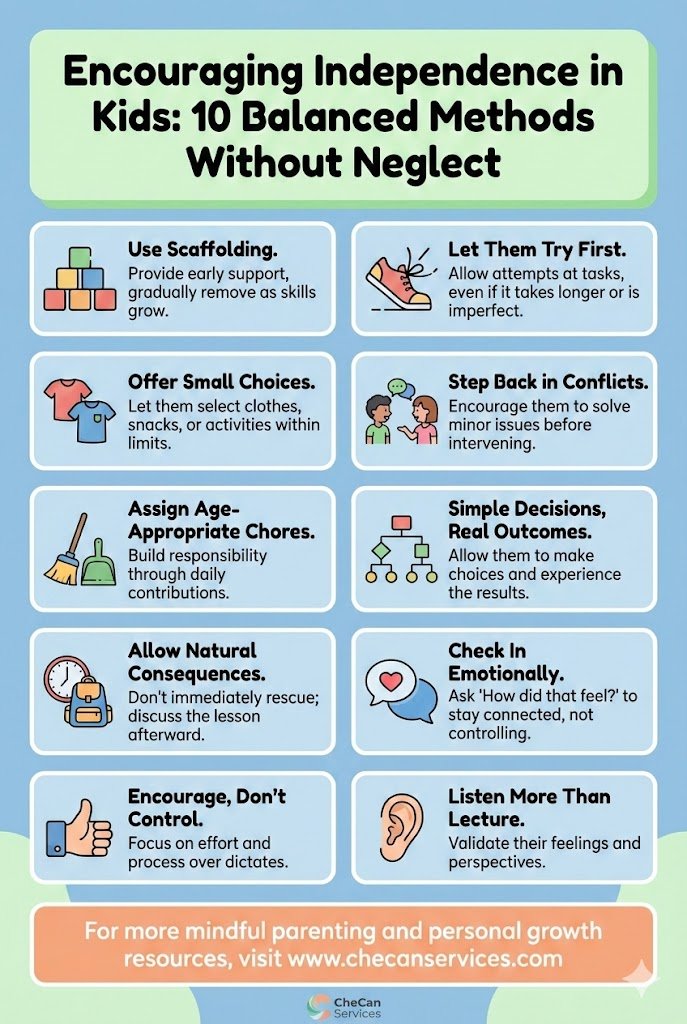
Every parent wants confident, capable kids—but many worry about where independence ends and neglect begins. The good news? Encouraging independence doesn’t mean stepping back completely. It’s about stepping alongside your child, giving them room to grow while staying emotionally and practically present.
Independence, when done right, builds resilience, self-trust, and problem-solving skills. When done wrong, it can feel like abandonment. The difference lies in intention, communication, and age-appropriate expectations.
What Healthy Independence Really Looks Like
Healthy independence is not “figure it out on your own.” It’s more like, “I believe you can do this, and I’m here if you need me.”
For a toddler, that might mean letting them try to put on their shoes—even if it takes five minutes and ends with the shoes on the wrong feet. For a school-aged child, it could be packing their own lunch while you quietly supervise. For teens, it’s allowing them to manage their schedules and face natural consequences, while still offering guidance when emotions run high.
The key is scaffolding: you provide support early on, then gradually remove it as confidence grows.
Independence Is Built Through Small, Daily Choices
Big independence doesn’t come from big moments—it comes from small, repeated opportunities.
Let your child:
- Choose their clothes (within weather-appropriate limits)
- Solve minor conflicts before stepping in
- Handle age-appropriate chores
- Make simple decisions and live with the outcomes
For example, if your child forgets their homework once, resist the urge to rescue immediately. A gentle conversation afterward about responsibility is far more powerful than fixing the mistake for them.
Staying Present While Letting Go
Neglect happens when children feel unseen, unheard, or unsupported. Independence thrives when kids feel secure enough to explore on their own.
Stay connected by:
- Checking in emotionally (“How did that feel?”)
- Offering encouragement, not control
- Listening more than lecturing
- Being consistent and predictable
Your presence is the safety net that allows independence to flourish.
When Independence Feels Uncomfortable—and That’s Okay
It’s normal for parents to feel uneasy when kids struggle. Watching them fail, feel frustrated, or make imperfect choices can trigger guilt or fear. But discomfort is often a sign that growth is happening.
Independence doesn’t mean avoiding hardship—it means learning how to move through it with confidence and support.
Key Takeaways
- Independence is guided, not forced
- Small responsibilities build long-term confidence
- Emotional presence prevents neglect
- Struggle, in safe doses, is part of healthy development
Looking Ahead
As kids grow, the balance between support and freedom will constantly shift. Staying flexible, reflective, and emotionally available helps ensure that independence becomes empowering—not isolating.
If you enjoy thoughtful, real-world insights on parenting, personal growth, and navigating life transitions, explore the ebooks by Louise Blount on Apple Books. They’re designed to support mindful growth—for parents and individuals alike.
👉 Discover Louise Blount’s ebooks on Apple Books