Leadership isn’t about being the loudest voice in the room or always taking charge. For children, leadership starts much earlier—and much quieter. It shows up when a child takes responsibility for their actions, speaks up kindly for a friend, or sticks with a challenge even when it feels uncomfortable. The good news? Leadership skills can absolutely be nurtured, and home is one of the best places to start.
Encouraging leadership in children isn’t about pressure or perfection. It’s about creating everyday moments where confidence, decision-making, and empathy can grow naturally.
Give Them Opportunities to Decide
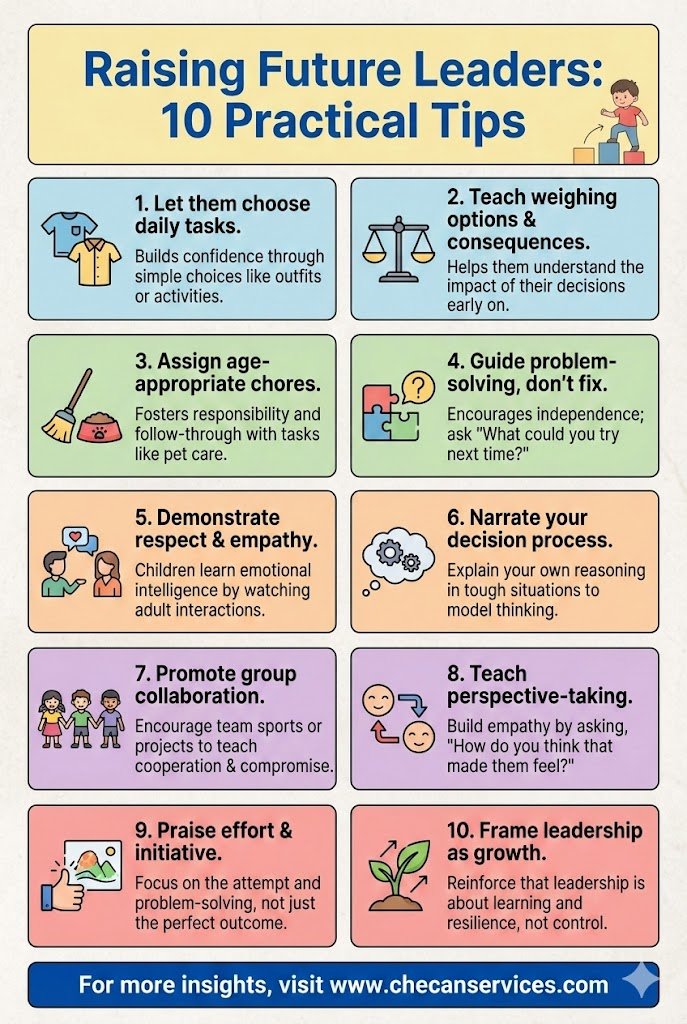
One of the simplest ways to build leadership skills is by letting children make age-appropriate decisions. This could be choosing their outfit, planning a family activity, or deciding how to spend their free time. When children see that their choices matter, they learn accountability and confidence.
Even small decisions help children practice weighing options and understanding consequences—two core leadership traits they’ll rely on throughout life.
Encourage Responsibility, Not Perfection
Leaders aren’t flawless; they’re resilient. Giving children responsibilities—like caring for a pet, managing homework, or helping with chores—teaches follow-through and ownership. If they make mistakes, resist the urge to immediately fix things for them. Instead, guide them through problem-solving.
For example, if a group project goes wrong, ask questions like, “What do you think you could try differently next time?” This approach builds independence rather than fear of failure.
Model the Behavior You Want to See
Children learn leadership by watching it in action. When they see adults communicating respectfully, managing stress, apologizing when wrong, and showing empathy, they absorb those behaviors. Leadership is as much about emotional intelligence as it is about action.
Narrating your own thought process—like explaining how you handled a tough decision—can make these lessons even more tangible.
Encourage Teamwork and Empathy
Strong leaders know how to collaborate and listen. Encourage group activities such as sports, drama, or community projects where children learn cooperation and compromise. Equally important is teaching empathy—helping children understand different perspectives and feelings.
Simple conversations like, “How do you think that made them feel?” can strengthen emotional awareness and social leadership.
Celebrate Effort and Initiative
Praise matters, but what you praise matters more. Focus on effort, initiative, and problem-solving rather than just outcomes. A child who tries to organize a game or help a peer is practicing leadership, even if things don’t go perfectly.
This kind of encouragement reinforces the idea that leadership is about growth, not control.
Key Takeaways
Leadership in children grows through everyday experiences—decision-making, responsibility, empathy, and resilience. When children are trusted, supported, and allowed to learn from mistakes, they naturally develop the confidence to lead in their own authentic way.
Looking Ahead
As children grow, these early leadership foundations can shape how they handle relationships, careers, and challenges later in life. By fostering leadership now, you’re not just raising confident kids—you’re helping shape thoughtful, capable adults.
If you’re interested in deeper insights into personal growth, confidence, and emotional development, explore the inspiring ebooks available by Louise Blount on Apple Books. You can discover them through these Apple Books titles and continue the journey of nurturing strong, self-aware leaders—starting with the children in your life.