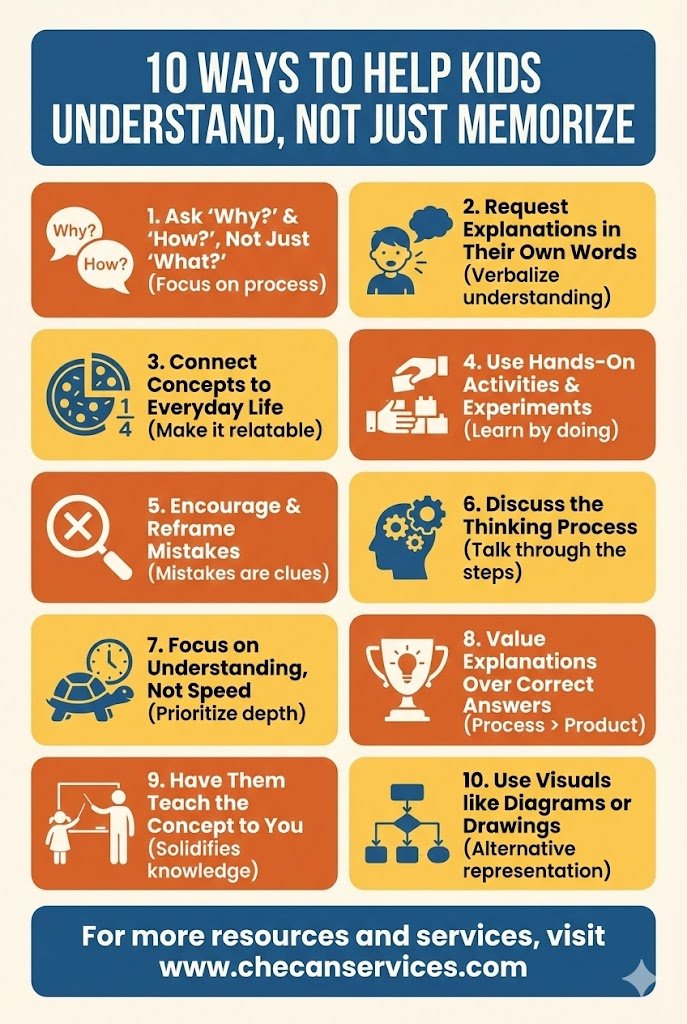
If you’ve ever watched a child memorize facts perfectly for a test, only to forget them a week later, you’ve seen the limits of rote learning in action. While memorization has its place, true learning happens when kids understand why something works—not just what the answer is. Helping children grasp concepts instead of repeating information prepares them for real-life problem solving, creativity, and long-term success.
So how do we shift from “repeat after me” to “tell me what you think”? Let’s explore some practical, parent- and teacher-friendly strategies.
Why Conceptual Learning Matters
Conceptual learning builds connections. When children understand ideas deeply, they can apply them in new situations. For example, a child who understands why fractions work won’t panic when they see a word problem—they’ll reason their way through it. This kind of learning boosts confidence and reduces anxiety around tests because knowledge isn’t fragile or dependent on memorization alone.
In a fast-changing world, understanding concepts is far more valuable than memorizing facts that may become outdated.
Ask “Why” and “How,” Not Just “What”
One simple shift makes a big difference: ask open-ended questions. Instead of asking, “What’s the answer?” try:
- “How did you get that answer?”
- “Why do you think this works?”
- “Can you explain it in your own words?”
For example, when a child solves a math problem, let them talk through their thinking—even if it’s messy. This helps them organize ideas and identify gaps in understanding.
Use Real-Life Examples Kids Can Relate To
Abstract ideas stick better when tied to everyday life. Fractions become clearer when cutting a pizza. Science concepts come alive when kids notice shadows changing during the day. Grammar rules make sense when applied to stories they enjoy.
When learning feels connected to their world, children are more likely to engage and remember.
Encourage Mistakes as Part of Learning
Rote learning often teaches kids that being wrong is bad. Conceptual learning reframes mistakes as clues. When a child gives a wrong answer, explore it together:
- “What made you think that?”
- “What could we try differently next time?”
This approach builds resilience and curiosity—two traits that matter far beyond school.
Hands-On Learning Beats Passive Listening
Kids learn concepts best by doing. Experiments, building projects, role-playing, and discussions all deepen understanding. Even simple activities—like sorting objects, drawing diagrams, or teaching a concept to someone else—can turn passive information into active knowledge.
The goal isn’t perfection; it’s exploration.
Key Takeaways for Parents and Educators
Helping kids move beyond rote learning doesn’t require fancy tools. It starts with conversation, curiosity, and patience. Focus on understanding, not speed. Value explanations over correct answers. And remember, when kids feel safe to think out loud, real learning happens.
Looking Ahead
As education evolves, conceptual learning will only grow more important. By nurturing understanding early, we give children skills that last a lifetime—critical thinking, adaptability, and confidence.
If you’re interested in thoughtful, practical resources that support meaningful learning and personal growth, explore the inspiring ebooks by Louise Blount available on Apple Books. You can browse and discover them here: eBooks