If it feels harder than ever to concentrate, you’re not imagining things. Notifications buzz, tabs multiply, and our attention is constantly being pulled in a dozen directions. Improving focus in a distracted world isn’t about becoming superhuman—it’s about learning how to work with your environment instead of fighting it.
Let’s start with a simple truth: focus is a skill, not a personality trait. Some people may appear naturally focused, but most have just built habits that protect their attention. The good news? You can do the same.
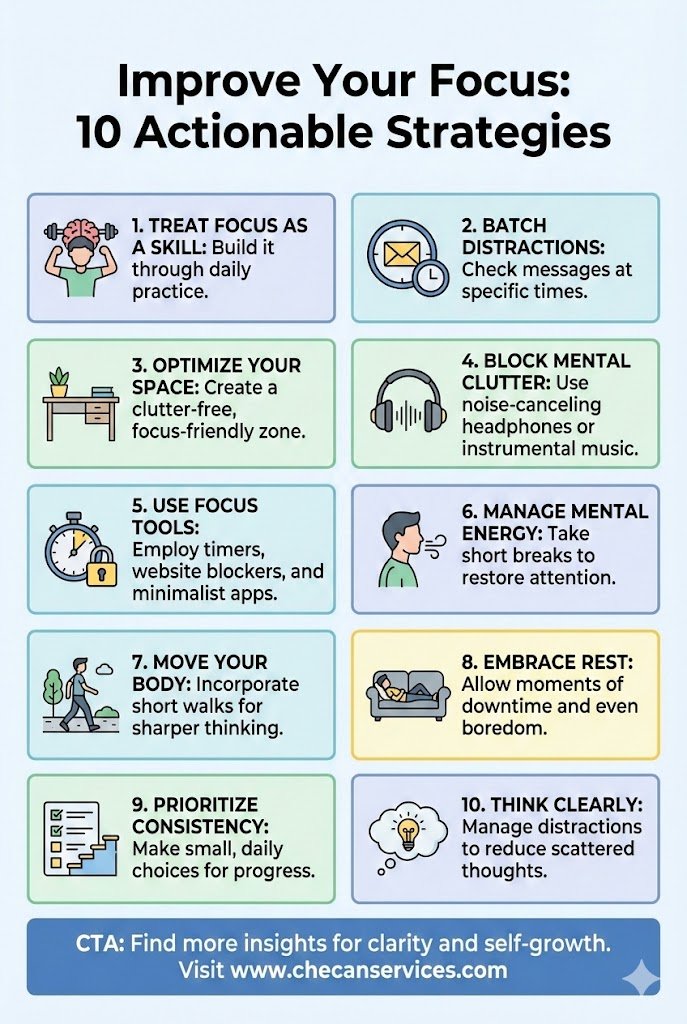
One powerful shift is understanding the cost of constant interruption. Every time you switch tasks—replying to a message mid-email or checking social media during work—your brain needs time to refocus. This “attention residue” quietly drains productivity. A practical fix is batching distractions. Instead of reacting all day, set specific times to check messages or scroll. You’re not cutting things out; you’re putting them in their place.
Environment also plays a bigger role than we realize. A cluttered desk or noisy background can subtly fragment attention. Try creating a “focus-friendly” zone, even if it’s small. A clear workspace, comfortable seating, and consistent lighting send a signal to your brain: this is where focus happens. Many people find that something as simple as noise-canceling headphones or instrumental music helps block mental clutter.
Technology, often blamed for distraction, can also be an ally. Focus timers, website blockers, and minimalist note apps can guide attention instead of hijacking it. The key is intentional use. Ask yourself: does this tool support what I’m trying to do right now, or pull me away from it?
Equally important is mental energy. Focus fades quickly when we’re exhausted or overwhelmed. Short breaks, movement, and even boredom can restore attention. Stepping away from screens for a few minutes or taking a short walk often leads to sharper thinking when you return. Counterintuitive as it sounds, rest can be productive.
Looking ahead, focus will only become more valuable. As information increases, the ability to sustain attention will set people apart—in work, creativity, and personal growth. Those who learn to manage distractions won’t just get more done; they’ll think more clearly and feel less scattered.
Key Takeaways for Building Better Focus
- Treat focus as a trainable skill, not a fixed trait
- Reduce task-switching by batching distractions
- Design your environment to support attention
- Use technology intentionally, not automatically
- Protect your energy with rest and simple routines
Improving focus isn’t about perfection. It’s about progress—small, consistent choices that add up to deeper concentration over time. If you enjoy thoughtful insights like this and want to explore ideas around clarity, self-growth, and intentional living, you might enjoy the ebooks by Louise Blount available on Apple Books. Take a moment to explore them here and see which one resonates with where you are right now.