Learning to trust yourself again can feel like trying to reconnect with an old friend after a long silence. Maybe you ignored your intuition once too often, stayed in situations that didn’t serve you, or let other people’s opinions drown out your own voice. Wherever you are starting from, rebuilding self-trust is not about becoming fearless overnight—it’s about gently coming back home to yourself.
At its core, self-trust is the belief that you can handle what life brings. When that belief is shaken, even small decisions can feel overwhelming. You might second-guess your choices, replay conversations in your head, or look outside yourself for constant validation. The good news is that self-trust is a skill. And like any skill, it can be relearned.
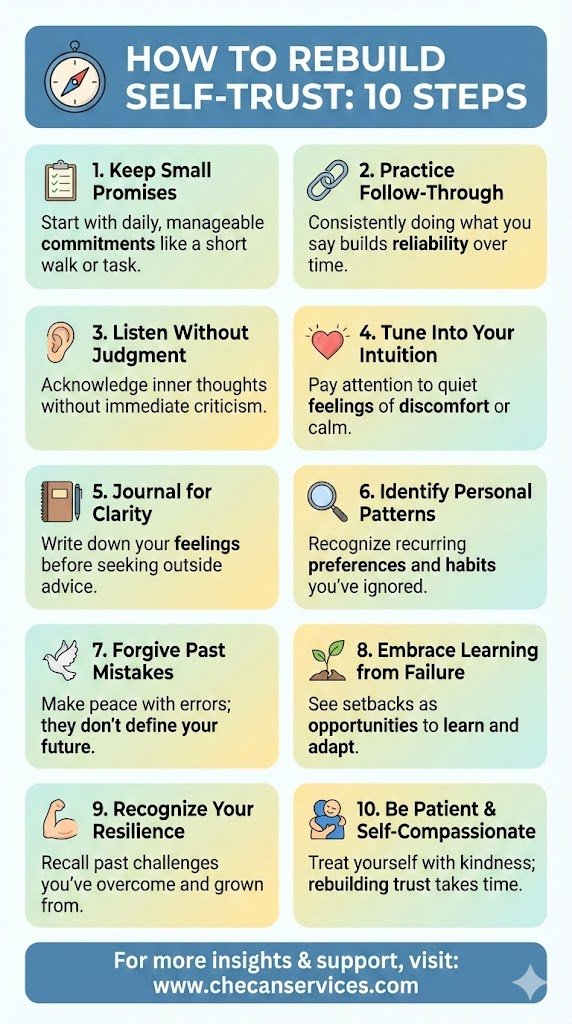
One of the simplest ways to begin is by keeping small promises to yourself. These don’t need to be life-changing commitments. It could be as basic as going for a short walk, finishing a task you said you would, or taking a proper lunch break. Each time you follow through, you send yourself a quiet but powerful message: I can rely on myself. Over time, these small acts stack up and rebuild confidence from the inside out.
Another important step is learning to listen to your inner voice without immediately judging it. Many of us were taught to override our feelings in favor of logic, politeness, or approval. But intuition often speaks softly—through discomfort, curiosity, or a sense of calm. Journaling can help here. Writing down how you feel about a decision before asking anyone else for advice can reveal patterns and preferences you may have been ignoring.
It’s also essential to make peace with past mistakes. Trusting yourself again doesn’t mean believing you’ll never get it wrong. It means trusting that even if things don’t work out, you’ll learn, adapt, and recover. Think of a time you made a choice that didn’t go as planned but still grew from the experience. That resilience is evidence of self-trust already at work.
Key Takeaways
Rebuilding trust with yourself is a gradual process rooted in consistency, self-compassion, and awareness. Start small, listen inward, and allow yourself to be human. Self-trust grows not from perfection, but from honesty and follow-through.
Looking Ahead
As you continue this journey, you may notice a shift in how you show up in the world. Decisions feel clearer. Boundaries become easier to set. And most importantly, you begin to feel safer within yourself. That sense of inner safety is what allows confidence to feel natural rather than forced.
If you’re drawn to reflective, empowering reads that support this kind of inner growth, you might enjoy exploring the ebooks by Louise Blount available on Apple Books. Take a moment to browse her collection here and see which title resonates with where you are right now.