We live in a world that often equates leadership with authority — the loudest voice, the biggest title, the most impressive résumé. But what if we’ve had it backward all along? What if the most powerful way to raise a true leader is to teach them how to serve?
That’s the central idea behind Leading by Serving: Empowering Kids to Lead Through Acts of Service — and it’s a philosophy that every parent, teacher, and mentor needs to hear.
Why Service Is the Foundation of Real Leadership
Think about the leaders you’ve most admired in your life. Chances are they weren’t the ones barking orders or demanding respect. They were the ones who showed up, rolled up their sleeves, and genuinely cared about the people around them.
Servant leadership — leading by example through acts of giving and helping — is not a new concept in the business world. But we rarely talk about it in the context of childhood development. The truth is, the habits and values formed in a child’s earliest years are the same ones that will define how they show up as adults in their families, workplaces, and communities.
When we teach children to serve, we’re teaching them empathy. We’re teaching them to look beyond themselves and recognize the needs of others. And that is the bedrock of meaningful leadership.
Starting Young: Teaching Toddlers Kindness
You don’t need to wait until your child is a teenager to begin nurturing leadership qualities. In fact, the earlier you start, the better.
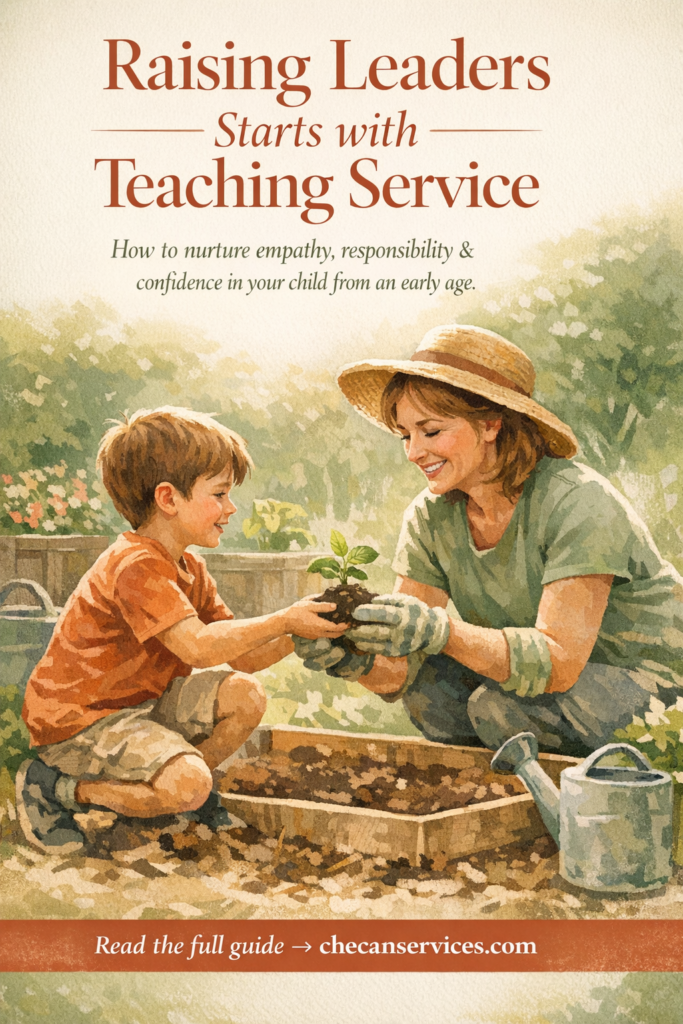
Even toddlers can practice small acts of service — sharing a toy, helping a friend who fell down, or pitching in to set the table. These moments might seem minor, but they plant seeds of compassion and responsibility that grow over time.
The key is to acknowledge these moments when they happen. When a child sees that their act of kindness mattered — that it changed someone’s day, even slightly — they begin to connect service with purpose. That connection becomes their internal compass.
Building Responsibility and Confidence Through Giving
One of the most underrated side effects of teaching children to serve others is the boost it gives to their self-confidence. When a child completes a task that helps their community — cleaning up a park, helping an elderly neighbor, organizing a food drive — they experience a sense of accomplishment that no grade or trophy can replicate.
This is because service gives children agency. It tells them: your actions matter. You can make a difference. That belief — that they are capable of creating positive change — is the foundation of genuine confidence.
Parents often focus on building confidence through achievement. But confidence built on service is different. It’s not about being the best; it’s about being useful. And children who feel useful develop a resilience and sense of purpose that carries them through life’s inevitable challenges.
From Home to School to Community: Expanding the Circle
Leadership through service doesn’t stop at the front door. As children grow, so does their capacity to contribute — and so should the scope of their service.
In schools, students who are encouraged to take on mentoring roles, join community projects, or lead peer support groups develop a richer understanding of teamwork, accountability, and inclusive thinking. These aren’t just “soft skills” — they’re the core capabilities of effective leaders in every field.
At the community level, teens who participate in service-based projects — whether it’s launching a fundraiser, advocating for a local cause, or volunteering with younger kids — gain a firsthand understanding of how systems work and how individuals can influence them. This kind of experiential learning is irreplaceable.
Practical Tools for Parents and Educators
So how do you actually make this happen in daily life? Here are a few starting points:
- Model service yourself. Children watch everything. When they see you volunteer, help a neighbor, or simply hold the door for a stranger, they internalize that behavior as normal and desirable.
- Create regular opportunities. Don’t wait for the perfect moment. Build small acts of service into your weekly routine — a family volunteer hour, a kindness challenge, or a “how can we help?” conversation at dinner.
- Celebrate effort, not outcome. When a child tries to help and it doesn’t go perfectly, praise the intention. Leadership is about trying, learning, and trying again.
- Connect service to values. Help children understand why they’re serving — not because they’re told to, but because they believe in fairness, kindness, and community.
For a deeper dive into how to implement these ideas at every stage of your child’s development, Leading by Serving is an invaluable resource packed with real-life examples and practical strategies.
The Leaders the World Needs
The next generation faces challenges that will require a new kind of leadership — one built on collaboration, empathy, and a genuine desire to make things better for everyone. Those leaders won’t emerge fully formed from universities or corporations. They’ll be shaped in homes and classrooms and neighborhoods, one small act of service at a time.
When we invest in raising children who lead with their hearts, we’re not just raising better kids — we’re building a better world.