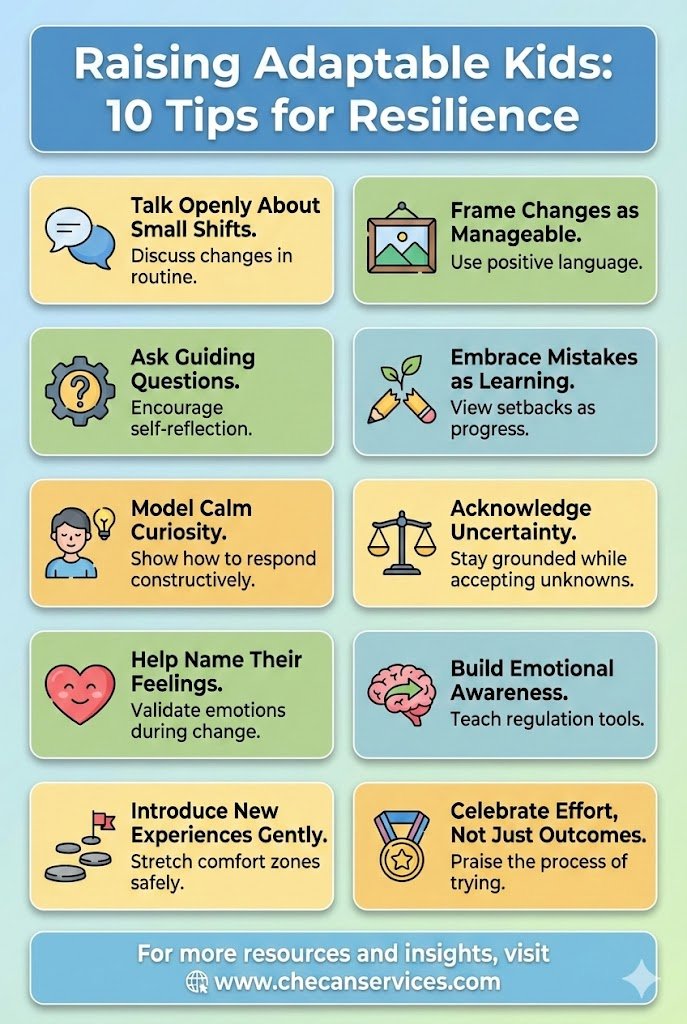
Change is no longer an occasional disruption—it’s a constant. New technologies, shifting routines, evolving social norms, and unexpected global events all shape the world our children are growing up in. As parents and caregivers, one of the most valuable skills we can nurture isn’t just academic success or talent, but adaptability. Raising kids who can adjust, recalibrate, and move forward with confidence sets them up for lifelong resilience.
Adaptable children aren’t born that way; they’re shaped through everyday experiences, conversations, and modeling. The good news? You don’t need perfection or rigid systems—just intentional guidance and trust in your child’s ability to grow.
Normalize Change Early and Often
One of the simplest ways to build adaptability is to treat change as a normal part of life. Talk openly about small shifts—new schedules, different meals, changes in plans—and frame them as manageable rather than stressful. For example, if a weekend plan falls through, you might say, “This didn’t work out the way we expected, so let’s figure out what we can do instead.”
This teaches children that flexibility is a skill, not a failure. Over time, they begin to see change as something to respond to, not something to fear.
Encourage Problem-Solving Over Perfection
When kids face challenges, it’s tempting to step in quickly with solutions. But adaptability grows when children learn to think through problems themselves. Ask guiding questions like, “What do you think could work here?” or “What’s another way we could try this?”
Mistakes are especially powerful teachers. When a child struggles and recalibrates, they’re learning that setbacks aren’t endpoints—they’re part of the process.
Model Calm and Curiosity
Children absorb more from what we do than what we say. When you respond to change with calm curiosity—rather than panic or frustration—you’re showing them how adaptability looks in real life. Saying things like, “This is new, but we can learn as we go,” reinforces a growth mindset.
It’s okay to acknowledge uncertainty. In fact, doing so while staying grounded shows kids that not having all the answers doesn’t mean losing control.
Build Emotional Literacy
Adaptability isn’t just mental—it’s emotional. Help kids name and process their feelings when things shift. A child who can say, “I feel nervous about this change,” is far better equipped to handle it than one who feels overwhelmed without understanding why.
Emotional awareness gives children tools to self-regulate, adjust expectations, and move forward with clarity.
Create Safe Opportunities to Stretch
New experiences—trying a different activity, meeting new people, learning unfamiliar skills—gently stretch a child’s comfort zone. The key is safety and support. Celebrate effort, not just outcomes, and remind them that discomfort often means growth is happening.
Key Takeaways
Raising adaptable kids isn’t about shielding them from change—it’s about equipping them to handle it. By normalizing flexibility, encouraging problem-solving, modeling calm responses, and supporting emotional growth, you’re helping your child build confidence that lasts far beyond childhood.
Looking Ahead
As the world continues to evolve, adaptability will remain one of the most essential life skills. Parents who focus on resilience today are giving their children a powerful advantage for tomorrow—one rooted in confidence, curiosity, and courage.
If you’re looking for thoughtful, practical insights on parenting, growth, and navigating life’s transitions, explore the inspiring ebooks by Louise Blount available on Apple Books. Discover stories and guidance that support intentional parenting by browsing her collection here.