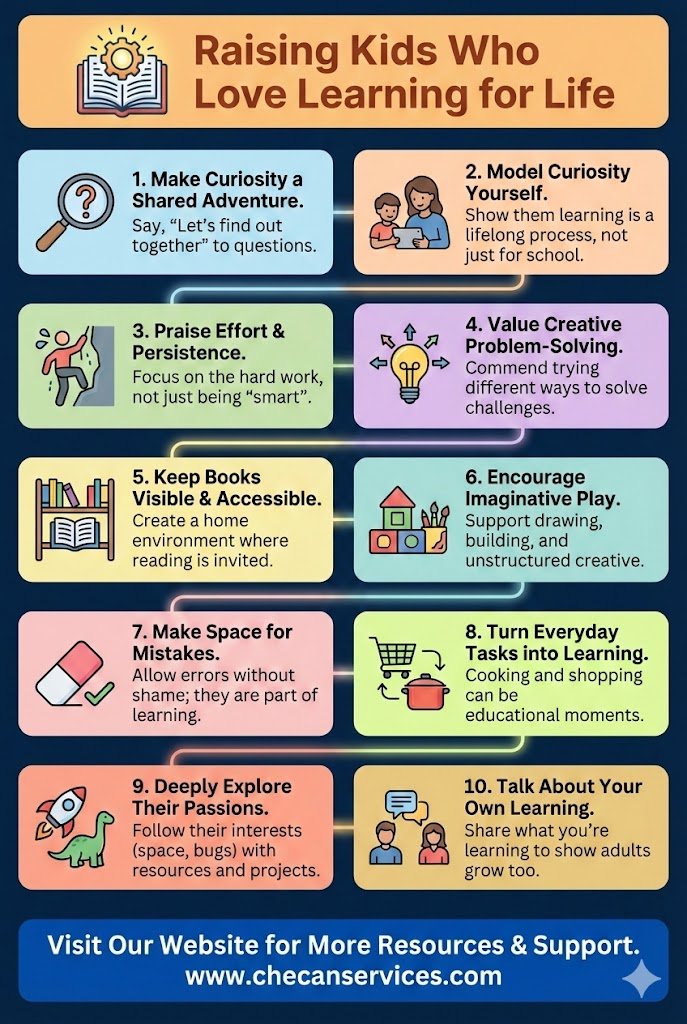
Every parent wants their child to succeed—but long-term success isn’t just about grades or test scores. It’s about curiosity. Kids who love learning tend to adapt better, think creatively, and stay motivated long after school ends. The good news? A love of learning isn’t something children are simply born with—it’s something we can intentionally nurture at home, every day.
Make Curiosity the Star of the Show
Children are natural question-askers. “Why is the sky blue?” “How do ants know where to go?” Instead of rushing to answer—or worse, brushing questions aside—lean into them. Say, “Let’s find out together.” This shifts learning from a chore to a shared adventure.
You don’t need to have all the answers. In fact, modeling curiosity—looking things up, experimenting, wondering out loud—shows kids that learning is a lifelong process, not a destination.
Focus on Effort, Not Just Results
One of the fastest ways to kill a love of learning is to overemphasize performance. When kids hear constant praise for being “smart,” they may start avoiding challenges to protect that label. Instead, praise effort, persistence, and creativity.
For example:
- “I love how you kept trying different ways to solve that.”
- “You really thought deeply about that question.”
This builds a growth mindset and helps children see learning as something they do, not something they either “are” or “aren’t.”
Create a Learning-Friendly Environment at Home
A home that supports learning doesn’t need fancy tools or expensive programs. Simple choices matter:
- Keep books visible and accessible
- Encourage drawing, building, and imaginative play
- Make space for mistakes without shame
Even everyday activities—cooking, grocery shopping, fixing things—can become learning moments when kids are invited to participate and think aloud.
Follow Their Interests (Even If They Surprise You)
When children are interested, learning happens naturally. Dinosaurs, space, music, bugs, coding, stories—none of these interests are “phases to outgrow.” They’re entry points into deeper learning.
If your child is obsessed with something, help them explore it further through books, documentaries, hands-on projects, or conversations. Passion is one of the strongest teachers there is.
Be the Example They Watch
Kids learn more from what we do than what we say. When they see you reading, asking questions, trying new skills, or reflecting on mistakes, they internalize those habits.
Talk about what you’re learning—even if it’s small. Let them see that adults grow too.
Key Takeaways for Raising Lifelong Learners
Raising kids who love learning isn’t about pressure or perfection. It’s about curiosity over compliance, effort over outcomes, and connection over control. When learning feels safe, meaningful, and enjoyable, children carry that mindset into adulthood—long after the homework ends.
If you’re looking for thoughtful, engaging reads that support personal growth and reflective learning for both parents and young minds, explore the ebooks by Louise Blount on Apple Books. You can discover them here. They’re a wonderful companion for anyone committed to lifelong learning—for themselves and the next generation.