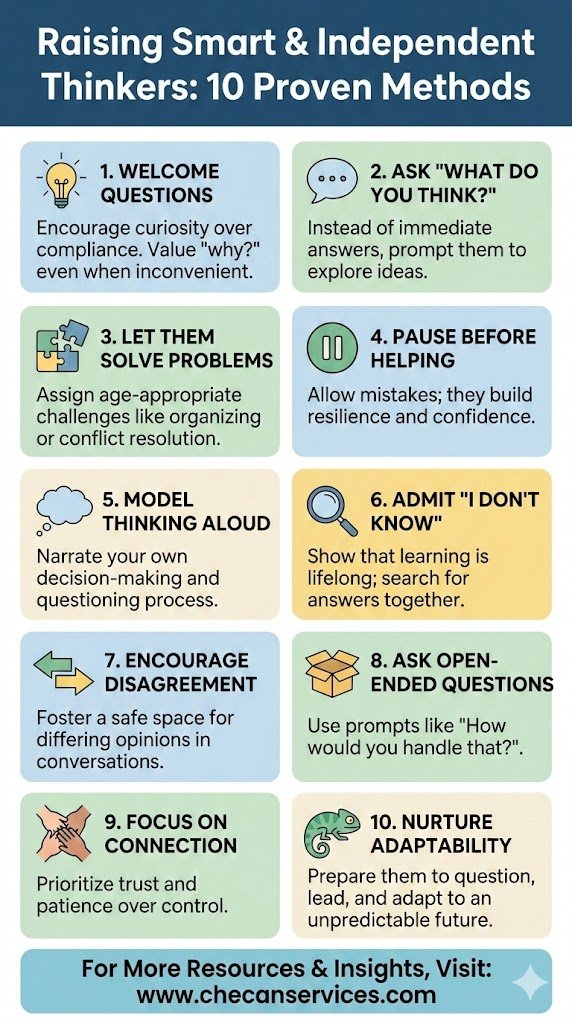
Raising smart and independent thinkers isn’t about pushing kids to have all the right answers. It’s about helping them ask better questions, trust their judgment, and feel confident navigating the world on their own terms. In a time when information is everywhere and opinions are loud, children need more than knowledge—they need thinking skills that last.
The good news? Independence and intelligence aren’t traits kids are simply born with. They’re shaped daily through small, intentional choices parents make at home.
Encourage Curiosity Over Compliance
One of the simplest ways to raise independent thinkers is to welcome questions—even the inconvenient ones. When a child asks “why,” it can be tempting to shut it down for the sake of speed or peace. But curiosity is the foundation of critical thinking.
Instead of giving immediate answers, try responding with, “What do you think?” or “Let’s figure it out together.” For example, if your child asks why the sky changes color at sunset, exploring ideas together—even imperfect ones—teaches them that thinking matters more than being correct.
Let Them Solve Real Problems
Smart thinking grows when children face age-appropriate challenges. This could be as simple as figuring out how to organize their school bag, resolve a disagreement with a sibling, or manage their allowance.
Rather than stepping in immediately, pause. Offer guidance only when needed. A child who learns from small mistakes builds confidence in their ability to make decisions. Over time, this creates resilience—the kind that helps them think clearly under pressure.
Model Independent Thinking
Children learn how to think by watching how you think. When you talk through your decisions out loud—why you chose a healthier meal, questioned a news headline, or changed your mind after learning something new—you’re showing them that thinking is an active process.
It also helps to admit when you don’t know something. Saying, “I’m not sure, let’s look it up,” reinforces that learning doesn’t stop at adulthood and that curiosity is a strength, not a weakness.
Create Space for Opinions
Independent thinkers feel safe expressing ideas, even when they differ. Family conversations are a powerful training ground. Encourage respectful disagreement at the dinner table. Ask open-ended questions like, “What would you do differently?” or “How would you handle that situation?”
When children feel heard, they learn that their thoughts have value. This confidence carries into school, friendships, and eventually the workplace.
Key Takeaways for Parents
Raising smart and independent thinkers isn’t about control—it’s about connection, patience, and trust. Encourage curiosity, allow problem-solving, model thoughtful behavior, and make space for opinions. These habits compound over time, shaping children who can think for themselves in a complex world.
Looking Ahead
As the future becomes more unpredictable, independent thinking will be one of the most valuable skills a child can have. Nurturing it today prepares them not just to succeed, but to adapt, question, and lead with confidence tomorrow.
If you enjoy thoughtful insights on personal growth, parenting, and self-discovery, explore the inspiring ebooks by Louise Blount available on Apple Books. They’re a meaningful next step for readers who value intentional living and lifelong learning.