Every parent wants their child to thrive intellectually—but not at the cost of their happiness. In a world filled with academic comparisons, early testing, and endless extracurriculars, it’s easy to confuse pressure with progress. The good news? Raising smart kids doesn’t require burnout, stress, or constant pushing. In fact, the opposite approach often works better.
Let’s talk about how learning can stay joyful, curiosity-driven, and sustainable—for both kids and parents.
Rethinking What “Smart” Really Means
Intelligence isn’t just about grades or early reading milestones. Smart kids grow into adults who can think critically, adapt, communicate, and keep learning. That kind of intelligence develops best in environments where curiosity is encouraged, mistakes are safe, and questions are welcomed.
Instead of asking, “Are they ahead?”, try asking, “Are they engaged?” Engagement fuels learning far longer than pressure ever could.
Let Curiosity Lead the Way
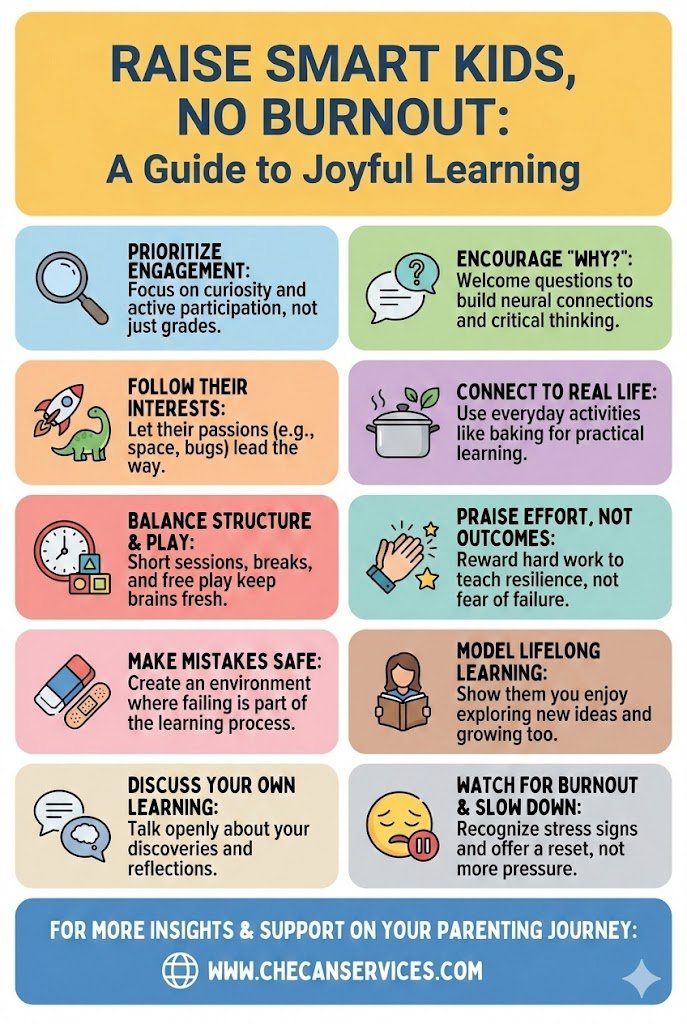
Children are naturally curious. When they ask “why” for the tenth time, they’re not being difficult—they’re building neural connections. Follow their interests, even when they seem random. Dinosaurs, space, baking, insects, stories—these passions are gateways to reading, math, science, and problem-solving.
For example, a child who loves cooking can learn fractions, chemistry, and planning without ever opening a workbook. Learning sticks better when it’s connected to real life.
Create a Low-Pressure Learning Environment
A calm environment helps kids absorb information more effectively. This doesn’t mean eliminating structure—it means balancing it. Short learning sessions, plenty of breaks, and room for play keep the brain fresh.
Praise effort instead of outcomes. Saying “You worked really hard on that” teaches resilience, while “You’re so smart” can create fear of failure. When kids feel safe to try and fail, they become more confident learners.
Model Lifelong Learning
Kids watch more than they listen. When they see you reading, exploring new ideas, or talking excitedly about what you’re learning, they absorb that mindset. Learning becomes something you do, not something you’re forced into.
Even casual moments—discussing a podcast, looking up answers together, or reflecting on mistakes—send the message that growth is ongoing and enjoyable.
Watch for Burnout Signs Early
Burnout doesn’t just happen to adults. Irritability, loss of interest, anxiety, or sudden resistance to learning can be signs that a child needs less pressure, not more support sessions. Slowing down isn’t falling behind—it’s often the reset kids need to move forward stronger.
Key Takeaways for Raising Smart, Balanced Kids
- Intelligence grows best with curiosity, not pressure
- Real-life learning is just as powerful as formal education
- Emotional safety fuels cognitive growth
- Balance and rest are part of success, not distractions
Looking Ahead
As education continues to evolve, one thing remains constant: children learn best when they feel supported, not stressed. By focusing on curiosity, balance, and connection, you’re not just raising smart kids—you’re raising resilient, motivated learners who won’t burn out before they even begin.
If you enjoy thoughtful, supportive approaches to personal growth and learning, you may find inspiration in the insightful ebooks available by Louise Blount on Apple Books. Explore them through this curated collection of ebooks and discover ideas that encourage growth without overwhelm.