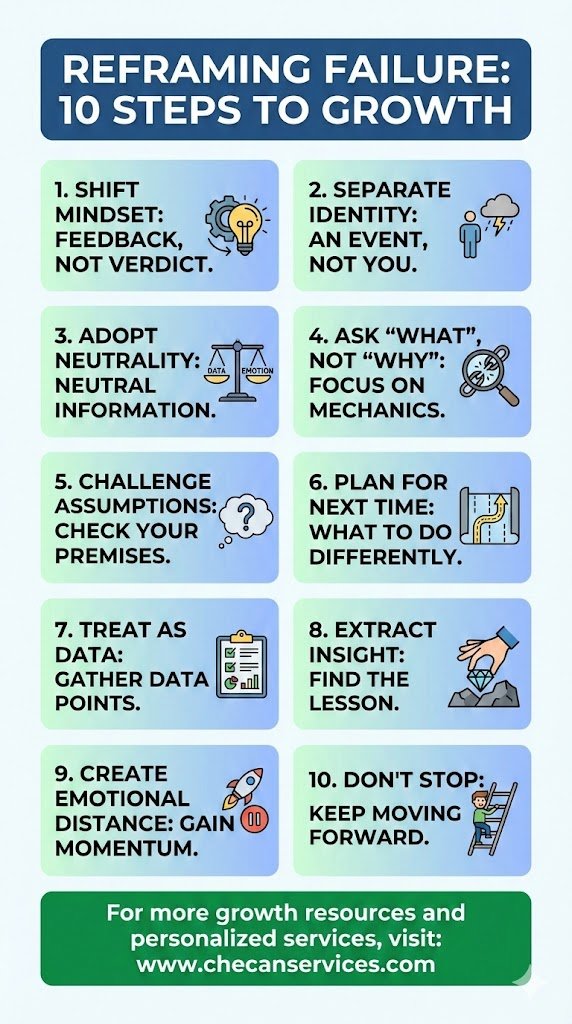
Failure is one of those words that instantly tightens the chest. We associate it with loss, embarrassment, or the quiet fear that we’re simply not good enough. But what if failure wasn’t a verdict at all? What if it was feedback—useful, directional, and even necessary?
Reframing failure as feedback is less about positive thinking and more about practical growth. It’s a mindset shift that changes how you respond when things don’t go as planned, whether that’s in your career, relationships, or personal goals.
Why Failure Feels So Personal
Most of us were taught early on that success is rewarded and failure is punished. Grades, performance reviews, and social validation wired us to see mistakes as reflections of our worth. So when something fails, we don’t just think this didn’t work—we think I didn’t work.
Feedback, on the other hand, is neutral. It’s information. When you start seeing failure through that lens, the emotional weight lifts just enough for curiosity to step in.
Turning Failure into Usable Information
Reframing doesn’t mean ignoring disappointment. It means asking better questions after it shows up.
Instead of asking:
- Why am I bad at this?
Try asking:
- What specifically didn’t work?
- What assumptions did I make that turned out to be wrong?
- What would I try differently next time?
For example, imagine you launch a project that doesn’t gain traction. As a failure, it feels like a dead end. As feedback, it might tell you the timing was off, the message wasn’t clear, or the audience wasn’t quite right. None of those are personal flaws—they’re data points.
The Compounding Effect of Feedback
One of the most powerful aspects of this mindset is how it compounds over time. Each “failed” attempt adds to your understanding. People who appear effortlessly successful usually aren’t avoiding failure—they’re just processing feedback faster and with less drama.
Athletes review losses to improve technique. Writers reread rejected drafts to sharpen clarity. Entrepreneurs analyze failed ideas to find the one that fits. In every case, progress comes not from avoiding failure, but from extracting insight from it.
Emotional Distance Creates Momentum
When failure is reframed as feedback, it creates emotional distance. That distance is where momentum lives. You’re less likely to quit, spiral, or procrastinate, because the outcome no longer defines you—it informs you.
This doesn’t mean failure stops hurting. It means it stops stopping you.
Key Takeaways to Practice Today
- Failure is an event, not an identity
- Feedback is neutral information you can act on
- Better questions lead to better next attempts
- Progress favors reflection, not perfection
Looking Ahead with a Growth Lens
The future belongs to people willing to experiment, reflect, and adapt. When you start treating failure as feedback, you give yourself permission to learn in public, try again with clarity, and move forward without carrying unnecessary shame.
If you’re interested in exploring deeper mindset shifts around resilience, growth, and self-leadership, you may enjoy the ebooks by Louise Blount available on Apple Books. They’re thoughtful, practical reads that subtly guide you toward turning life’s challenges into meaningful progress.