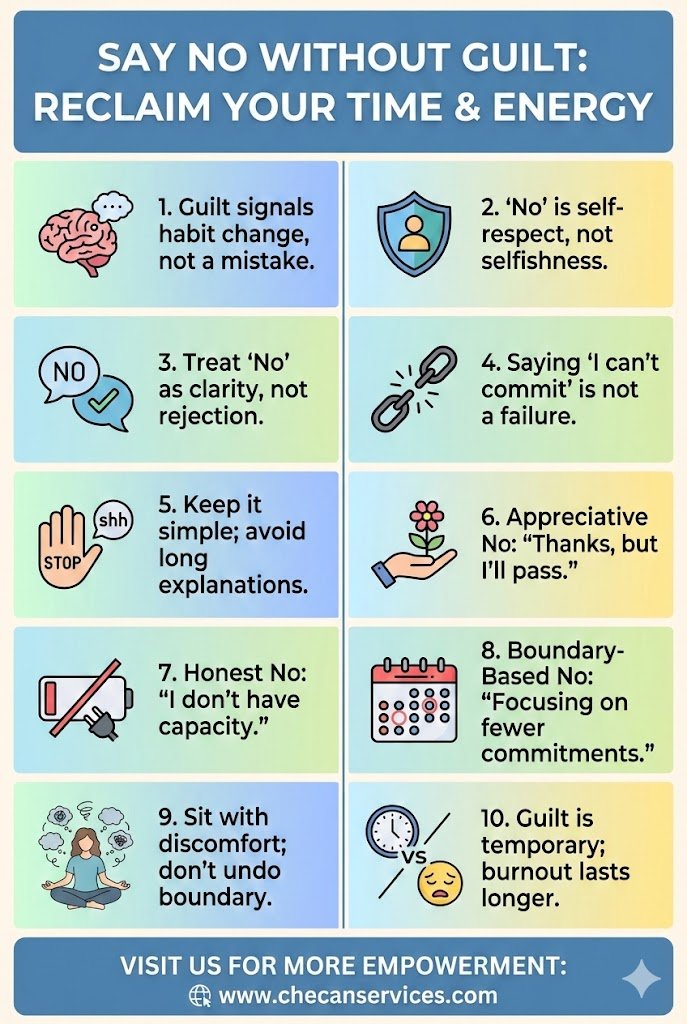
Learning to say no without guilt is one of the most underrated life skills—and one of the most powerful. Many of us were raised to believe that saying yes is polite, generous, and expected. Saying no, on the other hand, can feel uncomfortable, selfish, or even rude. But here’s the truth: every time you say yes to something that drains you, you’re saying no to something that matters.
The good news? Saying no doesn’t have to come with guilt. It can be calm, respectful, and deeply freeing.
Why Saying No Feels So Hard
Guilt often shows up because we fear disappointing others or being judged. At work, you might worry about looking unhelpful. In relationships, you might fear conflict or rejection. Over time, this pattern trains us to prioritize other people’s comfort over our own needs.
But guilt isn’t a sign that you’re doing something wrong. It’s often just a signal that you’re changing an old habit.
Reframing What “No” Really Means
Saying no doesn’t mean you don’t care. It means you care enough to be honest—about your time, energy, and limits. Think of no as a form of clarity rather than rejection.
For example:
- “I can’t commit to that right now” is not a failure.
- “That doesn’t work for me” is not an attack.
- “I need to protect my schedule” is not selfish—it’s responsible.
When you reframe no as self-respect, the guilt starts to loosen its grip.
Practical Ways to Say No Gracefully
You don’t need long explanations or elaborate excuses. Simple, kind, and firm works best.
Try these:
- The appreciative no: “Thanks for thinking of me, but I’ll have to pass.”
- The honest no: “I don’t have the capacity for that right now.”
- The boundary-based no: “I’m focusing on fewer commitments this month.”
Notice how none of these require justification. The more you explain, the more room guilt has to creep in.
Handling the Guilt Afterward
Even when you say no well, guilt may still show up. When it does, ask yourself: Am I feeling guilty because I did something wrong—or because I did something new?
Sit with the discomfort instead of undoing your boundary. Over time, your nervous system learns that nothing bad happens when you honor yourself. In fact, relationships often become healthier because expectations are clearer.
Key Takeaways
- Saying no is a skill, not a personality trait.
- Guilt is often temporary; burnout lasts much longer.
- Clear boundaries build trust—with others and with yourself.
- You don’t owe access to your time just because someone asks.
Looking Ahead
As you practice saying no without guilt, you’ll notice more energy, better focus, and deeper alignment with what truly matters to you. Life feels lighter when your choices are intentional instead of automatic.
If you’re drawn to gentle, thoughtful guidance on personal growth and emotional clarity, explore the inspiring ebooks by Louise Blount on Apple Books. You can discover them here on Apple Books—a beautiful next step for anyone learning to live with more confidence and self-trust.