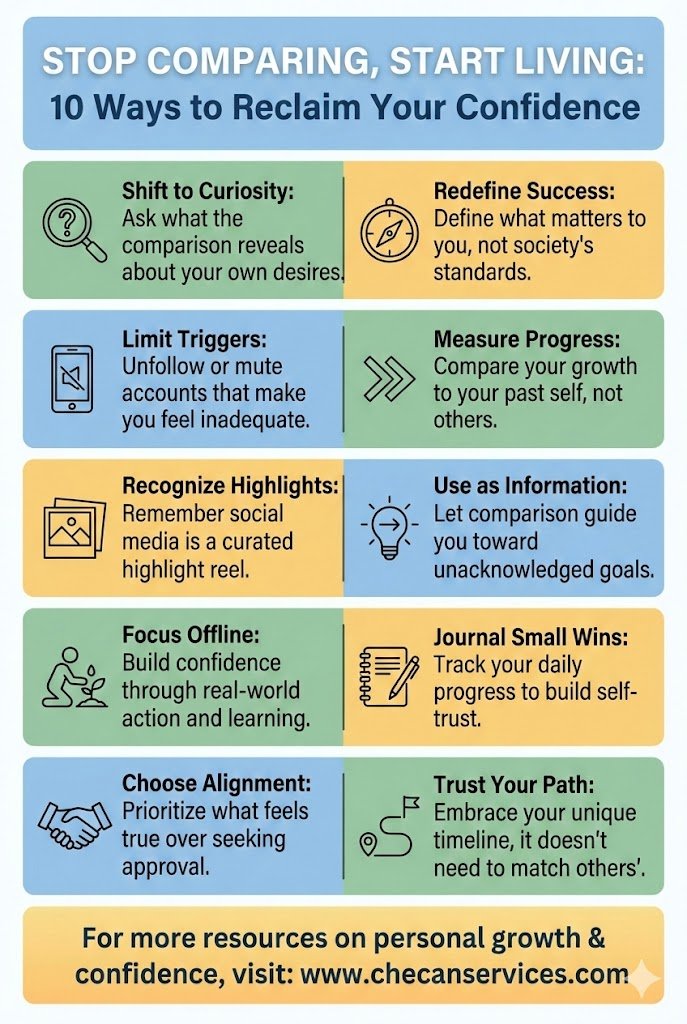
If you’ve ever scrolled through social media and suddenly felt behind in life, you’re not alone. Comparing yourself to others is one of the most common — and quietly destructive — habits of modern living. The good news? It’s also a habit you can unlearn.
Learning how to stop comparing yourself to others isn’t about pretending admiration doesn’t exist. It’s about shifting your focus back to where real growth happens: your own life, values, and progress.
Why We Compare Ourselves in the First Place
Comparison is deeply human. Our brains are wired to assess where we stand socially — it once helped with survival. Today, however, that instinct is overloaded. Social platforms show highlight reels, not full stories. Promotions, perfect relationships, luxury trips — all without context, setbacks, or struggles.
When you compare your behind-the-scenes to someone else’s curated moments, confidence naturally takes a hit. Over time, this can lead to self-doubt, anxiety, and a constant feeling of “not enough.”
Shift From Comparison to Curiosity
The moment you catch yourself comparing, pause and ask: What is this really showing me? Often, comparison reveals desire, not deficiency. Maybe you admire someone’s career path, creativity, or confidence. Instead of using it as proof you’re failing, use it as information.
For example, if a friend’s success makes you uncomfortable, that discomfort may be pointing you toward a goal you haven’t fully acknowledged yet. Curiosity turns comparison into clarity.
Redefine What Success Means to You
One of the fastest ways to stop comparing yourself to others is to define success on your own terms. If your version of success is vague, society fills in the blanks for you.
Take time to decide what matters most in this season of your life. Is it peace? Learning? Stability? Creative freedom? Once your values are clear, comparisons lose power because they’re no longer relevant to your personal scorecard.
Limit Inputs That Trigger Comparison
You don’t need to quit social media, but you do need boundaries. Notice which accounts leave you feeling inspired versus inadequate. Curate your feed intentionally. Unfollow, mute, or take breaks when necessary.
Also, remember that growth happens offline. Confidence is built through action — showing up consistently, learning from mistakes, and honoring progress that no one else sees.
Practice Measuring Progress, Not Position
Instead of asking “Am I ahead or behind them?” ask “Am I growing compared to who I was last year?” Progress is deeply personal. Someone else’s timeline has nothing to do with yours.
Keeping a simple journal of small wins can be powerful. Over time, it creates evidence that you are moving forward, even when it doesn’t look flashy.
Key Takeaways to Carry Forward
Stopping comparison doesn’t happen overnight. It’s a practice of awareness, redirection, and self-trust. When you choose alignment over approval, confidence grows naturally. Your path doesn’t need to look like anyone else’s — it just needs to feel true to you.
If you’re ready to explore deeper self-growth, clarity, and emotional resilience, you may enjoy the insightful ebooks available on Apple Books by Louise Blount. Discover them through this curated collection of ebooks and take the next step in investing in yourself.