If you’ve ever refreshed your phone to see who liked your post, replayed a conversation to check if you sounded “good enough,” or delayed a decision until someone else approved it—you’re not alone. Seeking external validation is deeply human. But when it becomes a habit, it quietly hands your confidence to other people.
The good news? You can unlearn it. And you don’t have to disappear into a cave or stop caring what anyone thinks. It’s about shifting where your sense of worth comes from.
Why External Validation Feels So Powerful
External validation feels good because it’s fast. A compliment, a like, a nod of approval gives instant reassurance. Your brain reads it as safety: I’m accepted, I belong.
The problem shows up when that reassurance becomes a requirement. You hesitate to speak unless you’re sure you’ll be praised. You doubt choices that once felt right because someone else disagreed. Over time, you stop asking, What do I think? and start asking, Will they approve?
That’s the moment confidence starts leaking outward.
Start Noticing the Pattern (Without Judging It)
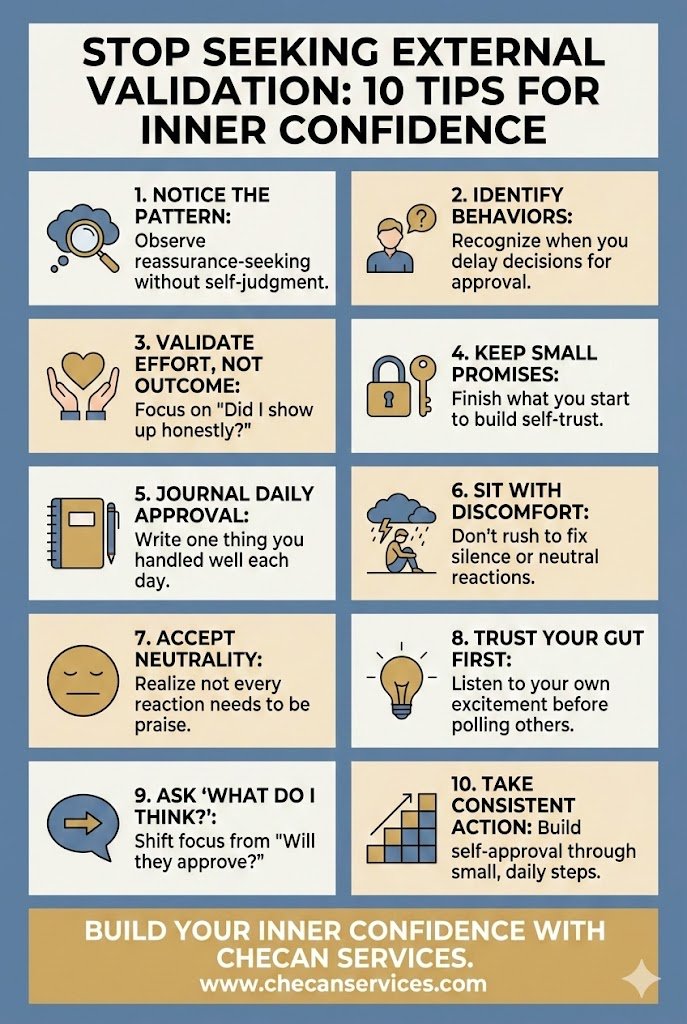
The first shift isn’t changing your behavior—it’s noticing it. Pay attention to moments when you:
- Ask for reassurance even after making a decision
- Feel anxious when feedback is delayed
- Downplay your needs to keep others comfortable
For example, imagine you’re choosing a new project at work. You feel excited, but instead of trusting that feeling, you immediately poll coworkers. If they hesitate, your excitement evaporates. That’s not a lack of capability—it’s outsourced self-trust.
Awareness alone loosens the grip.
Build Internal Validation Muscles
Internal validation isn’t about hype or pretending you’re perfect. It’s quieter and more grounded.
Try this:
- Validate effort, not outcomes. Instead of “Did they like it?” ask, “Did I show up honestly?”
- Keep small promises to yourself. Finish what you start, even when no one’s watching.
- Journal your own approval. Write one sentence a day answering: What did I handle well today?
At first, it may feel awkward—almost fake. That’s normal. You’ve been trained to look outward. Internal validation is a skill, and skills strengthen with repetition.
Learn to Sit With Discomfort
When you stop chasing validation, discomfort shows up. Silence. Neutral reactions. Sometimes disapproval.
This is where real growth happens.
Instead of fixing the feeling, try sitting with it. Notice that nothing terrible actually happens when approval doesn’t arrive. You’re still okay. You’re still capable. Over time, your nervous system learns that you don’t need constant confirmation to be safe.
Key Takeaways to Carry Forward
- External validation isn’t the enemy—dependency on it is
- Confidence grows when you trust your own experience
- Self-approval is built through consistent, small actions
- Discomfort is a sign you’re reclaiming your autonomy
Looking Ahead: A Quieter, Stronger Confidence
When you stop seeking external validation, something surprising happens. Decisions feel lighter. Feedback becomes information, not identity. You still care—but you’re no longer controlled.
If you’re ready to explore this inner shift more deeply through reflective, story-driven guidance, you may enjoy the ebooks by Louise Blount available on Apple Books. Discover them here on Apple Books and take the next step toward grounded self-trust.