Cause-and-effect thinking is one of those foundational skills that quietly shapes how children understand the world. It’s what helps them connect actions with outcomes, predict consequences, and eventually make thoughtful decisions. The good news? You don’t need flashcards, apps, or formal lessons to teach it. Everyday life at home is already full of powerful learning moments—you just need to make them visible.
At its core, cause-and-effect thinking answers two simple questions: What happened? and Why did it happen? When children learn to ask and answer these questions, they build critical thinking skills that support problem-solving, emotional regulation, and even early science and math understanding.
Turning Everyday Moments into Learning Opportunities
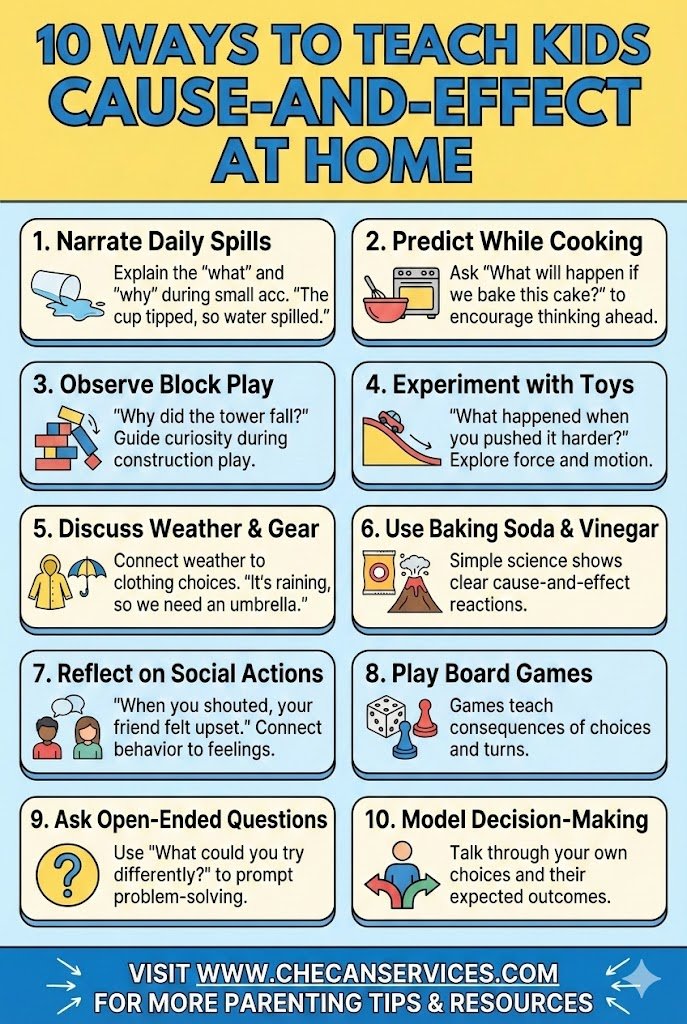
One of the easiest ways to teach cause and effect is by narrating daily experiences. For example, when a child spills water, instead of rushing to clean it up silently, you might say, “The cup tipped over, so the water spilled onto the floor.” This simple sentence links action and outcome without blame.
Cooking together is another goldmine. Ask questions like, “What do you think will happen if we don’t put the cake in the oven?” or “Why did the popcorn pop when it got hot?” These conversations encourage children to think ahead and reflect afterward, strengthening their ability to reason through events.
Play-Based Cause-and-Effect Activities
Children naturally explore cause and effect through play. Building blocks fall when stacked too high. Buttons make sounds when pressed. Toys roll faster down steeper ramps. Instead of directing play, try observing and gently guiding with curiosity-based prompts:
- “What happened when you pushed it harder?”
- “Why do you think the tower fell this time?”
- “What could you try differently next time?”
Board games and simple science experiments—like mixing baking soda and vinegar—are also great ways to spark excitement while reinforcing logical connections.
Helping Children Reflect on Behavior and Emotions
Cause-and-effect thinking isn’t just about physical events; it’s also deeply connected to social and emotional learning. When a child experiences a consequence, help them reflect calmly. For example, “When you shouted, your friend felt upset and didn’t want to play. What could we do differently next time?”
These conversations build empathy and accountability, helping children understand that their choices matter—not in a punitive way, but in a meaningful, real-world sense.
Key Takeaways for Parents
Teaching cause-and-effect thinking doesn’t require perfection or planning. It grows through consistent language, thoughtful questions, and shared reflection. By slowing down and talking through everyday moments, you give children tools they’ll use for a lifetime—tools that support learning, relationships, and confident decision-making.
Looking Ahead
As children grow, these early cause-and-effect lessons evolve into deeper reasoning skills. They’ll begin to predict outcomes, weigh options, and understand complex systems. What starts at home with spilled milk or a fallen block tower becomes the foundation for critical thinking in school and beyond.
If you’re looking for gentle, story-driven resources that support thoughtful learning and emotional growth, explore the inspiring ebooks by Louise Blount available on Apple Books. They’re a wonderful addition to any home library and a subtle way to keep meaningful conversations going long after storytime ends.