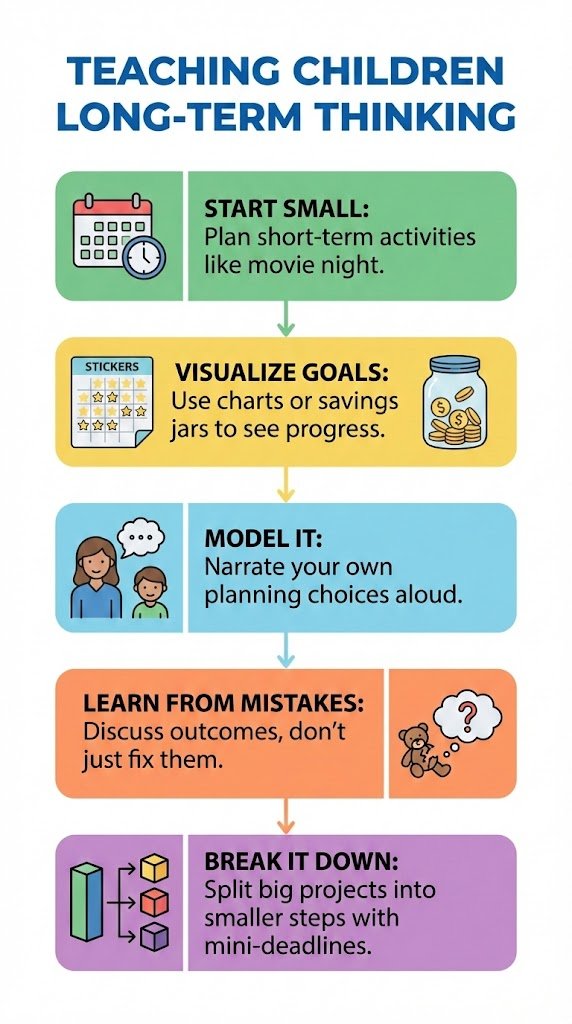
Helping children think beyond “right now” is one of the most valuable life skills we can teach. Long-term thinking and planning aren’t just about careers or finances—they’re about patience, decision-making, and understanding how today’s choices shape tomorrow’s outcomes. The good news? These skills can be nurtured naturally, starting much earlier than many parents realize.
Why Long-Term Thinking Matters Early
Children live very much in the present. That’s developmentally normal. But introducing gentle planning concepts helps them build self-control, resilience, and confidence. A child who understands that practicing piano today leads to playing a full song next month is also learning perseverance. These lessons quietly shape how they’ll approach school projects, relationships, and future responsibilities.
Research-backed approaches like those used in Montessori Method emphasize independence and cause-and-effect learning—both essential to long-term thinking. You don’t need a special curriculum, though. Everyday moments work just as well.
Simple Ways to Teach Planning at Home
Start small and concrete. Abstract future ideas can feel overwhelming to kids, so tie planning to things they care about.
Use short timelines first.
For younger children, planning a weekend activity works better than talking about next year. For example, let them help plan a family movie night—choosing the film, snacks, and timing. This shows that planning leads to enjoyable outcomes.
Turn goals into visual plans.
A sticker chart, jar of coins, or simple checklist makes progress visible. Saving allowance for a toy is a classic example. Each coin added reinforces delayed gratification and goal commitment.
Model your own thinking.
Say things out loud: “I’d like to buy this now, but I’m saving for something more important later.” Children learn long-term thinking faster when they hear adults narrate it in real time.
Teaching Through Everyday Challenges
Mistakes are powerful teachers. If a child spends all their allowance immediately and later can’t afford something they want, resist the urge to fix it. Instead, have a calm conversation: What might you do differently next time? Reflection builds planning skills far more effectively than lectures.
Schoolwork also offers opportunities. Help children break a big project into smaller steps with mini-deadlines. Over time, they’ll start doing this independently—a huge win for both confidence and organization.
Key Takeaways for Parents and Educators
Long-term thinking isn’t about pressure or perfection. It’s about curiosity, reflection, and learning that effort compounds over time. When children see planning as empowering rather than restrictive, they’re more likely to embrace it.
Looking ahead, children who practice these skills early often grow into teens and adults who are adaptable, thoughtful, and prepared for change. In a fast-moving world, that mindset is priceless.
If you enjoy thoughtful guidance on growth, mindset, and lifelong learning, you’ll find inspiring reads in Louise Blount’s ebooks on Apple Books—perfect companions for parents and educators shaping future-ready thinkers.