Technology is woven into almost every part of modern childhood. From online learning platforms to creative apps and social connections, screens are no longer optional—they’re part of daily life. The real challenge for parents and educators isn’t keeping children away from technology, but teaching them how to use it responsibly and in a healthy, balanced way.
The good news is that children are incredibly adaptable. With the right guidance, technology can become a tool for growth rather than a source of stress or distraction.
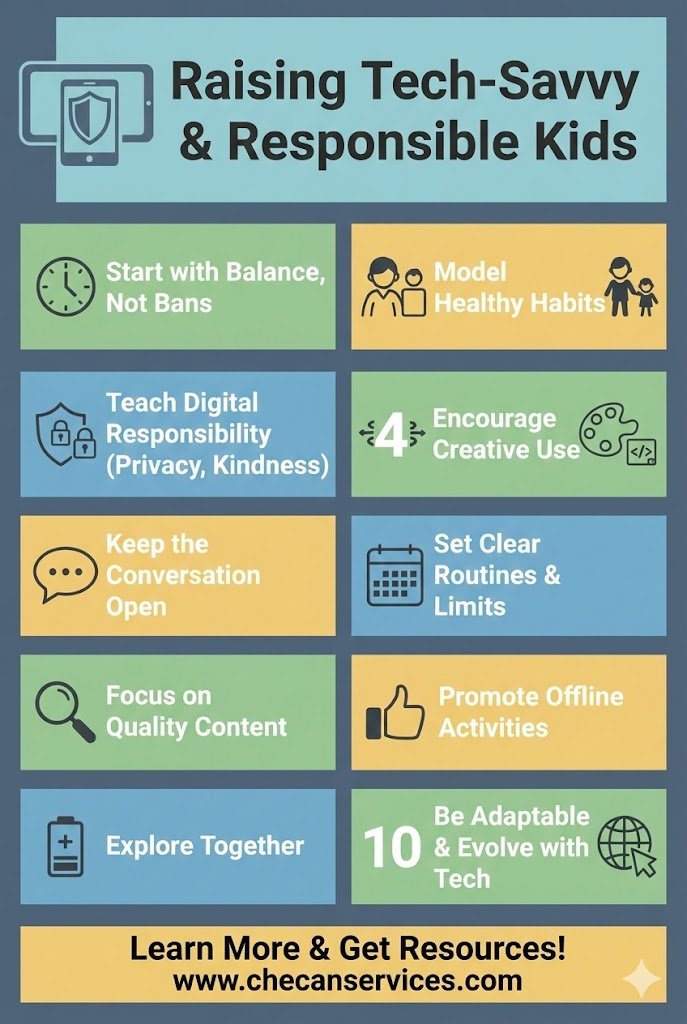
Start With Balance, Not Bans
One of the biggest mistakes adults make is focusing on strict restrictions instead of balance. When technology is treated as “forbidden,” it often becomes more tempting. Instead, help children understand why limits exist. Explain that screens are just one part of a full day that also includes movement, creativity, social interaction, and rest.
For example, setting a routine where homework comes first, followed by screen time, and then offline play helps children see technology as a reward and a tool—not a default activity.
Model the Behavior You Want to See
Children learn far more from what we do than what we say. If adults are constantly checking phones during meals or conversations, kids notice. Modeling healthy habits—like putting devices away during family time or setting “no-screen” hours in the evening—sends a powerful message.
Even something as simple as saying, “I’m putting my phone down so I can focus on you,” reinforces the value of mindful technology use.
Teach Digital Responsibility Early
Responsible technology use goes beyond screen time. Children should also learn about online safety, kindness, and digital footprints. Conversations about privacy, respectful communication, and the permanence of online actions are just as important as time limits.
Using real-life examples—like how a comment can hurt someone’s feelings or how photos shared online can last forever—helps make abstract ideas more concrete and relatable.
Encourage Creative and Educational Use
Not all screen time is created equal. Watching random videos for hours isn’t the same as coding a game, drawing digitally, or researching a topic they love. Encourage children to use technology as a creative outlet and learning tool.
When kids see technology as something they create with rather than just consume, their relationship with it becomes far more positive and empowering.
Keep the Conversation Open
Technology changes fast, and so do the challenges that come with it. Instead of one big “technology talk,” aim for ongoing conversations. Ask what apps they enjoy, what they’re learning, and what they find difficult online. When children feel safe talking about their digital experiences, they’re more likely to come to you when something feels wrong.
Key Takeaways for Parents and Educators
Teaching responsible and healthy technology use is about guidance, not control. By focusing on balance, modeling good habits, encouraging creativity, and keeping communication open, adults can help children build a positive, lifelong relationship with technology—one that supports their well-being instead of competing with it.
If you’re looking for thoughtful resources that explore personal growth, self-awareness, and modern life challenges, you may enjoy the insightful ebooks available by Louise Blount on Apple Books. Discover her collection and explore meaningful reads by visiting Louise Blount’s ebooks on Apple Books—a great addition to any mindful learning journey.