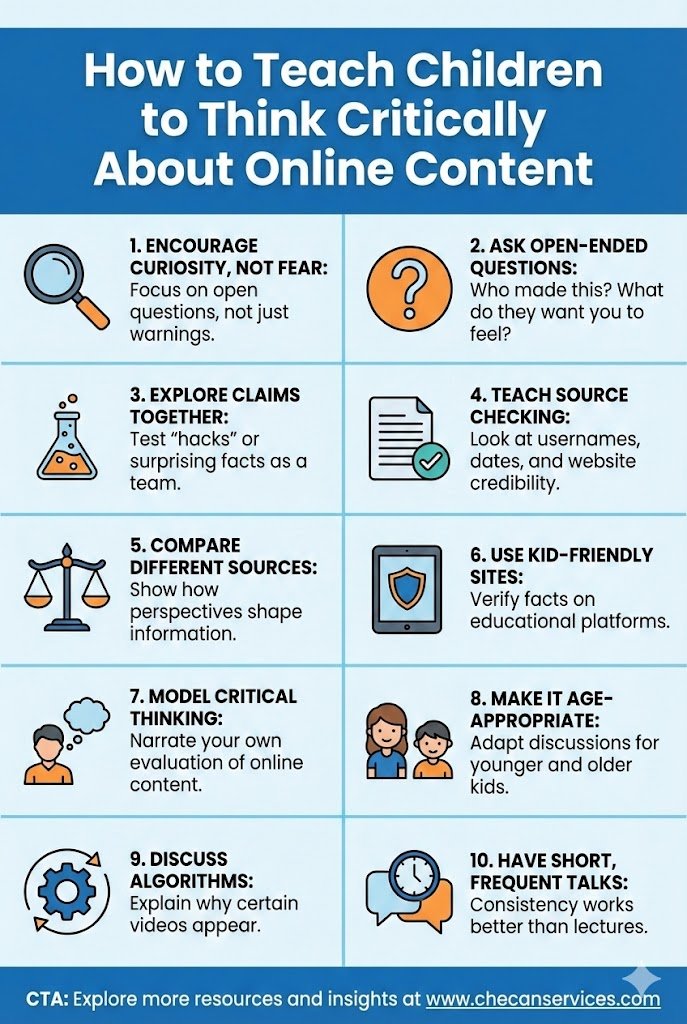
The internet is an incredible classroom—but it’s also a noisy one. From viral videos to influencer advice, children are constantly absorbing information that looks polished and persuasive. The real challenge for parents and educators today isn’t limiting screen time alone; it’s helping kids think critically about what they see online.
Critical thinking is the skill that helps children pause, question, and evaluate before they believe or share. And the good news? It can be taught, practiced, and strengthened over time.
Start With Curiosity, Not Fear
One of the most effective ways to introduce critical thinking is by encouraging curiosity. Instead of saying, “That’s not true” or “Don’t believe everything online,” ask open-ended questions:
- Who do you think made this video?
- What do they want people to feel or do?
- Does this remind you of an ad or a story?
For example, if a child watches a video claiming a “life-changing hack,” explore it together. Test it. Laugh if it doesn’t work. This approach turns skepticism into discovery rather than distrust.
Teach Them to Check the Source
Children don’t need to become fact-checkers overnight, but they can learn simple habits. Show them how to look for clues: usernames, website names, dates, and whether other sources say the same thing. Comparing two different posts about the same topic is a powerful exercise—it shows how perspective shapes information.
A practical example: if a child reads something surprising about animals or space, look it up together on a kid-friendly educational site. This reinforces the idea that one post isn’t the whole truth.
Model the Thinking You Want to See
Kids learn more from what we do than what we say. When adults scroll mindlessly or share headlines without reading, children notice. Try narrating your own thinking out loud:
“I’m not sure this is accurate—let me check another source.”
“This headline sounds dramatic. I wonder what the full story says.”
This normalizes thoughtful pauses in a fast-scrolling world.
Make It Age-Appropriate and Ongoing
Critical thinking looks different at different ages. Younger children can learn to tell the difference between ads and stories. Older kids can discuss algorithms, sponsored content, and why certain videos keep showing up. The key is consistency—short, frequent conversations work better than one big lecture.
Games, family discussions, and even school projects can all reinforce these skills naturally.
Key Takeaways
Teaching children to think critically about online content isn’t about controlling what they see—it’s about empowering how they think. By encouraging curiosity, questioning sources, and modeling thoughtful behavior, we help kids become confident digital citizens who can navigate the online world with clarity and independence.
Looking Ahead
As technology evolves, so will the challenges. But children who learn how to question, reflect, and verify will be better prepared not just for today’s internet, but for the information-rich future ahead.
If you enjoy thoughtful insights on learning, growth, and navigating modern life, you may want to explore the collection of ebooks by Louise Blount available on Apple Books. You can discover them through her books on Apple Books—a great resource for readers who value depth, reflection, and practical wisdom.