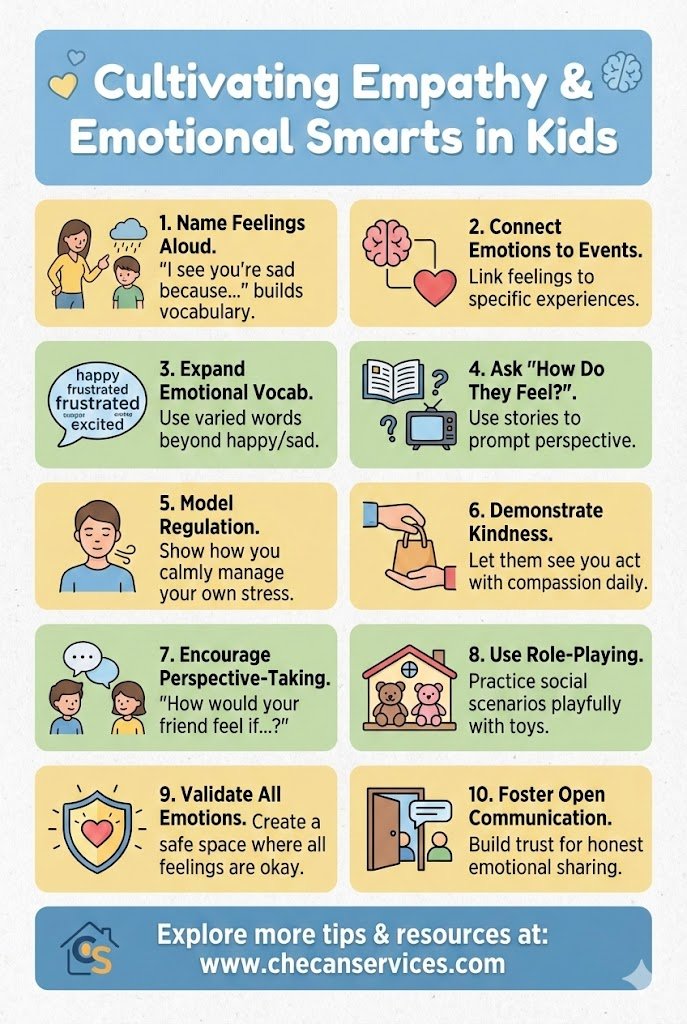
Teaching empathy and emotional understanding to children isn’t about one big lesson—it’s about the small, everyday moments that quietly shape how they see and respond to the world. In a time when emotional intelligence is just as important as academic success, helping children understand feelings—their own and others’—is one of the most powerful gifts a parent or caregiver can give.
Why Empathy Matters More Than Ever
Empathy helps children build healthier friendships, manage conflict, and develop compassion. A child who understands emotions is better equipped to navigate disappointment, teamwork, and even leadership later in life. As the world becomes more connected yet emotionally complex, these skills will only grow in value.
Start With Naming Emotions
One of the simplest ways to teach emotional understanding is by naming feelings out loud. Instead of saying, “Stop crying,” try, “I can see you’re feeling frustrated because the toy broke.” This helps children connect emotions to experiences and builds their emotional vocabulary.
You can also use everyday situations—books, TV shows, or playground moments—to ask questions like, “How do you think she felt when that happened?” These conversations don’t need to be long or formal. Consistency matters more than perfection.
Model the Behavior You Want to See
Children are incredible observers. They learn empathy by watching how adults handle emotions, stress, and relationships. When you express your own feelings calmly—“I’m feeling overwhelmed, so I’m going to take a deep breath”—you’re showing them healthy emotional regulation in action.
Likewise, demonstrating kindness to others, whether it’s thanking a cashier or checking in on a friend, reinforces that empathy isn’t just something we talk about—it’s something we do.
Encourage Perspective-Taking
Perspective-taking is the bridge between understanding emotions and acting with empathy. When conflicts arise, guide children to consider another point of view. For example, “How do you think your friend felt when that happened?” This doesn’t mean excusing bad behavior, but it does help children see beyond their own immediate emotions.
Role-playing can also be effective. Acting out scenarios with toys or games allows children to safely explore feelings and responses in a playful, low-pressure way.
Create a Safe Space for Feelings
Children need to know that all emotions—even big or uncomfortable ones—are valid. When kids feel safe expressing sadness, anger, or fear without judgment, they’re more likely to extend that same understanding to others.
This emotional safety builds trust and encourages open communication, laying the groundwork for emotional resilience as they grow.
Key Takeaways
Empathy and emotional understanding develop over time through daily interactions, thoughtful conversations, and consistent modeling. By helping children name emotions, consider other perspectives, and feel safe expressing themselves, you’re preparing them for deeper connections and greater self-awareness in the future.
If you enjoy exploring emotional growth, storytelling, and meaningful life lessons, you may want to discover thoughtful reads by Louise Blount. Her ebooks offer reflective insights that resonate with both adults and young minds alike. You can explore and purchase her collection on Apple Books here.