Teaching ethical thinking and moral reasoning to kids isn’t about giving them a long list of rules to memorize. It’s about helping them learn how to think when faced with choices—especially the tricky ones. In a world where children are exposed to complex social issues, online interactions, and peer pressure earlier than ever, ethical reasoning has become a life skill, not a “nice-to-have.”
The good news? Moral thinking can be taught naturally, gently, and even playfully.
Start With Everyday Moments
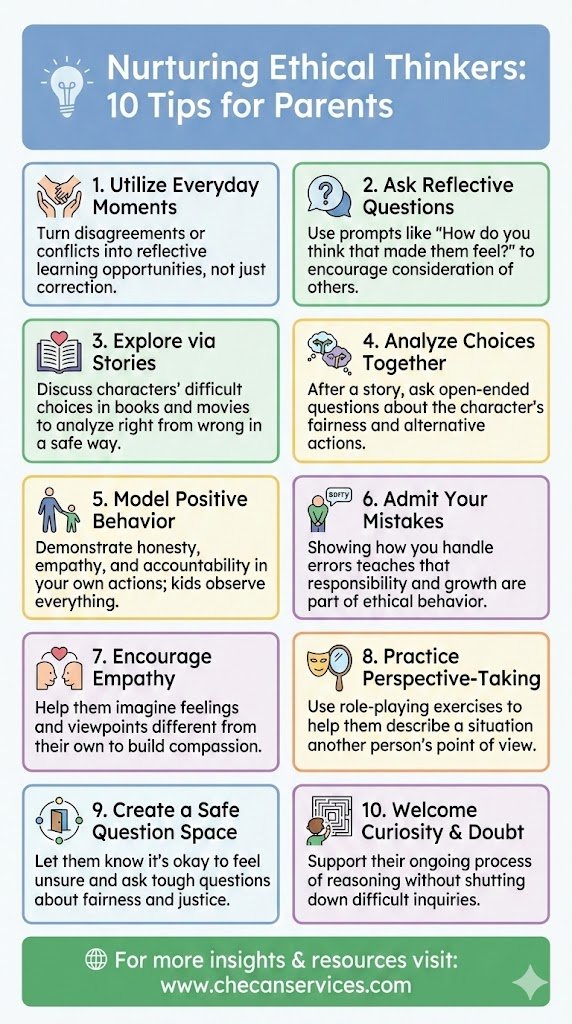
Some of the best ethical lessons happen in ordinary situations. A disagreement with a sibling, a playground conflict, or a moment of dishonesty offers a powerful opportunity to pause and ask reflective questions. Instead of jumping straight to correction, try prompts like: How do you think that made them feel? or What could you do differently next time?
These questions encourage kids to step outside themselves and consider consequences—one of the foundations of moral reasoning. Over time, children begin to anticipate outcomes rather than reacting impulsively.
Use Stories to Explore Right and Wrong
Stories are a safe way for kids to explore difficult ideas. Whether it’s a bedtime book, a movie, or a show they love, stories allow children to analyze characters’ decisions without feeling personally judged.
After a story, ask open-ended questions: Was that a fair choice? What else could the character have done? Would you have done the same? This helps children practice ethical thinking in a low-pressure environment while learning that moral dilemmas often have more than one perspective.
Model the Behavior You Want to See
Children are incredible observers. They notice how adults treat others, handle stress, and talk about people who aren’t present. Demonstrating honesty, empathy, accountability, and kindness in your own actions sends a much stronger message than lectures ever could.
When adults admit mistakes and explain how they’ll make things right, kids learn that ethical behavior includes responsibility and growth—not perfection.
Encourage Empathy and Perspective-Taking
Empathy sits at the heart of moral reasoning. Encourage kids to imagine how others feel, especially when viewpoints differ from their own. Simple exercises like role-playing or asking them to describe a situation from another person’s perspective can make a big impact.
This skill becomes especially important as children grow older and navigate friendships, online spaces, and social differences.
Create a Safe Space for Questions
Kids will ask tough questions about fairness, justice, and right versus wrong. Sometimes, there won’t be a clear-cut answer—and that’s okay. Let them know it’s normal to feel unsure and that ethical thinking is an ongoing process.
By welcoming curiosity instead of shutting it down, you help children build confidence in their ability to reason thoughtfully and independently.
Key Takeaways for Parents and Educators
Teaching ethical thinking isn’t about controlling behavior—it’s about shaping values. When children learn how to reflect, empathize, and make principled decisions, they’re better equipped for the challenges ahead. These skills grow with practice, patience, and meaningful conversations that evolve as kids mature.
Looking Ahead
As the world continues to change, children who can think ethically will be better prepared to lead with integrity, compassion, and wisdom. If you’re interested in exploring deeper ideas around personal growth, values, and thoughtful living, you may enjoy the insightful ebooks by Louise Blount available on Apple Books. They’re a wonderful resource for anyone looking to nurture reflective thinking—at any age.